Hybrid Power Systems Explained An Informative Guide to Basics, Working Concepts, and Key Facts
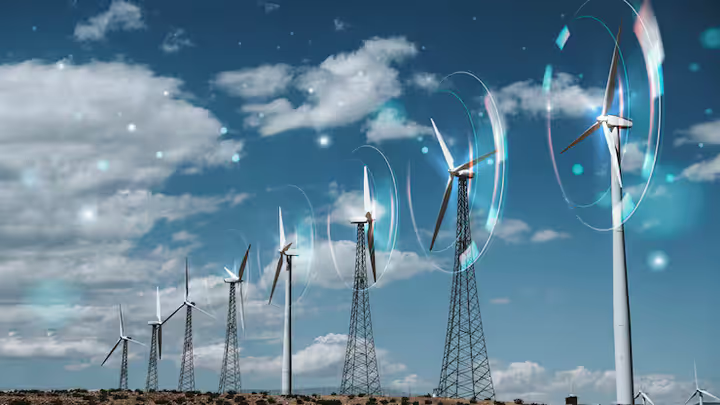
Hybrid power systems are energy generation setups that combine two or more power sources to deliver electricity in a more stable, efficient, and resilient way. Most commonly, these systems integrate renewable sources such as solar or wind with conventional generation and energy storage technologies.
The concept emerged to address the natural limitations of single-source power generation. Renewable energy output fluctuates due to weather and time of day, while conventional generation alone faces fuel dependency and environmental constraints. Hybrid configurations balance these variables by intelligently coordinating multiple sources.
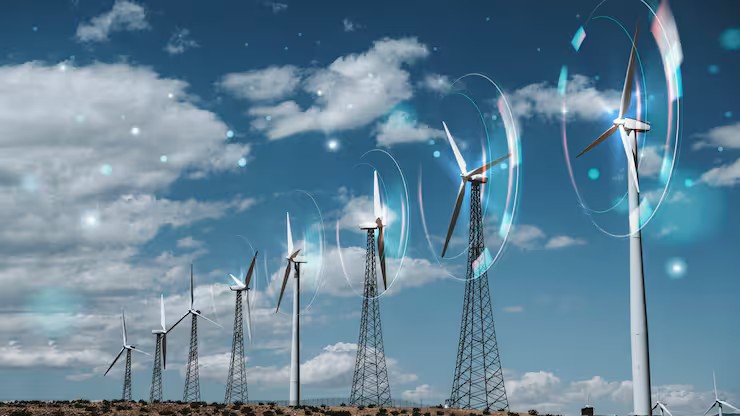
At their core, hybrid power systems aim to ensure consistent energy availability while optimizing efficiency and system reliability. They are designed for both grid-connected and standalone applications, ranging from utility-scale power networks to remote and industrial installations.
Common hybrid configurations include:
-
Solar photovoltaic with battery storage
-
Wind energy combined with diesel generators
-
Solar-wind-battery integrated systems
-
Grid-interactive hybrid microgrids
These systems rely on advanced control logic to manage power flow, storage cycles, and load demand without interruption.
Why Hybrid Power Systems Matter in Today’s Energy Landscape
Hybrid power systems have become increasingly relevant as energy demand grows and power infrastructure faces new challenges. Modern grids must handle variable renewable generation, rising consumption, and the need for greater resilience.
For industries, utilities, and communities, hybrid systems provide operational stability by smoothing energy fluctuations and improving power quality. This is especially valuable in regions with inconsistent grid reliability or high renewable penetration.
Key benefits include:
-
Improved energy reliability and continuity
-
Enhanced integration of renewable generation
-
Reduced dependence on a single energy source
-
Optimized energy management through intelligent controllers
Hybrid power systems affect a wide range of stakeholders:
-
Power utilities managing distributed generation
-
Industrial facilities requiring uninterrupted operations
-
Rural and remote communities
-
Data centers and critical infrastructure
By combining generation diversity with storage and automation, hybrid systems help mitigate voltage instability, frequency deviations, and supply interruptions. This makes them an essential component of modern energy transition strategies.
Recent Developments and Industry Trends in Hybrid Power Systems
Over the past year, hybrid power systems have seen rapid technological and policy-driven advancements. In 2025, global focus has intensified on grid-flexible solutions capable of handling renewable variability.
One major trend is the rise of hybrid renewable-storage plants, where energy storage is deployed alongside generation at the same site. Utilities increasingly favor this model to improve dispatchability and grid responsiveness.
Another notable development is the expansion of digital energy management platforms. These platforms use real-time data analytics, forecasting, and automated control to optimize hybrid system performance.
Recent trends observed since mid-2025 include:
-
Increased deployment of hybrid microgrids
-
Wider use of AI-based energy optimization software
-
Enhanced inverter technologies for multi-source integration
-
Stronger focus on grid-forming capabilities
In countries such as India and the United States, hybrid systems are now a core part of utility-scale renewable expansion strategies. Regulatory encouragement and infrastructure modernization have further accelerated adoption.
Regulatory Environment and Government Policies Influencing Hybrid Systems
Hybrid power systems operate within a framework of energy regulations, grid codes, and government programs that influence their design and deployment.
In many regions, policies now explicitly recognize hybrid configurations as distinct assets rather than treating each component separately. This has improved clarity around grid interconnection, performance standards, and operational compliance.
Key regulatory considerations include:
-
Grid interconnection and synchronization rules
-
Energy storage participation guidelines
-
Renewable integration standards
-
Emissions and efficiency compliance
In India, national renewable energy policies support hybrid renewable projects to maximize land use and grid efficiency. Similarly, in the United States, federal and state-level programs increasingly accommodate hybrid systems within transmission planning and grid resilience initiatives.
These policy frameworks aim to ensure that hybrid power systems contribute to grid stability while maintaining technical and environmental standards.
Tools, Platforms, and Informational Resources for Hybrid Power Systems
Understanding and managing hybrid power systems requires access to specialized tools and analytical resources. These tools support planning, modeling, monitoring, and optimization.
Commonly used resources include:
-
Hybrid energy system simulation software
-
Load forecasting and demand analysis tools
-
Battery performance and lifecycle calculators
-
Power system modeling platforms
-
Grid compliance assessment frameworks
These tools help engineers and planners evaluate system performance under varying load and generation conditions. Digital dashboards and monitoring platforms also provide real-time visibility into system health and efficiency.
Below is a simplified comparison table showing typical components and their roles:
| Component | Primary Function | Key Contribution |
|---|---|---|
| Solar PV | Daytime generation | Renewable energy input |
| Wind Turbine | Variable generation | Seasonal power support |
| Battery Storage | Energy balancing | Load stabilization |
| Controller | System coordination | Intelligent power flow |
| Grid Interface | Synchronization | Network compatibility |
Such resources play a critical role in ensuring hybrid systems operate safely, efficiently, and in compliance with regulations.
Frequently Asked Questions About Hybrid Power Systems
What defines a hybrid power system?
A hybrid power system combines multiple energy sources, often including renewables and storage, to deliver stable and reliable electricity through coordinated control.
How do hybrid systems manage power fluctuations?
They use intelligent controllers and energy storage to balance generation and demand in real time, smoothing variability from renewable sources.
Are hybrid power systems suitable for grid-connected use?
Yes. Many hybrid systems are designed specifically for grid-interactive operation, supporting voltage regulation and frequency stability.
What role does energy storage play in hybrid systems?
Energy storage absorbs excess generation and releases power when demand exceeds supply, enhancing reliability and flexibility.
Do hybrid systems support long-term energy planning?
They provide scalable and adaptable solutions that align with evolving grid requirements and renewable integration goals.
Concluding Insights on Hybrid Power Systems
Hybrid power systems represent a practical and forward-looking approach to modern energy challenges. By integrating multiple power sources with intelligent control and storage, they deliver reliability, efficiency, and adaptability.
As grids evolve and renewable adoption expands, hybrid configurations are becoming foundational elements of resilient power infrastructure. Their ability to stabilize supply, enhance flexibility, and support diverse applications positions them as a critical component of future energy systems.
With continued technological innovation and supportive policy frameworks, hybrid power systems will remain central to the global transition toward smarter and more sustainable electricity networks.