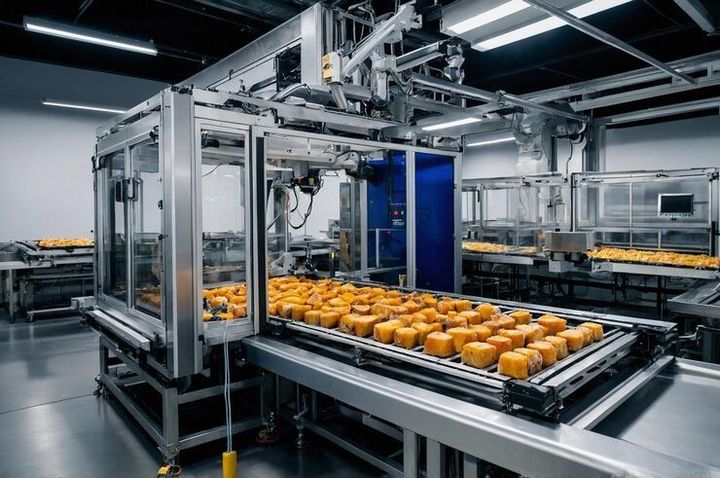
Food Processing Conveyor Systems Guide: Designs, Materials, Functions and Industrial Applications
Food processing conveyor systems are mechanical equipment used to move raw ingredients, partially processed materials, and finished food products through manufacturing facilities. A food processing conveyor systems guide explains their designs, materials, functions, and industrial applications, helping readers understand how these systems support food production. They are used in bakeries, dairy plants, meat processing facilities, beverage factories, fruit and vegetable packing facilities, and other food manufacturing environments.
Context
Food processing conveyor systems are mechanical equipment used to move raw ingredients, partially processed materials, and finished food products through manufacturing facilities. A food processing conveyor systems guide explains their designs, materials, functions, and industrial applications, helping readers understand how these systems support food production. They are used in bakeries, dairy plants, meat processing facilities, beverage factories, fruit and vegetable packing facilities, and other food manufacturing environments.
The development of conveyor systems is closely connected to the growth of industrial manufacturing. Early material-handling equipment relied on simple belts, rollers, and mechanical drives. As food production expanded, conveyor designs evolved to accommodate different product shapes, production speeds, cleaning requirements, and hygiene standards.
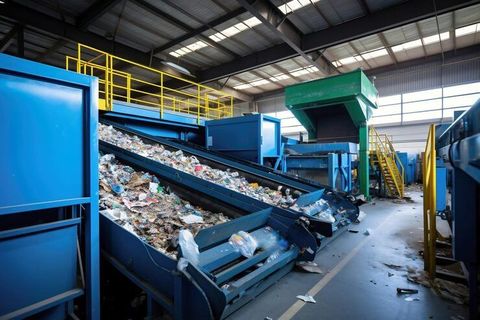
Modern food processing conveyor systems may operate between washing, cutting, mixing, cooking, cooling, inspection, packaging, and storage stages. Their design depends on the food being handled, the production environment, and the conditions under which materials must move.
Main Types of Food Processing Conveyors
Different conveyor designs support different production tasks. Common types include:
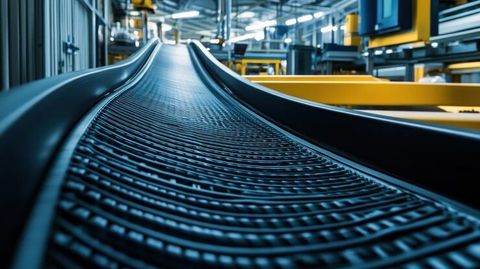
Belt conveyors: Use a continuous moving belt to transport items such as bread, packaged foods, vegetables, and lightweight ingredients.
Roller conveyors: Use rotating rollers to move containers, trays, cartons, and other products with suitable bases.
Modular plastic belt conveyors: Use connected plastic sections that can accommodate certain curves, drainage needs, and washdown environments.
Screw conveyors: Move powders, grains, and other bulk materials through a rotating helical mechanism inside a trough or tube.
Vibratory conveyors: Use controlled vibration to move, distribute, or separate products such as nuts, grains, and cut vegetables.
Bucket conveyors: Carry bulk materials vertically or along inclined paths using attached containers.
Pneumatic conveying systems: Move suitable powders or fine particles through enclosed pipes using air pressure or vacuum.
Each design has different operating characteristics. Product fragility, moisture, temperature, particle size, and the possibility of contamination influence which type is appropriate.
Importance
Food processing conveyors help manufacturers move products between production stages in an organized and repeatable manner. Without suitable material-handling equipment, workers may need to move ingredients manually between machines, which can create bottlenecks, increase handling requirements, and make production flow harder to coordinate.
These systems also affect food hygiene, product consistency, workplace safety, and the use of factory space. A conveyor that is difficult to clean or poorly matched to the product may contribute to material buildup, product damage, or contamination risks.
Functions in Food Manufacturing
Food processing conveyor systems perform several connected functions throughout a production line. Their main purpose is to maintain a controlled flow of materials between equipment and work areas.
Transportation: Moves ingredients and products between processing stages.
Sorting and inspection: Carries items past workers, cameras, sensors, or inspection equipment.
Distribution: Spreads products across a line or directs them toward separate processing stations.
Cooling and heating: Moves products through controlled-temperature zones, where the conveyor is designed for those conditions.
Washing and draining: Supports the movement of suitable foods through washing equipment and drainage stages.
Packaging preparation: Positions products for weighing, filling, wrapping, sealing, or container loading.
Conveyor speed and product spacing can influence the performance of connected machinery. For example, a packaging machine may require a consistent supply of products, while an inspection station may need sufficient spacing to identify individual items accurately.
Materials Used in Conveyor Construction
The materials used in food processing conveyor systems must suit the food, cleaning methods, operating temperature, and surrounding environment. Food-contact components may need to meet specific regulatory requirements, while frames and other structural parts must provide suitable strength and resistance to corrosion.
Stainless steel is commonly used for frames, supports, and food-handling equipment because it resists corrosion under appropriate conditions and can be designed for effective cleaning. Food-contact belts may use suitable polymers, including certain polyurethane or polyethylene materials, depending on their intended application.
| Material | Typical use | Main consideration |
|---|---|---|
| Stainless steel | Frames, supports, washdown equipment | Grade, corrosion resistance, weld quality |
| Polyurethane | Certain food-contact belts | Temperature and chemical compatibility |
| Polyethylene | Belts and modular conveyor components | Wear, temperature, and product compatibility |
| Rubber compounds | Selected belts and general handling | Food-contact suitability and cleaning |
| Engineering plastics | Guides, rollers, and components | Strength, wear, and operating conditions |
Not every material is suitable for every food application. Manufacturers must verify food-contact compliance, chemical resistance, temperature limits, and compatibility with the intended cleaning process.
Comparing Conveyor Designs
The following table summarizes practical differences between common systems.
| Conveyor design | Suitable applications | Important design factor |
|---|---|---|
| Flat belt | Bakery products and packaged foods | Belt surface and tracking |
| Modular belt | Produce and selected washdown lines | Drainage and cleanability |
| Roller | Trays, cartons, and containers | Product base and stability |
| Screw | Powders, grains, and bulk ingredients | Moisture and particle characteristics |
| Vibratory | Sorting and distribution of small products | Product fragility and vibration |
| Bucket | Vertical movement of bulk foods | Spillage and cleaning access |
| Pneumatic | Suitable powders and fine particles | Airflow, dust control, and product properties |
The table provides general examples rather than fixed rules. Final equipment selection depends on the actual product and production process.
Recent Updates
Food processing conveyor technology continues to develop through greater automation, improved monitoring, hygienic design, and more coordinated factory controls. Trends visible from 2024 through 2026 include wider use of sensors, machine vision, condition monitoring, and data collection to help operators understand production performance. The availability of these features varies by manufacturer and facility.
Automation and Smart Monitoring
Sensors can monitor belt movement, product presence, motor temperature, vibration, and other operating conditions. When connected to a suitable control system, this information can help operators identify irregular operation and coordinate conveyor movement with upstream and downstream machinery.
Machine vision can also support inspection tasks, such as detecting visible defects, checking product positioning, or identifying items that require removal. Its accuracy depends on lighting, camera placement, product variation, software configuration, and validation under actual operating conditions.
Hygienic Design and Energy Management
Conveyor design increasingly considers cleaning access, reduced material-trapping areas, drainage, and the compatibility of components with cleaning chemicals. Open structures or removable belts may simplify access in certain applications, although the appropriate design depends on the product and contamination risks.
Energy management is another area of attention. Efficient motors, variable-frequency drives, suitable belt tension, and coordinated operating schedules can help reduce unnecessary energy use. Actual results depend on equipment sizing, production demands, maintenance, and operating practices.
Laws or Policies
Food processing conveyor systems are affected by food safety requirements, machinery safety rules, electrical standards, and workplace regulations. Applicable requirements depend on the country, the type of food, the equipment's intended use, and whether components directly contact food.
Food Safety Requirements in India
In India, the Food Safety and Standards Authority of India (FSSAI) administers the food safety framework under the Food Safety and Standards Act, 2006, and associated regulations. The Food Safety and Standards (Licensing and Registration of Food Businesses) Regulations, 2011, and applicable hygiene requirements are relevant to food business operations.
Conveyor systems used in food manufacturing should be designed and maintained to support applicable hygiene controls. Relevant considerations include preventing contamination, maintaining cleanable surfaces, managing product residues, and ensuring that food-contact materials are suitable for their intended use.
Machinery Safety and Workplace Rules
Factories must also consider applicable occupational safety, electrical safety, machinery guarding, and maintenance requirements. Moving belts, rollers, gears, and drive mechanisms can create entanglement or crushing hazards, so suitable guards, emergency stops, isolation procedures, and worker training are important.
The Occupational Safety, Health and Working Conditions Code, 2020, forms part of India's workplace safety legislation, with applicability dependent on its commencement and relevant rules in force. Specific factory obligations may also depend on state requirements and other applicable legislation.
Food manufacturers should verify current requirements with the relevant authorities and qualified professionals. Equipment compliance depends on the complete installation and its intended operating conditions, not only on the conveyor's individual components.
Tools and Resources
Several technical resources help engineers, maintenance teams, and food manufacturers evaluate conveyor performance and plan equipment layouts. The appropriate tools depend on whether the task involves initial design, daily operation, hygiene assessment, or maintenance.
Conveyor Design and Planning Tools
Computer-aided design (CAD) software can be used to develop equipment layouts, examine clearances, and plan connections between conveyor sections and processing machines. Simulation and production-planning tools can help assess material flow, transfer points, accumulation areas, and possible bottlenecks.
Basic conveyor calculations may involve belt speed, conveyor length, elevation changes, product throughput, and motor requirements. These calculations must account for factors such as friction, loading, starting conditions, and the characteristics of the conveyed material.
Monitoring and Maintenance Resources
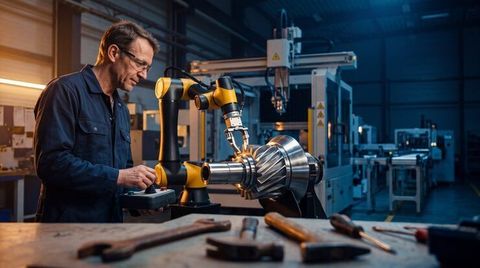
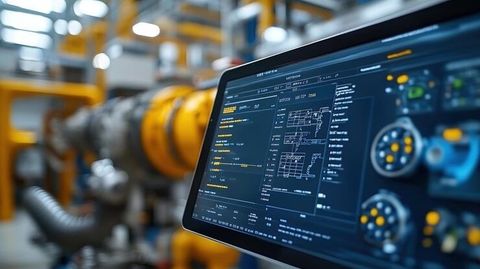
Programmable logic controllers (PLCs) coordinate conveyor movement and communicate with sensors and other machinery. Human-machine interfaces (HMIs) allow operators to monitor operating conditions, review alarms, and adjust permitted settings.
Maintenance records can track belt inspections, cleaning activities, lubrication where applicable, motor condition, and component replacement. Useful reference materials include FSSAI publications, relevant food-contact material standards, equipment manuals, and guidance from recognized engineering and food safety organizations.
FAQs
What are food processing conveyor systems used for?
Food processing conveyor systems transport ingredients and finished products between stages such as washing, cutting, cooking, cooling, inspection, and packaging. They help coordinate material flow within food manufacturing facilities.
Which conveyor belt materials are suitable for food processing?
Suitable materials may include stainless steel components and approved food-contact polymers such as certain polyurethane and polyethylene formulations. Selection depends on the food, temperature, cleaning chemicals, and applicable food-contact requirements.
How do manufacturers choose a food processing conveyor design?
Manufacturers consider product size, weight, moisture, fragility, required throughput, production layout, hygiene needs, and operating temperature. Cleaning access and compatibility with connected equipment are also important.
How do food processing conveyors support food safety?
Appropriate conveyor design supports cleaning, drainage, contamination control, and hygienic product handling. Effective food safety also requires suitable operating procedures, inspections, maintenance, and employee training.
What automation technologies are used in industrial conveyor systems?
Common technologies include PLCs, sensors, variable-frequency drives, machine vision, and condition-monitoring systems. These technologies can coordinate product movement, monitor equipment conditions, and support inspection tasks.
Conclusion
Food processing conveyor systems are important components of industrial food production, supporting transportation, inspection, distribution, and packaging operations. Their designs and materials must match product characteristics, hygiene requirements, and operating conditions. Automation and monitoring technologies can improve process coordination, while appropriate maintenance and safety measures help manage operational risks. Applicable food safety and machinery requirements depend on the location, installation, and intended use.