Electric Power Production Units An Informative Guide to Basics, Working Principles, and Key Facts
Electric power production units are systems designed to convert primary energy sources into electrical energy that can be transmitted, distributed, and used across industries, infrastructure, and households. These units form the backbone of modern civilization, supporting communication networks, transportation systems, healthcare facilities, manufacturing plants, and digital technologies.
At their core, electric power production units operate on energy conversion principles. Mechanical, thermal, chemical, nuclear, or renewable energy is transformed into electrical output using generators and control systems. Over time, these units have evolved from simple steam-driven generators to highly automated, grid-integrated installations capable of handling variable demand and intermittent energy sources.
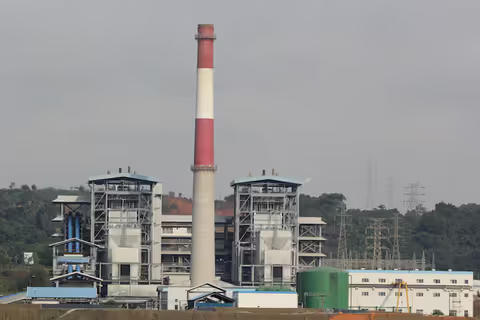
Common categories of power production units include thermal power plants, hydroelectric stations, nuclear facilities, wind farms, and solar power plants. Each exists to address specific energy availability, geographic constraints, and reliability requirements. Together, they ensure a continuous and stable electricity supply in both developed and emerging economies.
Importance: Why Electric Power Production Units Matter Today
Electric power production units play a critical role in economic stability, energy security, and technological advancement. As global electricity demand continues to rise due to urbanization, digitalization, and electrification of transport, efficient power generation has become a strategic priority.
Key reasons these units matter include:
-
Energy reliability: Continuous power generation supports essential services such as hospitals, data centers, and water treatment systems.
-
Industrial productivity: Manufacturing, mining, and processing industries rely on consistent electrical input for operations and automation.
-
Infrastructure development: Transportation systems, smart cities, and telecommunications depend heavily on stable power generation.
-
Environmental management: Modern power units integrate cleaner technologies to reduce emissions and improve efficiency.
Electric power production units directly affect governments, utilities, engineers, researchers, and end users. They solve challenges related to power shortages, grid instability, and energy inefficiency while enabling innovation in areas such as electric mobility and digital infrastructure.
Working Principles of Electric Power Production Units
The working principle of most power production units is based on electromagnetic induction. When a conductor moves within a magnetic field, an electric current is induced. This principle is applied using turbines, generators, and control equipment.
Basic operational stages include:
-
Energy source activation (fuel combustion, water flow, wind movement, or solar radiation)
-
Mechanical energy generation through turbines or rotors
-
Conversion of mechanical energy into electrical energy using generators
-
Voltage regulation and synchronization with the transmission grid
Different power units apply this principle in distinct ways, as summarized below.
| Power Unit Type | Primary Energy Source | Core Conversion Method | Typical Application |
|---|---|---|---|
| Thermal Power Unit | Coal, gas, oil | Heat → Steam → Turbine | Base-load generation |
| Hydroelectric Unit | Flowing water | Kinetic → Turbine | Renewable base/peak load |
| Nuclear Power Unit | Nuclear fission | Heat → Steam → Turbine | Large-scale base load |
| Wind Power Unit | Wind energy | Kinetic → Rotor | Distributed renewable |
| Solar Power Unit | Sunlight | Photovoltaic effect | Distributed generation |
Recent Updates: Trends and Developments in the Past Year
The past year has seen notable changes in electric power production technologies and strategies, driven by energy transition goals and grid modernization efforts.
Key developments include:
-
2025: Increased deployment of hybrid power plants combining solar, wind, and battery storage to improve grid stability.
-
Late 2025: Expansion of high-efficiency combined-cycle gas power units to support flexible generation alongside renewables.
-
2025: Advancements in digital power plant management using artificial intelligence for predictive maintenance and load forecasting.
-
2024–2025: Greater adoption of small modular nuclear reactor designs at the planning and regulatory approval stage.
A growing focus has also been placed on reducing transmission losses and improving power plant efficiency through advanced materials, smart sensors, and real-time monitoring systems.
Laws and Policies Influencing Electric Power Production Units
Electric power production units operate under strict regulatory frameworks to ensure safety, reliability, and environmental responsibility. In India and many other countries, policies guide how power units are planned, built, and operated.
Key regulatory influences include:
-
National electricity acts governing generation licensing and grid connectivity
-
Emission norms regulating particulate matter, sulfur oxides, and nitrogen oxides
-
Renewable energy policies mandating minimum clean energy integration
-
Grid codes defining frequency control, voltage limits, and dispatch rules
-
Government programs supporting modernization of aging power plants
These regulations encourage efficient power generation while aligning national energy strategies with climate and sustainability objectives.
Tools and Resources for Electric Power Production Analysis
Professionals and students working with electric power production units rely on specialized tools to analyze performance, efficiency, and system reliability.
Useful tools and resources include:
-
Power plant efficiency calculators for heat rate and output estimation
-
Load forecasting software to predict demand patterns
-
Grid simulation platforms for stability and fault analysis
-
Energy management dashboards for real-time monitoring
-
Technical standards documentation for compliance and best practices
These resources support informed decision-making and continuous improvement across power generation systems.
FAQs: Common Questions About Electric Power Production Units
What is the main function of an electric power production unit?
Its primary function is to convert various forms of energy into electrical energy suitable for transmission and distribution.
Which power production unit is most widely used?
Thermal power units remain widely used due to fuel availability and ability to provide continuous base-load power.
How do renewable power units differ from conventional units?
Renewable units rely on natural energy flows such as sunlight or wind, while conventional units depend on fuel combustion or nuclear reactions.
Are electric power production units connected directly to consumers?
No, electricity typically passes through transmission and distribution networks before reaching end users.
What factors determine power plant efficiency?
Efficiency depends on fuel quality, technology used, operating conditions, maintenance practices, and grid integration.
Conclusion
Electric power production units are fundamental to modern life, enabling economic growth, technological advancement, and social development. From traditional thermal systems to advanced renewable installations, these units continue to evolve in response to rising demand, regulatory requirements, and sustainability goals.
Understanding their working principles, recent developments, and regulatory context provides valuable insight into how electricity is generated and managed at scale. As energy systems become more complex and interconnected, electric power production units will remain central to achieving reliable, efficient, and resilient power infrastructure worldwide.