Electric Mobility Engineering An Explore Guide to Basics, Systems, and Core Knowledge
Electric mobility engineering focuses on the design, analysis, integration, and optimization of electrically powered transportation systems. It combines electrical engineering, mechanical systems, software intelligence, and energy science to enable vehicles that rely on electric propulsion rather than internal combustion.
This field exists as a response to rising urbanization, increasing energy demand, and the global shift toward cleaner transportation technologies. Engineers working in electric mobility address how electrical energy is generated, stored, managed, and converted into motion with maximum efficiency and safety.
At its core, electric mobility engineering covers:
-
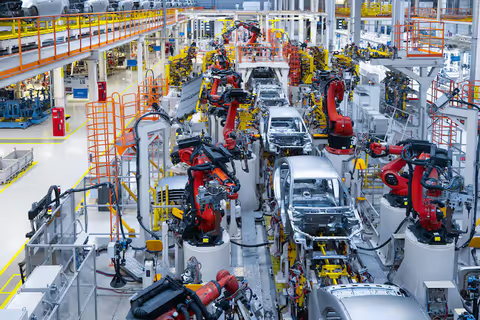
Electric vehicle architecture and system integration
-
High-voltage battery systems and energy storage
-
Electric motors, inverters, and power electronics
-
Embedded control systems and vehicle software
-
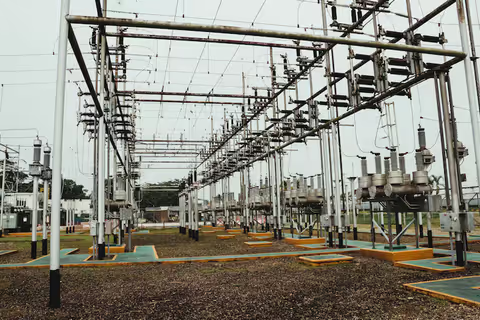
Charging infrastructure and grid interaction
The discipline has expanded rapidly as electric mobility moves from experimental concepts to mainstream transportation ecosystems.
Why Electric Mobility Engineering Matters Today
Electric mobility engineering plays a central role in reshaping transportation, energy usage, and industrial innovation. Its importance continues to grow due to environmental, economic, and technological pressures worldwide.
Key reasons this field matters today include:
-
Reduction of tailpipe emissions and urban air pollution
-
Improved energy efficiency compared to conventional drivetrains
-
Integration of renewable energy with transportation systems
-
Development of advanced power electronics and control algorithms
-
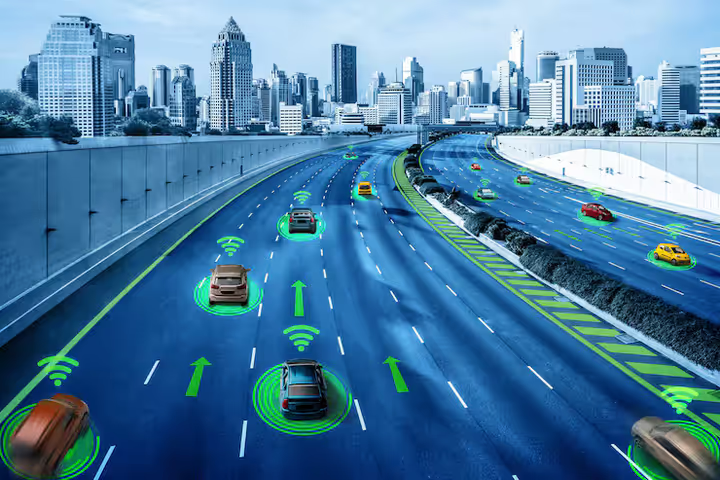
Support for smart cities and intelligent transport networks
This domain affects a wide range of stakeholders:
-
Automotive manufacturers and component developers
-
Power grid planners and energy researchers
-
Urban infrastructure designers
-
Policy makers focused on sustainable mobility
-
Academic institutions and technical research communities
Electric mobility engineering solves challenges related to energy losses, thermal management, battery degradation, charging interoperability, and system reliability—issues that directly influence large-scale adoption.
Key Developments and Trends from the Past Year
The past year has seen notable progress in electric mobility engineering, driven by research breakthroughs and industry-wide system upgrades.
Major developments observed during 2025 include:
-
Advancements in battery chemistry with higher energy density and improved cycle life
-
Wider adoption of silicon carbide power electronics for higher efficiency
-
Increased focus on vehicle-to-grid and bidirectional charging technologies
-
Integration of AI-based battery management systems for predictive diagnostics
-
Expansion of standardized fast-charging protocols across regions
The table below highlights recent technical trends:
| Engineering Area | 2024–2025 Focus |
|---|---|
| Battery Systems | Solid-state research, thermal optimization |
| Power Electronics | High-frequency inverters, reduced losses |
| Software Control | Model-based design, digital twins |
| Charging Systems | Ultra-fast DC charging, grid stability |
| Vehicle Architecture | Modular platforms, lightweight materials |
Research publications and pilot projects from late 2024 through mid-2025 emphasize system-level efficiency rather than isolated component performance.
Regulatory Frameworks and Government Programs in India
Electric mobility engineering in India is shaped by national policies and technical standards aimed at accelerating electrification while maintaining safety and grid stability.
Important regulatory influences include:
-
National Electric Mobility Mission Plan guiding long-term adoption
-
FAME Phase II program supporting technology development and infrastructure growth
-
Automotive Industry Standards governing high-voltage safety and testing
-
Central Electricity Authority guidelines for charging system integration
-
Bureau of Indian Standards norms for batteries, connectors, and power electronics
These frameworks influence engineering decisions related to:
-
Voltage limits and insulation design
-
Battery safety testing and thermal runaway prevention
-
Charger communication protocols
-
Grid compatibility and power quality requirements
Policy alignment ensures that electric mobility engineering developments remain compliant, scalable, and interoperable across regions.
Practical Tools and Knowledge Resources for Electric Mobility Engineering
Engineers and researchers rely on specialized tools and platforms to design, simulate, and analyze electric mobility systems accurately.
Commonly used resources include:
-
Vehicle system simulation software for drivetrain modeling
-
Battery modeling platforms for state-of-charge estimation
-
Power electronics design tools for inverter optimization
-
Charging load calculators for infrastructure planning
-
Technical standards repositories for compliance reference
Examples of tool categories:
| Tool Category | Application Area |
|---|---|
| Simulation Software | Motor control, energy flow |
| Data Analysis Tools | Battery health analytics |
| CAD Platforms | Mechanical and thermal design |
| Embedded Development Kits | Control algorithms |
| Standards Libraries | Regulatory alignment |
These resources help engineers validate designs before physical prototyping, reducing development risk and improving system performance.
Frequently Asked Questions About Electric Mobility Engineering
What skills are essential for electric mobility engineering?
Strong foundations in electrical machines, power electronics, control systems, and embedded software are essential, along with system integration knowledge.
How is electric mobility engineering different from automotive engineering?
Electric mobility engineering emphasizes electrical energy flow, software control, and battery systems, while traditional automotive engineering focuses more on mechanical and combustion systems.
What role does battery management play in electric vehicles?
Battery management systems monitor voltage, temperature, and current to ensure safety, extend lifespan, and maintain consistent performance.
Is electric mobility engineering limited to cars?
No. It applies to two-wheelers, buses, rail systems, marine transport, and even aerospace applications.
How does charging infrastructure affect vehicle design?
Charging power levels, connector standards, and grid constraints directly influence onboard charger design and thermal systems.
Conclusion
Electric mobility engineering represents a foundational shift in how transportation systems are designed, powered, and managed. By combining advanced electrical engineering, intelligent software, and energy science, this field enables efficient, scalable, and future-ready mobility solutions.
As technologies mature and regulations evolve, electric mobility engineering will continue to influence vehicle architecture, infrastructure planning, and energy ecosystems. Understanding its basics, systems, and core knowledge is essential for anyone engaged in modern transportation, power systems, or sustainable engineering development.