Drilling Machines Explained Learn the Basics with Helpful Tips and Information
Drilling machines are essential tools used to create precise round holes in materials such as metal, wood, plastic, and composites. They play a foundational role in industrial manufacturing, mechanical workshops, construction sites, and educational training environments. At their core, these machines operate by rotating a cutting tool known as a drill bit while applying controlled pressure to a solid surface.
The need for drilling machines emerged from early metalworking and woodworking requirements where accurate hole-making was critical for joining parts, fastening components, and assembling mechanical systems. Over time, manual drilling tools evolved into electromechanical systems, and later into computer-controlled CNC drilling machines that deliver extreme accuracy, speed, and repeatability.
Key categories of drilling machines include:
-
Bench drilling machines
-
Pillar or column drilling machines
-
Radial drilling machines
-
CNC drilling systems
-
Multi-spindle drilling machines
Each category supports different production scales, from small workshops to high-volume industrial manufacturing lines.
Why Drilling Machines Matter in Modern Industry
Drilling machines remain a cornerstone of precision manufacturing and engineering automation. Their importance continues to grow due to rising demands for accuracy, production efficiency, and material strength across industries.
Industries directly affected by drilling technology include:
-
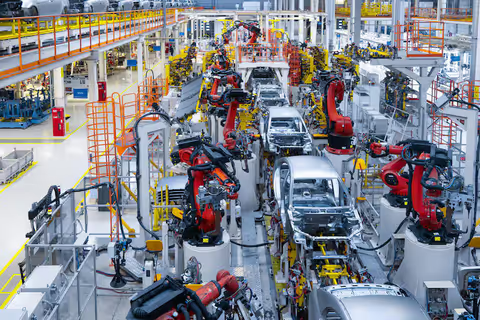
Automotive and electric vehicle manufacturing
-
Aerospace engineering and aircraft assembly
-
Renewable energy equipment production
-
Heavy construction and infrastructure development
-
Electronics and semiconductor fabrication
These machines solve several critical manufacturing challenges:
-
Achieving consistent hole accuracy
-
Improving structural alignment
-
Reducing material stress and vibration
-
Enhancing assembly reliability
-
Supporting automated mass production
Modern drilling machines now integrate with manufacturing execution systems (MES) and smart factory automation platforms, allowing engineers to monitor performance, detect tool wear, and optimize production workflows using real-time industrial data.
Key Advantages at a Glance
| Core Benefit | Industrial Impact |
|---|---|
| High precision | Reduces component failure |
| Automation support | Enhances production speed |
| Digital monitoring | Improves machine reliability |
| Tool compatibility | Expands material flexibility |
Recent Updates and Technology Trends (2024–2025)
The past year has seen strong advancements in industrial drilling technology, driven by automation, sustainability, and artificial intelligence.
Smart CNC Integration – 2024
Manufacturers introduced AI-powered CNC drilling systems capable of predicting tool wear, vibration imbalance, and thermal distortion. These systems now adjust drilling parameters automatically to maintain machining accuracy.
IoT-Enabled Machine Monitoring – Late 2024
Internet of Things (IoT) sensors are now widely embedded in industrial drilling machines, enabling:
-
Predictive maintenance analytics
-
Real-time load monitoring
-
Energy usage optimization
-
Remote diagnostics dashboards
Sustainable Drilling Fluids – 2025 Update
New eco-friendly lubrication and cooling fluids have been introduced to reduce hazardous waste output and improve worker safety compliance across manufacturing facilities.
Hybrid Multi-Axis Drilling Platforms – 2025
Hybrid drilling systems are now combining drilling, tapping, and milling operations into a single programmable platform, reducing production cycle time by over 40% in some factory environments.
How Regulations and Government Policies Affect Drilling Machines
Drilling machines operate under strict industrial safety laws, machinery compliance standards, and environmental regulations, especially in manufacturing-heavy economies like India, Germany, the United States, and Japan.
Workplace Safety Regulations
Factories using drilling machines must comply with occupational safety standards such as:
-
Machine guarding requirements
-
Emergency stop mechanisms
-
Noise exposure limits
-
Operator safety training
-
Electrical insulation protocols
These regulations protect machine operators from mechanical hazards such as tool breakage, flying debris, overheating, and electrical risks.
Environmental Protection Laws
Drilling operations must reduce:
-
Metal dust dispersion
-
Industrial fluid contamination
-
Energy overconsumption
-
Carbon emissions from large motors
Government Manufacturing Programs
Many governments now support:
-
Smart manufacturing adoption
-
Industry 4.0 digital transformation
-
Energy-efficient machinery certification
-
Advanced skills development for machine operators
These programs indirectly shape drilling machine innovation by pushing for cleaner production and intelligent automation.
Helpful Tools, Resources, and Engineering Utilities
Drilling machine performance depends heavily on proper calculations, tool selection, and production planning. The following tools support engineers, technicians, and students in optimizing drilling operations:
Engineering Calculators
-
Spindle speed calculators
-
Feed rate estimation tools
-
Drill size selection charts
-
Torque and power calculators
Digital Measurement Equipment
-
Digital calipers
-
Laser alignment tools
-
Bore gauges
-
Surface roughness testers
Manufacturing Software Platforms
-
CNC simulation software
-
Toolpath optimization programs
-
Predictive maintenance dashboards
-
Production efficiency tracking systems
Educational Resources
-
Mechanical engineering learning portals
-
Industrial machining reference libraries
-
Training simulators for CNC drilling
-
ISO safety compliance documentation
Performance Comparison of Common Drilling Machine Types
| Machine Type | Accuracy Level | Production Capacity | Automation Compatibility |
|---|---|---|---|
| Bench Drill | Moderate | Low | Limited |
| Pillar Drill | High | Medium | Partial |
| Radial Drill | High | Heavy-duty | Moderate |
| CNC Drill | Very High | High-volume | Full |
| Multi-Spindle Drill | High | Mass production | Full |
This comparison shows how advanced drilling systems directly support industrial productivity and lean manufacturing operations.
Frequently Asked Questions About Drilling Machines
What materials can industrial drilling machines handle?
Industrial drilling machines can process metals, alloys, plastics, composites, ceramics, and engineered wood, depending on spindle power, tool configuration, and cooling systems.
How does a CNC drilling machine differ from a conventional one?
CNC drilling machines operate using programmable controllers that automate movement paths, depth control, feed rate, and spindle speed. Conventional machines rely on manual adjustments.
Why is vibration control important in drilling operations?
Excess vibration causes tool wear, inaccurate hole dimensions, surface damage, and increased machine fatigue. Modern drilling machines use dynamic balancing and shock-absorbing systems.
What role does coolant play during drilling?
Coolants regulate cutting temperature, improve tool life, reduce friction, prevent heat deformation, and enhance surface finish during high-speed drilling.
How does predictive maintenance improve drilling machine performance?
Predictive maintenance uses sensor data and AI analytics to detect early signs of bearing wear, motor overload, tool dullness, and spindle misalignment before breakdowns occur.
Conclusion: The Ongoing Role of Drilling Machines in Advanced Manufacturing
Drilling machines continue to evolve from basic hole-making equipment into intelligent, data-driven production assets. With the rise of CNC automation, smart sensors, AI diagnostics, and sustainable engineering practices, modern drilling systems now support the highest levels of manufacturing precision and efficiency.
Their role extends beyond workshops into automated production lines supporting sectors like electric mobility, aerospace, medical devices, and renewable energy infrastructure. As industries demand tighter tolerances, faster throughput, and lower environmental impact, drilling machines remain essential to achieving these goals.
Through continued innovation in safety systems, materials engineering, and digital integration, drilling machines will remain a central pillar of future-ready manufacturing ecosystems.