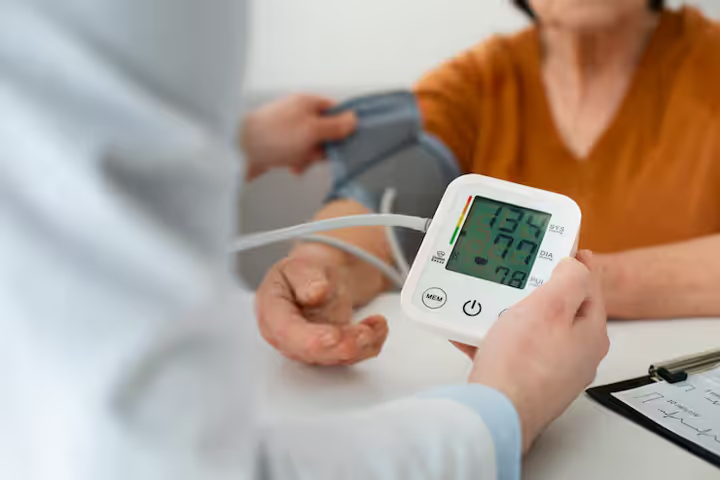
Blood Pressure Monitoring Guide: Basics, Insights, Tips, and Practical Knowledge
Blood pressure monitoring refers to the process of measuring the force of blood against artery walls, typically expressed as systolic over diastolic pressure (e.g., 120/80 mmHg). It is a foundational component of cardiovascular health assessment and plays a critical role in detecting conditions such as hypertension (high blood pressure) and hypotension (low blood pressure).
In recent years, the importance of blood pressure monitoring has increased significantly due to the global rise in lifestyle-related conditions, including obesity, diabetes, and stress-related disorders. According to global health research, hypertension affects over one billion people worldwide, often without noticeable symptoms. This has led to a growing emphasis on early detection and routine monitoring.
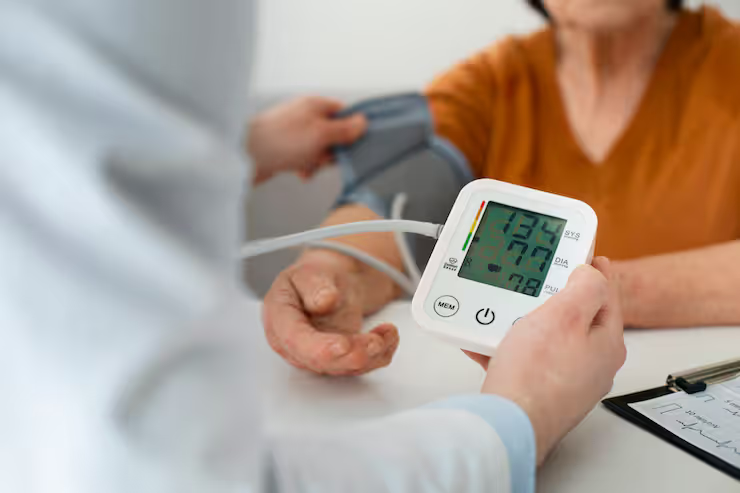
Technological advancements have also reshaped this space. Digital monitors, wearable devices, and mobile health applications now enable individuals to track blood pressure from home with improved accuracy and convenience. The shift toward preventive healthcare, combined with increased health awareness after the COVID-19 pandemic, has further accelerated adoption.
Comparing different blood pressure monitoring methods—manual vs. digital, clinic-based vs. home-based—is essential for understanding accuracy, usability, cost considerations, and suitability for different populations.
Who It Affects and What Problems It Solves
Blood pressure monitoring affects a wide range of individuals, including:
- Adults over 40, who are at higher risk of hypertension
- Individuals with chronic conditions such as diabetes, kidney disease, or heart disorders
- Pregnant women, where monitoring helps detect complications like preeclampsia
- Young adults experiencing stress, poor diet, or sedentary lifestyles
- Patients undergoing treatment for cardiovascular conditions
Healthcare providers, caregivers, and public health systems also rely on accurate blood pressure monitoring to guide treatment decisions and preventive strategies.
Uncontrolled blood pressure is a major risk factor for heart attacks, strokes, and kidney failure. The challenge is that hypertension is often asymptomatic, meaning many individuals remain undiagnosed until complications arise.
Problems It Solves
Blood pressure monitoring helps address several critical healthcare challenges:
- Early Detection: Identifies hypertension before severe complications develop
- Treatment Management: Tracks the effectiveness of medications or lifestyle changes
- Risk Reduction: Helps prevent cardiovascular events through timely intervention
- Data Tracking: Enables long-term health monitoring and trend analysis
- Patient Awareness: Encourages proactive health behavior and adherence to treatment
Regular monitoring transforms healthcare from reactive to preventive, reducing long-term healthcare costs and improving quality of life.
Recent Updates and Trends
Over the past year, several notable developments have influenced blood pressure monitoring:
- Growth of Wearable Devices: Smartwatches and fitness trackers are integrating blood pressure estimation features, although accuracy varies and clinical validation is ongoing
- Remote Patient Monitoring (RPM): Healthcare systems increasingly use connected devices to monitor patients remotely, especially for chronic disease management
- AI and Data Analytics: Artificial intelligence is being applied to detect patterns in blood pressure data, improving predictive diagnostics
- Guideline Updates: Medical organizations continue refining thresholds for hypertension classification, emphasizing individualized care
- Home Monitoring Adoption: Post-pandemic trends show a sustained increase in home-based monitoring due to convenience and reduced clinic visits
There is also growing awareness about “white coat hypertension” (elevated readings in clinical settings) and “masked hypertension” (normal readings in clinics but high at home), reinforcing the importance of multiple measurement methods.
Comparison of Blood Pressure Monitoring Methods
| Feature | Manual (Aneroid) Monitor | Digital Monitor | Wearable Devices | Ambulatory Monitoring (24h) |
|---|---|---|---|---|
| Accuracy | High (if used correctly) | High (validated devices) | Moderate (varies widely) | Very high |
| Ease of Use | Requires training | User-friendly | Very easy | Requires setup by professionals |
| Portability | Moderate | High | Very high | Moderate |
| Cost | Low to moderate | Moderate | Moderate to high | High |
| Continuous Monitoring | No | No | Limited | Yes |
| Clinical Use | Common | Increasingly common | Emerging | Gold standard |
| User Dependency | High | Low | Very low | Low |
| Best For | Professionals | Home users | Tech-savvy users | Detailed diagnosis |
Key Insights from Comparison
- Digital monitors dominate home usage due to simplicity
- Ambulatory monitoring provides the most comprehensive data
- Wearables are evolving but not yet fully reliable for clinical decisions
- Manual monitors remain important in clinical settings
Laws and Policies Affecting Blood Pressure Monitoring (India Context)
Blood pressure monitoring in India is influenced by healthcare regulations, medical device standards, and national health programs.
Regulatory Framework
- Medical Device Rules (2017): Blood pressure monitors are classified as medical devices and must meet safety and quality standards
- Bureau of Indian Standards (BIS): Provides certification guidelines for device accuracy and reliability
- Central Drugs Standard Control Organization (CDSCO): Oversees approval and regulation of medical devices
Government Programs
- National Programme for Prevention and Control of Cancer, Diabetes, Cardiovascular Diseases and Stroke (NPCDCS): Promotes routine screening, including blood pressure checks
- Ayushman Bharat Initiative: Encourages preventive healthcare and access to diagnostics at primary health centers
Practical Guidance
- For home users, choose validated digital monitors approved under regulatory frameworks
- For clinical diagnosis, ambulatory monitoring is often recommended for accurate assessment
- For rural or low-resource settings, manual devices remain widely used due to affordability
- For high-risk patients, regular monitoring (daily or weekly) is advised under medical supervision
Compliance with regulatory standards ensures device reliability and patient safety.
Tools and Resources
Several tools and resources support effective blood pressure monitoring:
Devices
- Digital upper-arm blood pressure monitors (clinically validated models recommended)
- Wrist monitors (portable but less accurate if not positioned correctly)
- Ambulatory monitoring systems (used in clinical settings)
Mobile Applications
- Blood pressure tracking apps for logging readings
- Health ecosystem apps integrated with wearable devices
- Reminder apps for medication and measurement schedules
Online Resources
- Government health portals providing guidelines and awareness
- Educational websites offering lifestyle advice and monitoring techniques
- Research databases for updated clinical recommendations
Calculators and Templates
- Blood pressure log templates (daily/weekly tracking)
- Cardiovascular risk calculators (based on BP and other factors)
- Lifestyle tracking sheets (diet, exercise, stress levels)
Using these tools improves consistency, accuracy, and long-term health tracking.
Frequently Asked Questions (FAQ)
What is the ideal blood pressure range for adults?
A normal blood pressure reading is typically around 120/80 mmHg. Values above 130/80 mmHg may indicate hypertension, depending on guidelines and individual health conditions.
How often should blood pressure be monitored?
For healthy individuals, periodic checks every few months may suffice. Those with hypertension or risk factors may need daily or weekly monitoring as advised by a healthcare professional.
Are home blood pressure monitors accurate?
Validated digital monitors can provide accurate readings when used correctly. Proper cuff placement and consistent measurement conditions are essential.
What is the difference between systolic and diastolic pressure?
Systolic pressure measures the force during heartbeats, while diastolic pressure measures the force when the heart is at rest between beats.
Can lifestyle changes reduce high blood pressure?
Yes. Regular exercise, reduced salt intake, balanced diet, stress management, and avoiding tobacco can significantly lower blood pressure levels.
Conclusion
Blood pressure monitoring is a critical component of preventive healthcare, enabling early detection and effective management of cardiovascular risks. Data consistently shows that regular monitoring—especially when combined with lifestyle modifications can significantly reduce the incidence of heart disease and stroke.
Among available methods, digital monitors offer the best balance of accuracy and convenience for home users, while ambulatory monitoring remains the most reliable for clinical diagnosis. Wearable technologies show promise but require further validation for widespread medical use.
The most effective approach is a combination of regular monitoring, adherence to medical advice, and use of validated tools. For most individuals, a clinically approved digital monitor used consistently at home provides a practical and reliable solution.