Biogas Production Systems Explained: Learn Insights, Advice, and Key Differences
Biogas production units are systems designed to convert organic waste such as agricultural residue, animal manure, and food waste into usable energy in the form of methane-rich gas. This process occurs through anaerobic digestion, where microorganisms break down biodegradable material in the absence of oxygen. The resulting biogas can be used for cooking, electricity generation, heating, or even upgraded to bio-CNG.
In recent years, the relevance of biogas systems has increased due to growing concerns around waste management, fossil fuel dependency, and climate change. Countries like India are actively promoting decentralized renewable energy solutions, making biogas units a practical option for both rural and urban settings. Rising energy costs and the push for sustainable agriculture have also accelerated adoption.
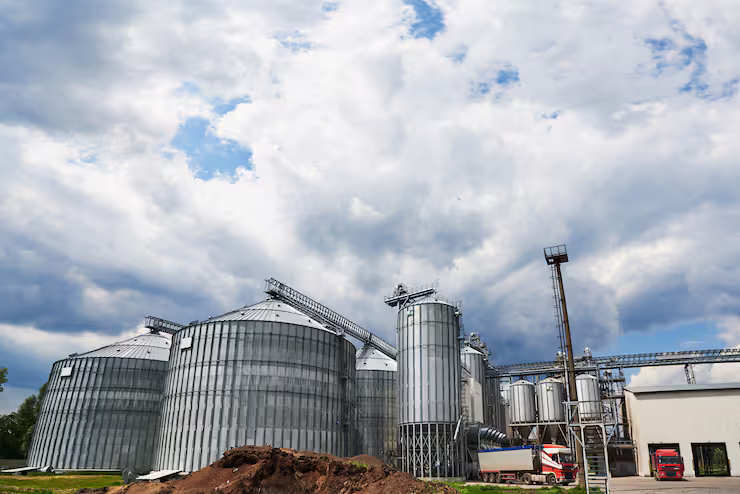
Technological advancements have improved efficiency, scalability, and maintenance of biogas plants. From small household digesters to large industrial-scale systems, there is a wide spectrum of solutions available today. This comparison matters because choosing the right type of biogas unit directly affects cost efficiency, output reliability, and environmental impact.
Who It Affects and What Problems It Solves
Biogas production units impact a wide range of stakeholders. Farmers and rural households benefit significantly, as they can convert livestock waste into cooking fuel and organic fertilizer. Urban municipalities and industries also use biogas systems to manage food waste, sewage sludge, and organic industrial byproducts. Small businesses, such as dairy farms and food processing units, increasingly rely on biogas for reducing energy costs and waste disposal challenges.
Additionally, governments and environmental agencies see biogas as a strategic tool for reducing greenhouse gas emissions. Methane, which would otherwise escape into the atmosphere from decomposing waste, is captured and used productively. This contributes to climate mitigation efforts and aligns with renewable energy targets.
Problems It Solves
- Waste Management Challenges: Organic waste accumulation leads to environmental pollution. Biogas systems convert waste into energy and fertilizer.
- Energy Access Issues: Rural areas often lack reliable energy sources. Biogas provides decentralized energy solutions.
- Rising Fuel Costs: Traditional fuels like LPG and diesel are expensive. Biogas offers a cost-effective alternative.
- Environmental Pollution: Open dumping and burning of waste release harmful gases. Biogas reduces emissions and improves sanitation.
- Soil Fertility Decline: The byproduct (digestate) acts as a nutrient-rich organic fertilizer, improving soil health.
Recent Updates and Trends
Over the past year, the biogas sector has seen notable developments driven by sustainability goals and policy support:
- Expansion of Bio-CNG Projects: Many countries, including India, are scaling up compressed biogas (CBG) plants to replace fossil fuels in transportation.
- Integration with Smart Waste Systems: Urban areas are integrating biogas plants with municipal waste collection systems, improving efficiency.
- Technological Improvements: New digester designs, such as prefabricated and modular units, are reducing installation time and maintenance requirements.
- Digital Monitoring: IoT-based monitoring systems are being introduced to track gas production, temperature, and system health in real time.
- Public-Private Partnerships (PPP): Increased collaboration between governments and private companies is accelerating infrastructure development.
These updates reflect a shift toward more scalable, efficient, and data-driven biogas solutions.
Comparison of Biogas Production Units
| Parameter | Fixed Dome Plant | Floating Drum Plant | Plug Flow Digester | Balloon/Bag Digester | Industrial Biogas Plant |
|---|---|---|---|---|---|
| Structure Type | Underground dome | Movable drum | Long horizontal tank | Flexible plastic bag | Large engineered system |
| Initial Cost | Moderate | Higher | Moderate | Low | Very high |
| Maintenance | Low | Medium (corrosion risk) | Low | Medium | High |
| Gas Storage | Fixed | Adjustable | Limited | Flexible | Advanced storage systems |
| Lifespan | Long (20+ years) | Medium | Medium | Short | Long |
| Suitable Scale | Household/Rural | Small to medium | Farms | Temporary/small setups | Industrial/Commercial |
| Efficiency | Stable | Good | High for slurry input | Variable | Very high |
| Installation Complexity | High | Medium | Medium | Low | Very high |
| Climate Suitability | Warm regions | Moderate climates | Wide range | Warm climates | Controlled environments |
Laws or Policies and Practical Guidance
Biogas production units are influenced by national and regional policies, especially in countries focusing on renewable energy and waste management.
Regulatory Framework
- Renewable Energy Policies: Governments often include biogas under renewable energy targets, offering subsidies or incentives.
- Waste Management Rules: Regulations may require proper treatment of organic waste, encouraging adoption of biogas systems.
- Environmental Standards: Emission norms and pollution control guidelines affect plant design and operation.
- Agricultural Policies: Incentives for organic farming indirectly support biogas adoption due to fertilizer byproducts.
Practical Guidance
- Households and Small Farms: Fixed dome or balloon digesters are suitable due to lower cost and simpler operation.
- Medium-Scale Farms: Plug flow digesters provide better efficiency for continuous waste input.
- Urban or Industrial Use: Industrial biogas plants are more appropriate due to higher capacity and advanced processing.
- Cold Regions: Systems with temperature control or insulation are recommended to maintain efficiency.
- Policy Incentives: Users should evaluate local subsidy programs and compliance requirements before installation.
Tools and Resources
Several tools and resources can help in planning, designing, and managing biogas production units:
- Biogas Calculators: Estimate gas output based on feedstock type and quantity.
- Design Software: Tools for sizing digesters and optimizing system layout.
- Government Portals: Provide guidelines, subsidy details, and technical manuals.
- Monitoring Systems: IoT-based platforms for tracking performance metrics.
- Research Publications: Academic journals and reports offering data-driven insights.
- Training Programs: Workshops and online courses on installation and maintenance.
- Templates and Checklists: Useful for project planning and compliance documentation.
Frequently Asked Questions (FAQ)
What is the most efficient type of biogas plant?
Efficiency depends on scale and input type. Industrial plants and plug flow digesters generally offer higher efficiency for continuous operations.
How much waste is required to run a household biogas unit?
A small household unit typically requires 20–50 kg of organic waste daily, depending on design and gas demand.
Is biogas safe for cooking and electricity?
Yes, when properly managed, biogas is a safe and reliable fuel for cooking and can also be used in generators for electricity.
What is the lifespan of a biogas plant?
Fixed dome plants can last over 20 years, while flexible bag digesters may last 5–10 years depending on material quality.
Are there government incentives for biogas systems?
Many countries offer subsidies, tax benefits, or technical support programs to encourage adoption of biogas technology.
Conclusion
Biogas production units represent a practical and scalable solution for addressing energy needs, waste management challenges, and environmental concerns. The comparison between different types of systems shows that no single solution fits all scenarios. Fixed dome plants are cost-effective and durable for rural households, while industrial systems provide high efficiency for large-scale operations.
Recent trends indicate a strong shift toward integrated, technology-driven solutions supported by policy incentives and sustainability goals. Data from renewable energy initiatives consistently highlight biogas as a reliable contributor to decentralized energy systems and emission reduction strategies.
The most suitable biogas unit depends on factors such as scale, budget, feedstock availability, and regulatory environment. For small users, simple designs offer affordability and ease of use, while larger operations benefit from advanced systems with higher output and monitoring capabilities.
Overall, biogas systems are a viable long-term investment in sustainable infrastructure, offering both environmental and economic benefits when implemented appropriately.