Autonomous Vehicle Guide: Automation Levels, Sensors, Software and Driving Capabilities
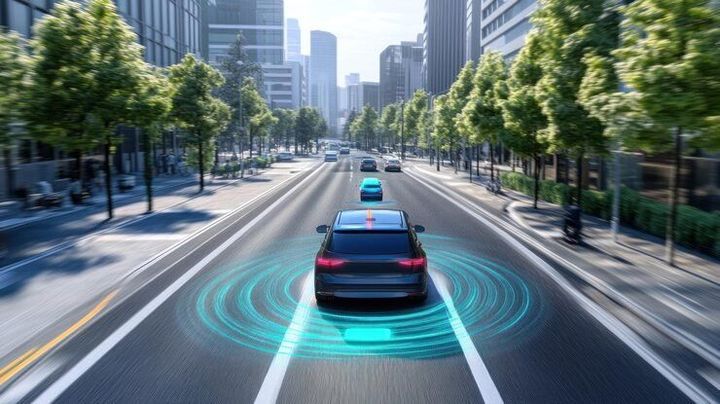
An Autonomous Vehicle Guide explains how vehicles use sensors, computer software, and automated control systems to perform some or all driving tasks. These vehicles are developed from advances in robotics, computer vision, artificial intelligence, and vehicle engineering. Their purpose is to help a vehicle observe its surroundings, interpret road conditions, plan movements, and control steering, acceleration, and braking under defined conditions.
Context
An Autonomous Vehicle Guide explains how vehicles use sensors, computer software, and automated control systems to perform some or all driving tasks. These vehicles are developed from advances in robotics, computer vision, artificial intelligence, and vehicle engineering. Their purpose is to help a vehicle observe its surroundings, interpret road conditions, plan movements, and control steering, acceleration, and braking under defined conditions.
The development of autonomous vehicles has involved research laboratories, automotive manufacturers, universities, and technology companies. Early experiments explored automated steering and vehicle guidance, while modern systems combine cameras, radar, computing hardware, digital maps, and machine-learning methods. The level of automation varies considerably, and a vehicle with driver-assistance features is not necessarily capable of driving independently.
Understanding Autonomous Driving Levels
The Society of Automotive Engineers (SAE) defines six driving automation levels, from Level 0 to Level 5. These levels describe how driving tasks are divided between a human driver and an automated system.
| SAE level | General description | Human role |
|---|---|---|
| Level 0 | No driving automation | Driver performs driving tasks |
| Level 1 | Driver assistance | System assists with steering or speed control |
| Level 2 | Partial driving automation | System may control steering and speed together; driver supervises |
| Level 3 | Conditional driving automation | System performs driving tasks under specific conditions; driver must respond when requested |
| Level 4 | High driving automation | System performs driving tasks within its defined operating conditions |
| Level 5 | Full driving automation | System is designed to perform driving tasks in all conditions a human driver could reasonably manage |
These levels describe driving capability rather than a simple ranking of vehicle quality. A Level 2 system still requires active driver supervision, even when steering and speed are controlled together. Levels 3 and above involve different responsibilities, depending on the system and the conditions in which it operates.
Main Components of an Autonomous Vehicle
Autonomous driving depends on several systems working together. Sensors gather information, software interprets it, planning systems determine an appropriate movement, and vehicle controls carry out the instructions.
Key components include cameras for visual information, radar for measuring distance and relative movement, and sometimes lidar, which uses laser pulses to measure surrounding objects. Onboard computers process sensor information, while control systems operate steering, acceleration, and braking.
Importance
Autonomous vehicle technology matters because road transportation involves complex decisions, changing conditions, and potential hazards. Researchers are examining whether automated systems can support safer driving, improve transport access, manage vehicle movements, and reduce some forms of human error. The actual results depend on the system's design, operating environment, maintenance, and interaction with other road users.
The technology affects private motorists, commercial transport operators, public transport planners, pedestrians, cyclists, regulators, and emergency responders. It also raises practical questions about responsibility, public confidence, accessibility, infrastructure, and the handling of information collected by vehicle sensors.
Driving Challenges and Potential Uses
Human drivers must monitor lanes, identify road signs, judge distances, recognize hazards, and respond to other vehicles. Automated systems attempt to perform parts of these tasks using sensor data and software models, but unusual situations can remain difficult to interpret.
Potential applications include:
Highway driving assistance: Systems help maintain a lane or a following distance under specified conditions.
Automated parking: A vehicle controls some parking movements while the driver supervises or authorizes the process.
Driverless shuttles: Vehicles may transport passengers along defined routes within a controlled operating area.
Freight transport: Automated driving technology is being studied for selected logistics and highway operations.
Accessible transportation: Automation may eventually help some people who have difficulty driving, although availability and suitability vary.
These applications do not all represent the same automation level. A vehicle that parks itself or follows a highway lane may still require a human to handle most driving situations.
Limitations and Safety Considerations
Autonomous vehicles must respond to pedestrians, cyclists, temporary roadworks, emergency vehicles, poor visibility, and unpredictable traffic. Heavy rain, fog, glare, damaged road markings, unusual objects, or sensor obstruction can affect system performance.
Software faults, sensor failures, incorrect interpretations, and cybersecurity weaknesses also require attention. Automated systems therefore need testing, monitoring, maintenance, and clearly defined operating limits. Their presence does not mean that every journey can be completed without human involvement.
Recent Updates
Developments from 2024 through 2026 have included wider testing of automated driving systems, continued expansion of advanced driver-assistance features, and efforts to improve the reliability of perception and decision-making software. Progress differs by manufacturer, vehicle type, and country, so the availability of a particular capability should not be assumed across all vehicles.
Advances in Sensors and Driving Software
Modern autonomous vehicle systems may combine camera images, radar measurements, lidar point clouds, and information from other vehicle systems. Combining these sources can help software assess the positions and movements of surrounding objects, although each sensor has limitations.
Artificial intelligence is increasingly important in recognizing road scenes, interpreting complex situations, and predicting how other road users might move. Developers also use simulation environments to test software against a wide range of road layouts and traffic events before or alongside physical testing.
High-definition maps and satellite navigation may support some automated driving systems. However, maps can become outdated, and satellite positioning may be less reliable in tunnels, dense urban areas, or locations with signal interference. Some systems therefore combine several sources of location and road information.
Testing, Monitoring, and Deployment
Automated driving programs increasingly distinguish between controlled trials and regular public-road operation. Testing may take place on closed tracks, in simulation, or on selected roads under defined conditions. More advanced systems may also use remote monitoring or support procedures when a vehicle encounters a situation it cannot handle.
Another development is the growing focus on driver monitoring for systems that require human supervision. Cameras or other sensors may check whether a driver is attentive and ready to take control. These features can support supervision, but they do not eliminate the driver's responsibility when the system requires it.
Laws or Policies
Autonomous vehicle rules differ across countries and may cover vehicle approval, road testing, driver responsibility, insurance, data protection, and cybersecurity. A technology permitted for testing in one location may not be approved for general public use elsewhere. The automation level alone does not establish whether a vehicle can legally operate on a particular road.
Autonomous Vehicle Rules in India
In India, motor vehicles are governed primarily by the Motor Vehicles Act, 1988, and the Central Motor Vehicles Rules, 1989, along with relevant amendments, standards, and government notifications. Vehicle approval, registration, roadworthiness, and driving requirements operate within this legal framework.
Advanced driver-assistance features may be available in vehicles sold in India, but this does not mean that fully driverless vehicles are generally authorized for unrestricted public-road use. Automated vehicle testing or deployment may require applicable approvals and compliance with the rules relevant to the vehicle and location.
India's road environment includes mixed traffic, varied road markings, pedestrians, two-wheelers, animals, and changing road conditions. These factors make local testing and evaluation important when determining whether an automated system is suitable for a particular operating environment.
Safety, Liability, and Data Protection
Responsibility after a collision may depend on the circumstances, applicable traffic law, the driver's actions, the vehicle's design, and evidence about system operation. Questions may arise about manufacturer responsibility, software defects, insurance coverage, and whether the driver was expected to supervise the system.
Autonomous vehicles may collect video, location, diagnostic, and other operational information. India's Digital Personal Data Protection Act, 2023, and associated rules and commencement arrangements form part of the country's developing data-protection framework. The requirements that apply depend on the provisions in force and the circumstances of data collection and use.
Tools and Resources
Several technical and public resources help explain autonomous vehicle systems, their safety limits, and their legal status. Their purposes differ, so information about a specific vehicle should be checked against its documentation and the applicable rules.
Technical Standards and Government Information
The SAE International J3016 standard provides terminology for driving automation levels. It helps distinguish driver assistance from systems that perform the full driving task within defined operating conditions.
India's Ministry of Road Transport and Highways publishes motor vehicle rules, notifications, and transport-related information. The International Organization for Standardization also publishes standards relevant to vehicle safety, functional safety, and cybersecurity, although some technical documents require specialized interpretation.
Simulation and Learning Resources
Simulation tools allow developers to create virtual road scenes and examine how automated systems respond to traffic, weather, and unusual events. Examples used in research and development include CARLA, an open-source driving simulator, and MATLAB and Simulink, which support modeling and system testing.
For general readers, vehicle owner manuals, manufacturer safety documentation, and government road-safety publications can explain the capabilities and restrictions of particular systems. These sources are especially relevant when distinguishing between a feature's advertised name and its actual operating requirements.
FAQs
What is an autonomous vehicle?
An autonomous vehicle uses automated systems to perform some or all driving tasks. Its capabilities depend on its automation level, sensors, software, and defined operating conditions.
What are the six levels of autonomous driving?
SAE Levels 0 through 5 range from no driving automation to full driving automation. The levels describe how driving tasks and supervision are divided between the human and the system.
How do autonomous vehicle sensors work?
Cameras capture visual information, radar measures distance and relative movement, and lidar uses laser pulses to measure surroundings. Software combines available data to identify objects and support driving decisions.
Are autonomous vehicles legal in India?
Vehicle testing and road use depend on applicable motor vehicle laws, approvals, and operating conditions. Driver-assistance features do not automatically authorize a vehicle to operate without a driver on public roads.
Can an autonomous vehicle drive in every weather condition?
No. Rain, fog, glare, sensor obstruction, and unclear road markings can affect system performance. Each system has defined operating limits and may require human intervention or a safe stop when conditions exceed those limits.
Conclusion
Autonomous vehicles combine sensors, computing hardware, and software to perform driving tasks at different levels of automation. Their capabilities depend on operating conditions, system design, testing, and the division of responsibility between the vehicle and a human driver. Laws and approval requirements vary by country, including India, and continue to shape testing and deployment. Understanding automation levels and system limitations provides a clear basis for interpreting autonomous driving technology.