AI in Personal Robots Explained: Features, Functions, Applications, Benefits and Limitations
Artificial intelligence (AI) in personal robots refers to the technologies that help robots recognize their surroundings, interpret instructions, process information, and perform selected tasks. Personal robots are designed to assist individuals in homes, educational settings, and other everyday environments. Their development combines robotics, computer science, sensors, machine learning, and human-computer interaction.
Context
Artificial intelligence (AI) in personal robots refers to the technologies that help robots recognize their surroundings, interpret instructions, process information, and perform selected tasks. Personal robots are designed to assist individuals in homes, educational settings, and other everyday environments. Their development combines robotics, computer science, sensors, machine learning, and human-computer interaction.
Early personal robots generally followed fixed instructions and performed limited actions. As computing capabilities and AI techniques developed, some robots gained the ability to recognize objects, respond to spoken commands, navigate indoor spaces, and adapt to familiar situations. These developments have expanded the role of personal robots beyond simple mechanical movement.
Understanding AI Features in Personal Robots
AI enables a robot to process information gathered through cameras, microphones, touch sensors, and other components. Software interprets this information and helps the robot select an appropriate response within its programmed capabilities.
Common AI features include:
Speech recognition: Identifies spoken words and converts them into instructions that the robot can process.
Computer vision: Helps identify objects, people, obstacles, and visual patterns.
Navigation: Uses sensor information and mapping techniques to move through an environment.
Machine learning: Allows a system to identify patterns from data and improve certain tasks through training or experience.
Natural language processing: Helps interpret questions, commands, and conversational language.
Task planning: Organizes supported activities into steps, such as moving to a location and performing a specific action.
Not every personal robot includes all these features. A robot designed to clean floors has different requirements from a social companion robot or a robotic device intended to support people with limited mobility.
How AI Personal Robots Developed
Personal robotics emerged from wider developments in industrial automation, research laboratories, consumer electronics, and artificial intelligence. Early domestic robots focused on specific repetitive tasks, while research platforms explored navigation, object recognition, and interaction with people.
Modern systems can combine several capabilities in one device, although performance varies considerably. Some robots operate mainly through predetermined rules, while others use trained AI models to interpret inputs or adjust their behavior. AI does not automatically give a robot human-level understanding, independent judgment, or the ability to perform every physical task.
Importance
AI in personal robots matters because everyday environments involve changing conditions, varied objects, and different human needs. A fixed-function machine may struggle when an obstacle appears in an unexpected location, whereas a robot with suitable sensors and navigation software may detect the obstacle and choose another route.
These technologies can support household routines, learning activities, accessibility, and companionship. Their usefulness depends on the task, the surrounding environment, the reliability of the hardware, and the level of human supervision required.
Everyday Applications of Personal Robots
Personal robots can be used in several settings:
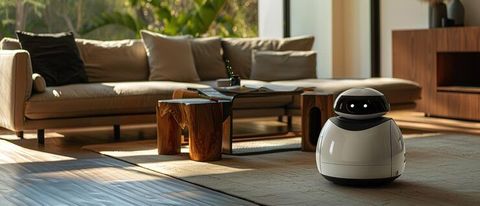
Household assistance: Robotic vacuum cleaners and floor-mopping devices navigate rooms and perform routine cleaning.
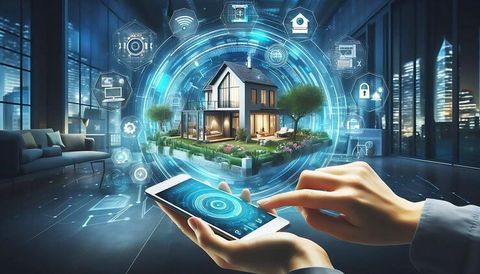
Home monitoring: Some mobile robots allow users to check selected areas of a home through connected cameras and sensors.
Education: Programmable robots help learners explore coding, logic, engineering, and problem-solving.
Accessibility support: Certain robotic devices assist with movement, object handling, or specific daily activities.
Social interaction: Companion robots can provide conversation, reminders, games, or structured activities.
Personal organization: Some robots can respond to commands, provide information, or support simple routines through connected applications.
These applications have different levels of complexity. A cleaning robot operating in a familiar room does not face the same challenges as a robot expected to pick up unfamiliar objects or move safely around people.
Benefits and Limitations
AI can make personal robots more adaptable to changing surroundings and different instructions. Automated navigation may reduce the need for continuous manual control, while voice interfaces can make certain functions easier to access.
However, personal robots also have practical limitations. They may misinterpret speech, fail to recognize an unfamiliar object, lose navigation accuracy, or struggle with stairs, clutter, poor lighting, and unexpected movements. Physical tasks also depend on mechanical design, battery capacity, sensor quality, and available computing resources.
The following table summarizes common capabilities and constraints.
| Feature | Potential benefit | Common limitation |
|---|---|---|
| Speech recognition | Responds to spoken instructions | Background noise can interfere |
| Computer vision | Identifies selected objects | Lighting and unusual objects affect accuracy |
| Navigation | Moves through mapped areas | Clutter may disrupt movement |
| Machine learning | Detects patterns in data | Results depend on training data |
| Task planning | Organizes supported actions | Unexpected situations may cause errors |
| Connected applications | Enables remote controls and updates | Network or privacy risks may arise |
Personal robots should therefore be understood as tools with specific capabilities rather than complete substitutes for human judgment and physical assistance.
Recent Updates
Developments in AI personal robots from 2024 through 2026 have increasingly focused on combining language models, visual recognition, navigation, and physical action. Research in embodied AI explores how systems can connect digital reasoning with movement and interaction in the real world. At the same time, consumer robots continue to develop around more specialized tasks, including cleaning, monitoring, and household interaction.
AI Models and Human-Robot Interaction
Some newer robotic systems use multimodal AI, which processes more than one type of information, such as text, images, and audio. This approach can help a robot connect a spoken instruction with visible objects or surroundings. However, recognizing an instruction correctly does not necessarily mean that the robot can carry it out physically.
Research into vision-language-action models aims to connect visual observations and language instructions with robot movements. These systems are being explored in research and selected practical settings, but performance in uncontrolled homes remains challenging. Tasks involving delicate objects, unfamiliar layouts, or multiple steps can require considerable training and supervision.
Home Robotics and On-Device Processing
Personal robots increasingly combine sensors, mobile applications, wireless connectivity, and automated decision-making. Some devices process selected information locally, while others rely on remote computing systems. Local processing may reduce the amount of data transmitted for certain functions, but it does not automatically eliminate privacy or security risks.
Manufacturers also provide software updates that may change a robot's features, compatibility, or behavior. The extent of these changes depends on the device and its software architecture. Users may need to review update policies, connected-account requirements, and the period during which software support is available.
Laws or Policies
AI personal robots are affected by several areas of regulation, including product safety, radio communications, data protection, consumer protection, and, in some cases, rules governing AI systems. The applicable requirements depend on the robot's design, intended use, location, and whether it records information or connects to external networks.
AI and Robotics Rules in India
India's approach to AI and robotics includes general laws and sector-specific requirements rather than one comprehensive law covering every personal robot. The Information Technology Act, 2000, and applicable rules address certain electronic activities and information-related matters. Product-specific requirements may also apply to electrical safety, wireless equipment, batteries, and other components.
India's Digital Personal Data Protection Act, 2023, forms part of the country's data-protection framework. Its applicable provisions and associated rules depend on commencement arrangements and the circumstances of data processing. A robot that records identifiable people or sends personal information to an external platform may raise privacy considerations.
Privacy, Safety, and Responsible Use
Personal robots may collect audio, images, location information, usage records, or household activity data. The information collected depends on the device and its settings. Users should understand where data is processed, how long it is retained, who can access it, and whether it is shared with external providers.
Physical safety is equally important. A robot should be appropriate for its intended environment, particularly around children, older adults, pets, stairs, heat, water, and fragile objects. Users should follow the manufacturer's safety instructions and avoid assuming that obstacle detection or automated decision-making will prevent every incident.
Tools and Resources
Several resources help people understand, evaluate, program, and maintain AI personal robots. Their relevance depends on whether the goal is household use, education, research, or software development.
Robotics Learning and Development Platforms
ROS 2 (Robot Operating System 2) is a software framework used to develop robotic applications. It supports communication between software components and can be used for navigation, sensor integration, and robot control. It is primarily a development framework rather than a ready-made personal robot.
Google AI and machine learning documentation can help readers understand concepts such as machine learning, computer vision, and language models. Educational robotics platforms also provide programming exercises that demonstrate how sensors, motors, and software work together.
Evaluation and Maintenance Tools
Before selecting or using a personal robot, it can be useful to examine:
Capability lists: Identify supported tasks, navigation functions, and voice controls.
Compatibility information: Check operating-system requirements, wireless connectivity, and application support.
Privacy settings: Review microphone, camera, account, and data-sharing controls.
Maintenance schedules: Check cleaning requirements, battery care, replacement parts, and software updates.
Safety documentation: Understand operating limits, supervision requirements, and environmental restrictions.
A comparison spreadsheet can record each device's functions, supported languages, operating time, maintenance needs, privacy settings, and compatibility. These details provide a structured basis for understanding differences between personal robot models.
FAQs
What is AI in personal robots?
AI in personal robots refers to software that helps robots interpret information, recognize objects, understand supported instructions, and select actions. The specific capabilities depend on the robot's hardware and AI system.
What are the main features of AI personal robots?
Common features include speech recognition, computer vision, navigation, machine learning, natural language processing, and task planning. Not every robot includes all these capabilities.
How are AI personal robots used at home?
Home applications include floor cleaning, selected monitoring tasks, voice-based interaction, reminders, and certain forms of accessibility support. The tasks a robot can perform depend on its design and operating environment.
What are the limitations of AI in personal robots?
Limitations include recognition errors, restricted physical abilities, battery constraints, privacy risks, and difficulty handling unfamiliar situations. Human supervision may remain necessary for tasks involving safety or complex decisions.
Are AI personal robots safe to use around people?
Safety depends on the device, its design, its environment, and how it is used. Sensors and automated controls can reduce certain risks, but they cannot prevent every collision, malfunction, or unexpected action.
Conclusion
AI in personal robots combines sensing, software, machine learning, and physical movement to support selected everyday tasks. Applications range from household cleaning and education to interaction and accessibility support. Despite improvements in language processing, vision, and navigation, robots remain limited by their hardware, training, environment, and safety requirements. Privacy, maintenance, and applicable regulations are also important parts of understanding their use.