AI in Education Overview: Learning Platforms, Classroom Uses, Benefits and Challenges
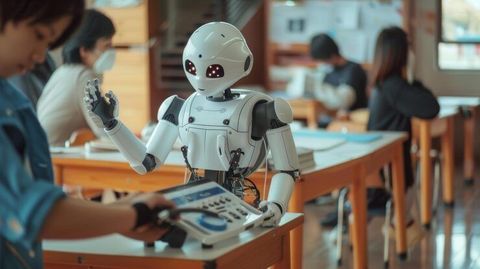
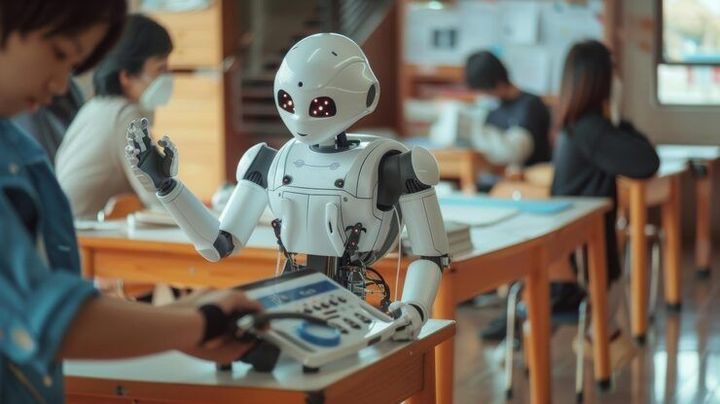
Artificial intelligence (AI) in education refers to the use of computer systems that can analyze information, recognize patterns, generate content, or provide responses to support teaching and learning. AI in education can appear in learning platforms, classroom applications, assessment systems, tutoring tools, language-learning applications, and educational research. As digital learning has expanded, schools, colleges, teachers, students, and education authorities have increasingly explored how AI can support learning while also addressing questions about accuracy, privacy, fairness, and appropriate use.
What Is AI in Education?
AI in education combines educational practices with technologies that can process information and respond to user input. Traditional educational software generally follows predefined instructions, while AI-based systems may adapt their responses based on learner interactions, supplied information, or patterns in available data.
Common applications include personalized learning, automated feedback, language assistance, question generation, educational chatbots, accessibility tools, learning analytics, and content development. Generative AI has also expanded the range of classroom uses by allowing systems to produce text, explanations, questions, summaries, and other learning materials.
How AI Entered Education
The use of computer-assisted learning predates modern AI. Earlier systems included digital quizzes, computer-based training programs, adaptive learning applications, and automated assessment tools. Developments in machine learning and natural language processing gradually made it possible for educational systems to analyze larger amounts of information and interact with learners in more flexible ways.
The rapid public adoption of generative AI since the early 2020s has created additional interest in AI in education. UNESCO has emphasized the need for human-centred approaches, teacher preparation, learner protection, and appropriate institutional policies when generative AI is used in education.
Main Types of Educational AI
AI in education can be grouped into several broad areas:
- Adaptive learning: Adjusts exercises or learning paths according to learner activity.
- Intelligent tutoring: Provides explanations, hints, questions, or practice activities.
- Learning analytics: Examines educational data to identify patterns in participation or progress.
- Generative AI: Produces text, questions, examples, summaries, or other educational material.
- Language tools: Support translation, pronunciation practice, reading assistance, and language learning.
- Accessibility tools: Can assist learners through speech recognition, text conversion, or other interfaces.
Importance
Why AI in Education Matters
AI in education matters because classrooms contain learners with different levels of knowledge, learning speeds, languages, and educational needs. A single lesson or textbook may not address every learner in exactly the same way. Digital tools can provide additional explanations, practice questions, or alternative ways to interact with educational material.
AI can also affect teachers. It may assist with preparing practice questions, organizing educational content, generating lesson ideas, analyzing learning patterns, or providing draft feedback. These applications can change how teachers allocate their time, although human judgment remains important when interpreting learner needs and educational progress.
Potential Benefits
The possible benefits depend on how a system is designed and used. Common areas include:
- Personalized practice: Learners can receive exercises that reflect their current level.
- Faster feedback: Digital systems can respond to certain types of questions immediately.
- Learning accessibility: Speech, translation, and text-based tools can support different learning needs.
- Teacher preparation: AI can assist with creating draft questions, examples, lesson structures, and learning activities.
- Additional explanations: Students can ask for concepts to be explained using different wording or examples.
- Learning analysis: Educational institutions can examine patterns that may help identify areas requiring attention.
These benefits do not automatically occur in every classroom. The quality of educational content, teacher involvement, access to technology, learner digital skills, and system accuracy all influence the outcome.
Challenges and Limitations
AI also introduces several challenges. AI systems can produce inaccurate information, incomplete explanations, biased outputs, or inappropriate material. Learners may also become overly dependent on automated answers instead of developing their own reasoning and problem-solving abilities.
Privacy is another important consideration because educational systems can involve information about students, teachers, academic performance, or learning behavior. UNESCO has highlighted concerns involving privacy, safety, inequality, ethics, and governance as AI becomes more integrated into education.
A further challenge is unequal access. Differences in internet availability, devices, digital literacy, language support, and institutional resources can affect how learners experience AI-based education.
Recent Updates
Growth of AI Competency Education
From 2024 onward, greater attention has been placed on AI literacy rather than simply introducing AI tools. UNESCO published an AI Competency Framework for Students that identifies competencies across areas such as human-centred thinking, AI ethics, AI techniques and applications, and AI system design. The framework also describes progression from understanding to applying and creating.
UNESCO also developed an AI Competency Framework for Teachers covering areas such as AI foundations, ethics, AI-supported pedagogy, and professional learning. The framework is intended to help countries and institutions develop teacher training approaches for responsible AI use.
Expansion of AI Classroom Uses
During 2025 and 2026, discussions around AI in education increasingly moved toward practical classroom integration, teacher preparation, curriculum development, and responsible deployment. In India, the Ministry of Education has highlighted AI integration in school and higher education, including teacher training, curriculum integration, national digital platforms, and institutional initiatives.
India's 2025–26 Budget also announced a Centre of Excellence in Artificial Intelligence for Education with an allocation of ₹500 crore. Subsequent Ministry of Education material described the establishment of the Centre at IIT Madras and consultations concerning an AI-in-education roadmap.
Current Direction
The current trend is moving toward combining AI with established digital education systems rather than treating AI as a replacement for teachers. Areas receiving attention include Indian-language learning, teacher preparation, foundational learning, assessment, educational research, and responsible use of generative AI.
Laws or Policies
National Education Policy and Technology
In India, the National Education Policy 2020 provides a broad policy foundation for technology use in education. The National Curriculum Framework for School Education recognizes emerging technologies such as artificial intelligence, machine learning, data science, and immersive technologies as areas with potential applications in teaching, learning, assessment, teacher preparation, and educational planning. It also emphasizes appropriate safety and security measures.
The policy environment therefore supports educational technology while placing importance on appropriate implementation, teacher preparation, accessibility, and learner protection.
Digital Personal Data Protection Framework
AI-based learning systems can process personal information, making data protection relevant to educational technology. India's Digital Personal Data Protection framework establishes requirements concerning the processing of personal data, while the Digital Personal Data Protection Rules, 2025 provide additional operational provisions. The rules include specific provisions concerning verifiable parental consent for processing children's personal data, alongside defined conditions for certain educational activities.
Educational institutions and technology providers therefore need to consider applicable privacy obligations when AI systems handle information relating to students and other individuals. Specific legal requirements can depend on the organization, type of information, purpose of processing, and applicable implementation provisions.
Institutional Policies
Schools and colleges may also establish their own rules concerning AI-generated assignments, examinations, academic integrity, data handling, and acceptable classroom use. UNESCO's guidance emphasizes institutional policies, teacher capacity building, validation of AI systems, protection of human agency, and responsible educational use.
Tools and Resources
Digital Learning Platforms
DIKSHA is India's national digital platform for school education, developed under NCERT and the Ministry of Education. It provides textbooks, courses, quizzes, videos, interactive content, teacher development materials, and other educational resources across different grades and subjects.
SWAYAM and related national digital learning initiatives can support structured learning across different educational levels. Such platforms can be considered alongside institution-specific learning management systems and classroom applications.
AI Learning Resources
UNESCO's AI competency frameworks provide reference material for understanding the knowledge and skills that students and teachers may need when interacting with AI. Its guidance on generative AI in education also provides information concerning ethics, human agency, institutional policies, assessment, and responsible implementation.
Practical Classroom Resources
Teachers and learners may also use:
- Digital textbooks and question banks
- Learning management systems
- Online assessment platforms
- Language-learning applications
- Accessibility and speech tools
- AI-assisted writing and study tools
- Digital libraries and educational databases
- Curriculum-aligned learning portals
When AI-generated information is used for academic work, checking important facts against textbooks, institutional materials, academic references, or other reliable sources remains relevant because AI systems can generate incorrect information.
FAQs
What is AI in education?
AI in education is the use of artificial intelligence technologies to support teaching, learning, assessment, educational content, accessibility, and learning analysis. Examples include adaptive learning systems, educational chatbots, language tools, and generative AI applications.
How are AI learning platforms used in classrooms?
AI learning platforms can provide personalized practice, automated feedback, question generation, learning recommendations, language assistance, and progress analysis. Their exact capabilities depend on the platform and the educational setting.
What are the benefits of AI in education?
Potential benefits include personalized learning activities, additional explanations, faster feedback, accessibility support, teacher preparation assistance, and analysis of learning patterns. These benefits depend on accurate systems, suitable educational design, and appropriate human oversight.
What are the main challenges of AI in education?
Important challenges include inaccurate AI-generated information, privacy concerns, bias, unequal access, academic integrity issues, excessive dependence on automated answers, and uncertainty about appropriate classroom use.
Is AI regulated in Indian education?
India's education policies address technology integration, while data protection rules apply to the processing of personal information in relevant circumstances. The National Education Policy and National Curriculum Framework also recognize AI and other emerging technologies within educational development.
Conclusion
AI in education includes adaptive learning, classroom applications, generative AI, learning analytics, language tools, and accessibility technologies. Its development from 2024 through 2026 has brought greater attention to AI literacy, teacher preparation, privacy, responsible classroom use, and institutional governance. In India, national education policy and recent AI initiatives are contributing to a broader framework for technology-supported learning. The continuing challenge is to balance technological capabilities with accurate information, human judgment, learner privacy, equitable access, and educational goals.