Agricultural Robotics An In-Depth Guide to Basics, Working Concepts, and Practical Knowledge
Agricultural robotics refers to the application of automation systems, artificial intelligence, machine learning algorithms, and precision control technologies in farming operations. These robotic systems are designed to perform tasks traditionally carried out by human labor or heavy machinery, such as planting, monitoring crops, managing soil conditions, and harvesting.
The concept exists because modern agriculture faces growing pressure from labor shortages, climate variability, rising productivity demands, and data-driven decision requirements. Agricultural robotics emerged as a response to the need for consistent, scalable, and data-accurate farming practices that can function across large land areas with minimal manual intervention.
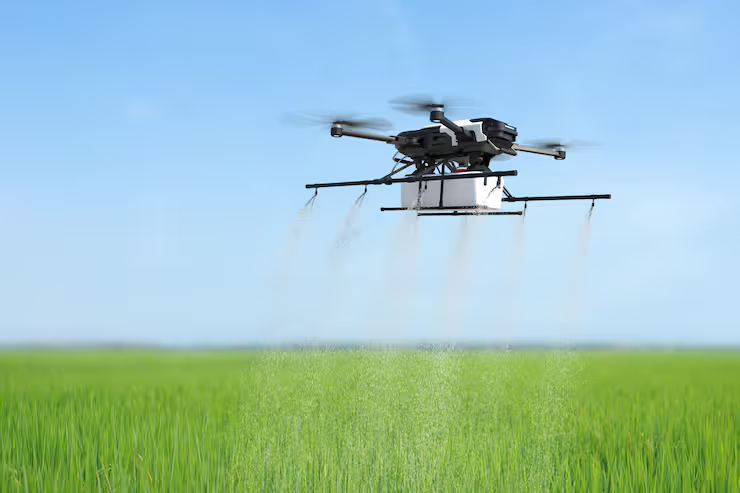
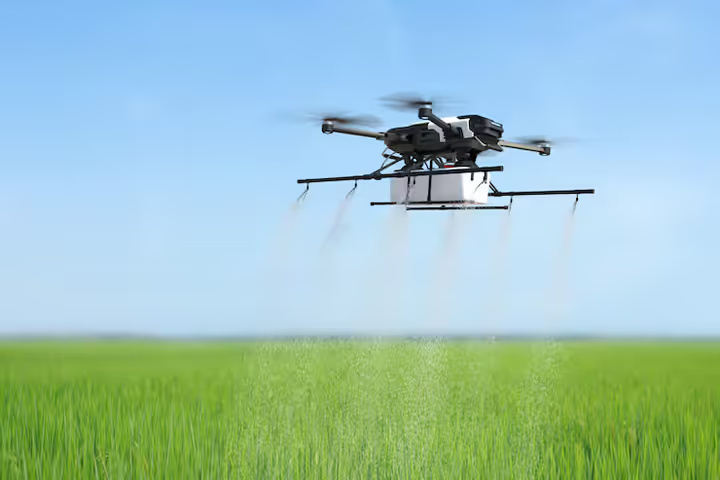
At its core, agricultural robotics integrates sensors, GPS guidance, computer vision, robotic arms, autonomous navigation, and cloud-based analytics. These technologies work together to enable machines to perceive their environment, make calculated decisions, and execute precise actions in real-time field conditions.
Importance: Why Agricultural Robotics Matters Today
Agricultural robotics plays a critical role in modern food systems by improving operational accuracy, sustainability, and productivity across the agricultural value chain.
Key reasons this field matters today include:
-
Increasing demand for precision agriculture systems
-
Reduced availability of skilled agricultural labor
-
Rising importance of data analytics in crop management
-
Environmental concerns requiring optimized resource usage
Farmers, agribusiness planners, policymakers, and agricultural researchers are directly affected by this technological shift. Robotics helps address challenges such as uneven crop yields, inefficient water usage, excessive chemical application, and delayed harvesting cycles.
Major problems agricultural robotics helps solve:
-
Inconsistent crop monitoring across large farms
-
Manual errors in planting and spraying
-
Delayed response to pest and disease outbreaks
-
High dependency on seasonal labor availability
By using AI-powered field robots and autonomous agricultural machines, farms can operate with improved predictability, better yield forecasting, and long-term operational stability.
Working Concepts: How Agricultural Robotics Functions in Real Environments
Agricultural robots operate through a combination of hardware systems and intelligent software models.
Core functional components include:
-
Sensors for soil moisture, temperature, and nutrient analysis
-
Computer vision for crop detection and plant health assessment
-
GPS and RTK navigation for autonomous movement
-
Machine learning models for decision optimization
Robots collect real-time field data, process it through onboard or cloud-based analytics engines, and execute precise mechanical actions. This closed feedback loop allows continuous adaptation to changing field conditions.
Typical Robotic Workflow in Farming
| Stage | Function |
|---|---|
| Data Collection | Sensors and cameras scan crops and soil |
| Data Processing | AI models analyze field conditions |
| Decision Logic | Algorithms determine required action |
| Execution | Robotic tools perform targeted operations |
| Feedback | System refines future actions |
This workflow enables site-specific crop management, which significantly improves efficiency compared to uniform field treatment methods.
Recent Updates and Industry Trends (2024–2025)
The past year has seen accelerated innovation in agricultural robotics driven by advances in artificial intelligence, edge computing, and autonomous navigation systems.
Notable developments include:
-
2024: Expanded use of AI-based crop recognition models for early disease detection
-
2024: Integration of IoT-enabled robotics with real-time weather intelligence
-
Early 2025: Improved battery efficiency in autonomous farm robots
-
2025: Increased adoption of swarm robotics for coordinated field operations
Another key trend is the shift toward data interoperability, allowing agricultural robots to share insights across platforms such as farm management software, satellite imagery systems, and predictive analytics dashboards.
These advancements reflect a broader move toward intelligent automation ecosystems rather than standalone robotic machines.
Laws, Regulations, and Government Programs in India
Agricultural robotics in India operates within a framework of technology, agriculture, and digital innovation policies.
Relevant regulatory influences include:
-
National policies supporting digital agriculture transformation
-
Government initiatives promoting smart farming and automation research
-
Guidelines related to autonomous machinery safety and testing
-
Data protection norms affecting farm data analytics platforms
Public programs encourage pilot testing of robotic technologies in controlled agricultural zones while ensuring compliance with safety, environmental, and data governance standards.
Additionally, agricultural research institutions collaborate with technology developers to align robotics adoption with national food security and sustainability goals.
Tools and Resources for Agricultural Robotics Knowledge
A wide range of tools and digital resources support learning, planning, and implementation of agricultural robotics concepts.
Useful categories include:
-
Farm management software with robotics integration dashboards
-
Crop analytics platforms using AI-driven insights
-
Robotics simulation tools for field planning
-
Precision agriculture calculators for yield estimation
-
Academic and research databases on agricultural automation
These resources help stakeholders understand robotic workflows, analyze performance metrics, and improve decision accuracy without manual data handling.
Frequently Asked Questions About Agricultural Robotics
What types of tasks can agricultural robots perform?
Agricultural robots can assist with planting, crop monitoring, soil analysis, weed identification, selective spraying, and harvesting support using automated systems.
How does artificial intelligence improve agricultural robotics?
AI enables pattern recognition, predictive analysis, and adaptive decision-making based on real-time field data, improving precision and efficiency.
Is agricultural robotics suitable for small farms?
Scalable robotic solutions can be adapted for different farm sizes depending on terrain, crop type, and operational requirements.
What data do agricultural robots collect?
Common data includes soil moisture levels, plant health indicators, growth patterns, pest activity, and environmental conditions.
How does robotics support sustainable farming?
Robotics reduces resource wastage by enabling targeted actions, lowering environmental impact while maintaining consistent crop performance.
Conclusion: The Future Outlook of Agricultural Robotics
Agricultural robotics represents a transformative shift toward intelligent, data-driven, and automation-enabled farming systems. By combining robotics engineering with artificial intelligence, precision agriculture, and IoT technologies, this field addresses some of the most pressing challenges in modern agriculture.
As adoption grows, agricultural robotics will continue evolving into interconnected ecosystems that support productivity, sustainability, and resilience across diverse farming landscapes. Understanding its fundamentals, working principles, regulatory environment, and practical applications is essential for anyone seeking long-term insights into the future of agriculture.