Solar Electricity Guide: Technologies, Installation Methods, Applications and Key Features
Solar electricity is a method of generating electrical power from sunlight. A Solar Electricity Guide explains the technologies, installation methods, applications, and key features involved in converting solar energy into usable electricity. Solar power has developed from early experiments with photovoltaic materials into a widely used technology for homes, commercial buildings, industrial facilities, and large electricity-generating plants.
Context
Solar electricity is a method of generating electrical power from sunlight. A Solar Electricity Guide explains the technologies, installation methods, applications, and key features involved in converting solar energy into usable electricity. Solar power has developed from early experiments with photovoltaic materials into a widely used technology for homes, commercial buildings, industrial facilities, and large electricity-generating plants.
Most solar electricity systems use photovoltaic (PV) panels, which contain semiconductor cells that convert sunlight directly into electrical energy. Another technology, concentrated solar power, uses mirrors to focus sunlight and produce heat, which can then drive equipment that generates electricity. These approaches work differently and are suited to different locations and project requirements.
How Solar Electricity Works
A photovoltaic system produces direct current (DC) electricity when sunlight interacts with the solar cells. An inverter converts this electricity into alternating current (AC), which is used by most household appliances and electrical equipment.
A typical solar electricity system may include:
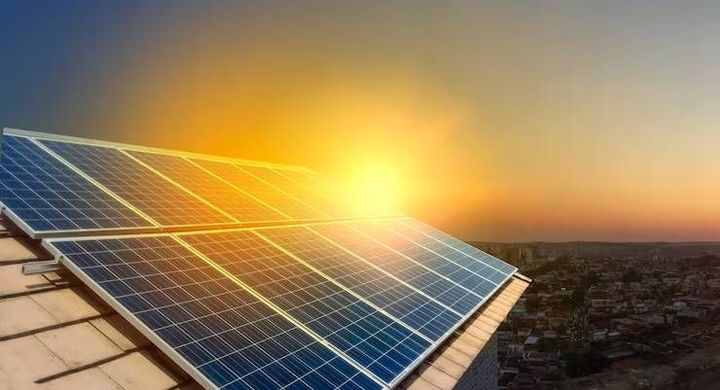
Solar panels: Capture sunlight and generate DC electricity.
Inverter: Converts DC electricity into AC electricity.
Mounting structure: Secures panels to a roof, ground frame, or another suitable surface.
Electrical protection equipment: Helps protect the installation against specified electrical faults and abnormal conditions.
Monitoring equipment: Records electricity generation and system performance.
Battery storage: Stores electricity for later use when a compatible battery system is installed.
Some systems operate without batteries and use electricity as it is generated. Others combine solar panels with batteries, the public electricity grid, or a backup generator, depending on their design.
Importance
Solar electricity matters because households, businesses, farms, and public institutions need dependable electricity for lighting, cooling, communication, machinery, and other everyday activities. Solar generation can provide part of this electricity from a renewable energy source, reducing dependence on electricity produced from fossil fuels when it displaces that generation.
Its usefulness depends on local sunlight, installation quality, electricity consumption, available roof or land area, and the way the system connects to other power sources. Solar panels do not produce the same amount of electricity at every hour, and generation generally falls during cloudy weather and stops at night unless electricity is supplied from storage or another source.
Common Applications of Solar Power
Solar electricity is used in a range of settings:
Residential buildings: Supplies electricity for lighting, fans, refrigerators, air conditioning, and electronic devices.
Commercial properties: Supports offices, retail buildings, hotels, and other facilities with daytime electricity demand.
Industrial sites: Helps supply selected electrical loads, including equipment used during daylight hours.
Agriculture: Powers suitable irrigation pumps, farm buildings, lighting, and monitoring equipment.
Remote locations: Supports telecommunications equipment, isolated buildings, and installations where grid access is limited.
Public infrastructure: Supplies electricity to certain streetlights, monitoring systems, and public facilities.
The suitability of solar electricity varies by application. Equipment with high starting currents, continuous operating requirements, or substantial nighttime demand may need a carefully designed combination of panels, storage, and grid electricity.
Key Features of Solar Electricity Systems
System performance depends on more than the rated capacity printed on the panels. Panel efficiency describes how effectively a panel converts sunlight into electricity under specified test conditions, while system output also depends on sunlight, temperature, shading, orientation, and electrical losses.
Other important features include inverter compatibility, battery capacity where applicable, monitoring functions, mounting design, and protection against weather and electrical faults. Equipment warranties and expected operating life also vary by manufacturer, model, climate, and maintenance conditions.
Recent Updates
Solar electricity technology continues to develop through improvements in panel design, inverters, battery storage, system monitoring, and installation methods. Trends observed during 2024–2026 include greater attention to high-efficiency solar cells, integrated battery systems, digital monitoring, and installations that combine solar generation with flexible electricity use. Adoption and availability differ across markets.
Advances in Solar Panel Technology
Modern photovoltaic panels use several cell technologies, including monocrystalline silicon, polycrystalline silicon, and thin-film materials. Monocrystalline silicon panels are widely used in residential and commercial installations, while thin-film technologies have applications where weight, flexibility, or particular environmental conditions influence the design.
Perovskite solar cells and tandem cells, which combine different light-absorbing materials, continue to receive research attention. These technologies aim to improve sunlight conversion, but durability, manufacturing scale, and long-term field performance remain important considerations for widespread deployment.
Battery Storage and Smart Monitoring
Battery storage allows electricity generated during sunny periods to be used later, subject to battery capacity, conversion losses, and operating limits. Lithium-ion batteries are common in modern storage systems, although other battery technologies are also used for particular applications.
Smart inverters and monitoring platforms can display generation, household consumption, grid imports, and battery status. Some systems can adjust charging or electrical loads according to operating conditions. These functions depend on compatible equipment, local electricity rules, and the configuration of the installation.
Solar System Types Compared
| System type | Main characteristics | Common applications |
|---|---|---|
| Grid-connected | Works alongside the public electricity grid | Homes, offices, commercial buildings |
| Off-grid | Operates independently of the public grid | Remote buildings, isolated installations |
| Hybrid | Combines grid connection with battery storage or other sources | Homes and businesses needing backup capability |
| Concentrated solar power | Uses mirrors to focus sunlight and produce heat | Large-scale electricity generation in suitable locations |
Each system type has different design requirements. Off-grid installations generally need sufficient storage and another plan for periods of low sunlight, while grid-connected systems are subject to local connection rules and may not operate during a grid outage unless specifically designed for backup operation.
Laws or Policies
Solar electricity installations are shaped by electrical safety standards, building rules, grid-connection requirements, energy regulations, and government policies. In India, the applicable process depends on the installation type, capacity, state, electricity distribution company, and whether the project is residential, commercial, or industrial.
Solar Electricity Policies in India
India's Ministry of New and Renewable Energy (MNRE) oversees national renewable energy initiatives. The PM Surya Ghar: Muft Bijli Yojana supports eligible residential rooftop solar installations under the scheme's applicable conditions. Eligibility, approved equipment, subsidy levels, installation requirements, and application procedures should be checked through official government resources because scheme rules can change.
Grid-connected rooftop systems may also need to comply with relevant Central Electricity Authority safety regulations, state electricity regulatory commission rules, and the procedures of the local distribution company. Depending on the project, approvals, inspections, metering arrangements, and technical documentation may be required.
Net Metering and Electrical Safety
Net metering, where permitted, records electricity imported from and exported to the grid according to the applicable regulatory arrangement. The treatment of exported electricity and the method of billing vary by state, consumer category, system capacity, and current policy.
Electrical safety is another important consideration. Proper earthing, suitable cables, circuit protection, weather-resistant equipment, and compliant installation methods help reduce risks. Work involving grid connections and high-voltage components should follow applicable regulations and be handled by appropriately qualified personnel.
Property owners should also check building permissions, roof suitability, equipment certification, and any relevant fire-safety requirements before installation. Government schemes and grid rules do not necessarily apply in the same way to every solar project.
Tools and Resources
Several digital resources help users estimate solar generation, understand equipment specifications, and review installation requirements. Results from calculators are estimates rather than guarantees of actual electricity output.
Solar Calculators and Technical Resources
The Global Solar Atlas provides solar resource maps and related information that can help with preliminary assessments of solar potential. PVWatts, developed by the United States National Renewable Energy Laboratory (NREL), estimates the energy production of photovoltaic systems based on location and system assumptions.
These tools can help users explore how location, panel capacity, tilt, and other factors affect estimated generation. A site-specific assessment is still needed to account for shading, roof condition, electrical configuration, and local weather patterns.
Government and Installation Resources
India's MNRE website provides information about renewable energy policies and relevant schemes. The national rooftop solar portal associated with PM Surya Ghar provides scheme information and application guidance for eligible residential consumers.
Before comparing system designs, users can prepare a simple worksheet containing:
Average monthly electricity consumption.
Available roof or ground area.
Estimated panel capacity and expected generation.
Battery capacity, if storage is required.
Inverter rating and equipment compatibility.
Installation approvals, warranties, and maintenance requirements.
This information makes it easier to understand proposals and identify which assumptions need further verification.
FAQs
How does solar electricity generate power?
Solar panels use photovoltaic cells to convert sunlight into direct current electricity. An inverter converts it into alternating current for compatible appliances and electrical systems.
What are the main types of solar electricity systems?
The main types are grid-connected, off-grid, and hybrid photovoltaic systems. Concentrated solar power is another approach, using focused sunlight to produce heat for electricity generation.
Can solar electricity work at night?
Solar panels do not generate electricity from sunlight at night. A system can supply nighttime electricity through batteries, grid electricity, or another compatible power source.
What affects solar panel installation in India?
Factors include sunlight, roof condition, system capacity, electrical safety requirements, local grid rules, metering arrangements, and eligibility for applicable government schemes.
What tools help estimate solar electricity generation?
PVWatts and the Global Solar Atlas can support preliminary estimates and solar resource assessments. Actual generation depends on site conditions, equipment, installation quality, and weather.
Conclusion
Solar electricity converts sunlight into usable electrical power through photovoltaic panels or, in some large-scale plants, concentrated solar technology. System selection depends on electricity demand, site conditions, storage needs, equipment features, and grid access. In India, installation procedures and potential government support depend on applicable national and state rules. Understanding these technologies and requirements provides a foundation for evaluating solar electricity systems.