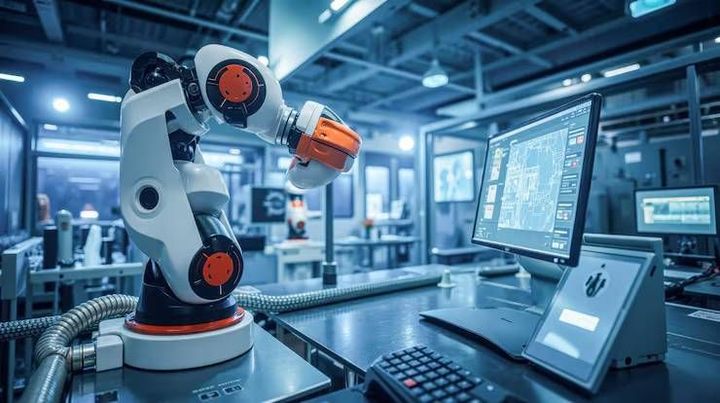
Smart Factory Equipment Guide: Systems, Connectivity, Automation, Functions and Applications
Smart factory equipment refers to machines, sensors, control systems, software, and connected devices used to monitor and manage industrial production. These technologies are part of the broader Industry 4.0 approach, which connects physical manufacturing equipment with digital systems so that production information can be collected, analyzed, and used for operational decisions.
Context
Smart factory equipment refers to machines, sensors, control systems, software, and connected devices used to monitor and manage industrial production. These technologies are part of the broader Industry 4.0 approach, which connects physical manufacturing equipment with digital systems so that production information can be collected, analyzed, and used for operational decisions.
Traditional factories often depend on individual machines operated through local controls. A smart factory adds communication between machines, production systems, sensors, and monitoring platforms. This creates a connected environment where information about equipment activity, production conditions, energy use, and machine status can be viewed across different parts of a facility.
Smart factory equipment can include programmable logic controllers, industrial robots, machine vision systems, industrial sensors, automated material handling equipment, industrial computers, data gateways, and manufacturing software. The exact combination depends on the type of production and the level of automation used.
Main equipment categories
Common smart factory equipment can be grouped into several categories:
- Industrial sensors: Measure temperature, pressure, vibration, position, flow, speed, and other operating conditions.
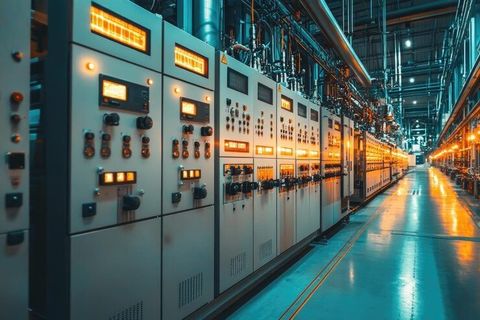
- Control systems: PLCs, distributed control systems, and other controllers coordinate machine operations.
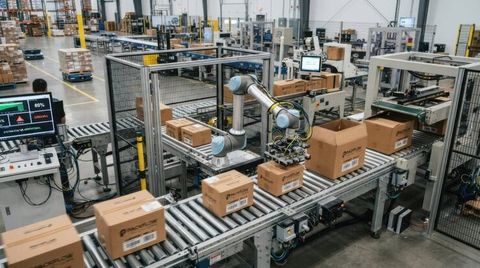
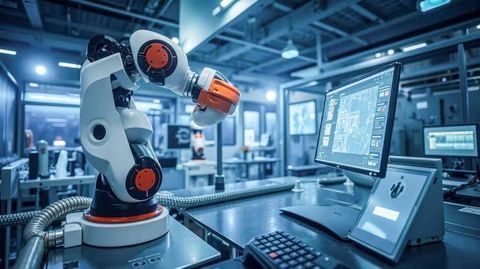
- Robotic equipment: Handles tasks such as assembly, movement, welding, inspection, and material handling.
- Machine vision: Uses cameras and image-processing systems to examine products or processes.
- Industrial networking equipment: Connects machines, controllers, computers, and monitoring systems.
- Data platforms: Collect and organize production information for analysis and reporting.
- Automated handling systems: Include conveyors, automated guided vehicles, and related movement equipment.
Importance
Smart factory equipment matters because modern manufacturing involves many interconnected activities. A production line may contain hundreds of operating points, and manually checking every machine can make it difficult to identify changes in operating conditions.
Connected equipment can provide information about machine activity while production is taking place. Operators and managers can use this information to understand equipment status, identify unusual readings, and examine production patterns.
Problems addressed by connected manufacturing
Smart factory systems can help address several practical manufacturing challenges:
- Limited visibility into machine operating conditions
- Manual collection of production information
- Delays in identifying equipment abnormalities
- Difficulty coordinating multiple production stages
- Repetitive material movement
- Inconsistent inspection processes
- High volumes of production data
- Challenges in tracking energy consumption
Automation also changes how people interact with industrial equipment. Instead of manually controlling every operation, workers may supervise automated processes, review information, adjust parameters, inspect equipment, or respond to identified conditions.
Smart factory equipment comparison
| Equipment type | Main function | Common application |
|---|---|---|
| Industrial sensors | Measure operating conditions | Machine monitoring |
| PLC | Control machine sequences | Production lines |
| Industrial robot | Perform programmed movements | Assembly and handling |
| Machine vision system | Analyze images | Inspection |
| Industrial gateway | Transfer equipment data | Connected machinery |
| Conveyor system | Move materials | Production and warehouses |
| HMI | Display and control information | Machine operation |
| Manufacturing software | Organize production data | Planning and monitoring |
Recent Updates
Smart manufacturing has continued to develop through greater use of connected equipment, industrial data platforms, artificial intelligence, robotics, and edge computing. Between 2024 and 2026, manufacturers have increasingly focused on combining existing machinery with digital monitoring rather than replacing every machine at once.
Greater use of industrial connectivity
Industrial Ethernet, wireless communication, edge devices, and standardized data interfaces are being used to connect equipment across production environments. Modern systems can collect information from both newer machines and selected older equipment through gateways and compatible interfaces.
Another development is the use of edge computing. Instead of sending every piece of machine information to a distant platform, some processing can take place near the equipment. This can help organize data and support faster local monitoring.
Artificial intelligence and machine data
Artificial intelligence is increasingly being applied to manufacturing data for activities such as anomaly detection, quality inspection, production analysis, and equipment monitoring. Machine vision systems can process images to identify visible differences in products, while analytical software can examine equipment readings for unusual patterns.
Digital twins are also being explored in industrial environments. A digital twin is a digital representation of a physical machine, process, or production system. It can combine operational information with models or simulations to help users understand how a system behaves.
Human-centered automation
Another trend is the combination of automation with human oversight. Collaborative robots, digital work instructions, electronic production records, and operator dashboards can support people working alongside automated equipment.
The level of automation varies widely. Some factories use a small number of connected sensors, while others integrate robotics, machine vision, production software, automated material movement, and centralized monitoring.
Laws or Policies
In India, smart factory equipment operates within several areas of regulation covering workplace safety, electrical systems, machinery, data, and industrial operations. Requirements can vary according to the industry, facility, equipment type, and location.
Workplace and machinery safety
Industrial facilities need to follow applicable occupational safety and factory requirements. The Occupational Safety, Health and Working Conditions Code, 2020 is part of India's labour-law framework, while implementation requirements depend on applicable rules and government notifications.
Machine guarding, electrical safety, emergency controls, worker training, and safe operating procedures are important considerations when automated equipment is installed or modified. Specific requirements may also apply to pressure equipment, lifting equipment, electrical installations, or other specialized machinery.
Standards and digital data
The Bureau of Indian Standards develops and publishes standards relevant to many industrial products and systems. Depending on the equipment, applicable Indian Standards or other recognized technical standards may be relevant to design, testing, installation, or safety.
Smart factories also generate digital information. When connected systems process personal information, organizations may need to consider India's Digital Personal Data Protection framework and other applicable information-security requirements. Industrial machine data that does not identify individuals may fall into different categories, but access controls and cybersecurity remain important for connected facilities.
Government manufacturing initiatives
India has supported Industry 4.0 development through programs and initiatives connected with smart manufacturing, digital technologies, advanced production, and industrial skills. The SAMARTH Udyog Bharat 4.0 initiative is associated with Industry 4.0 awareness, demonstration, and adoption in manufacturing.
Because regulations and implementation requirements can change, organizations generally need to check the current requirements applicable to their specific facility and equipment.
Tools and Resources
Several types of tools can help people understand, configure, or monitor smart factory equipment. The appropriate tool depends on the production process, existing machinery, and information requirements.
Equipment monitoring tools
Industrial monitoring platforms can display machine conditions, production information, alarms, and equipment status. Human-machine interfaces, supervisory control systems, and manufacturing dashboards are commonly used for this purpose.
Planning and analysis resources
Manufacturing execution systems can organize production information between planning and shop-floor activities. Data-analysis platforms can be used to examine production records, equipment readings, energy information, and quality measurements.
Useful resources may include:
- Bureau of Indian Standards: Information about applicable Indian Standards and technical documents.
- Ministry of Labour and Employment: Information concerning occupational safety and labour regulations.
- Ministry of Heavy Industries: Information related to manufacturing and Industry 4.0 initiatives.
- SAMARTH Udyog Bharat 4.0: Resources concerning smart manufacturing and industrial digitalization.
- Industrial automation documentation: Manuals and technical documentation can explain equipment specifications, communication protocols, and operating requirements.
- Production data templates: Structured spreadsheets can help organize machine readings, downtime records, inspection results, and production information.
Cybersecurity tools are also relevant because connected machines can create additional digital access points. Network segmentation, authentication, access controls, software updates, backups, and activity monitoring are commonly considered parts of industrial cybersecurity planning.
FAQs
What is smart factory equipment?
Smart factory equipment includes connected machines, sensors, controllers, robots, inspection systems, networking devices, and software used to monitor or automate manufacturing activities. These components can exchange information and support digital production processes.
How does smart factory automation work?
Smart factory automation combines sensors, controllers, machines, and software. Sensors collect information, controllers manage machine operations, and connected platforms can organize production data for monitoring and analysis.
What systems are used in smart factory equipment?
Common systems include PLCs, HMIs, industrial networks, machine vision, robotics, SCADA systems, manufacturing execution systems, industrial gateways, sensors, and data-analysis platforms. The combination depends on the production environment.
How is industrial equipment connected in a smart factory?
Industrial equipment can be connected through wired industrial networks, wireless technologies, gateways, and communication protocols. A gateway can sometimes connect older machinery to a newer digital monitoring environment.
What are the applications of smart factory equipment?
Applications include automated assembly, machine monitoring, quality inspection, material movement, production tracking, energy monitoring, equipment analysis, warehouse coordination, and process control. Different applications require different combinations of hardware and software.
Conclusion
Smart factory equipment combines industrial machinery with sensors, automation, connectivity, control systems, and digital data tools. Its applications range from machine monitoring and inspection to robotics, material handling, and production management. Developments in artificial intelligence, edge computing, industrial networking, and digital twins are expanding the ways manufacturing information can be used. In India, smart manufacturing also operates within applicable workplace, machinery, electrical, data, and industrial standards.