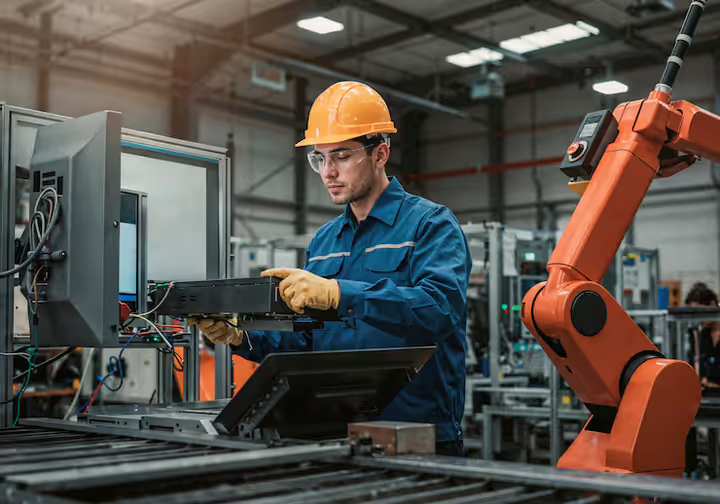
Industrial Robotics Comparison Guide: Tips, Insights, Knowledge & Detailed Explanation
Robotics in industrial automation refers to the use of programmable machines—industrial robots—to perform manufacturing and production tasks with minimal human intervention. These robots are commonly deployed for repetitive, high-precision, or hazardous operations such as welding, assembly, material handling, packaging, and inspection. Unlike traditional manual processes, robotic systems operate with consistency, speed, and increasing levels of intelligence through integration with sensors, artificial intelligence (AI), and machine learning.
In recent years, this comparison between traditional automation and robotics-driven automation has become increasingly important. Industries are transitioning from fixed automation systems to flexible robotic solutions that can adapt to changing production needs. This shift is driven by global supply chain challenges, labor shortages, and the need for higher productivity and quality standards.
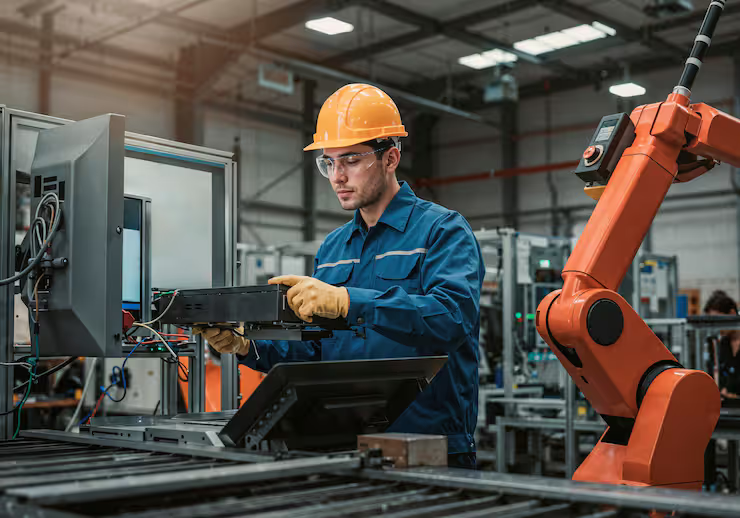
Current trends highlight the growing adoption of collaborative robots (cobots), AI-enabled vision systems, and cloud-connected manufacturing environments. According to industry reports from organizations such as the International Federation of Robotics, robot installations have continued to grow globally, especially in sectors like automotive, electronics, and logistics. The impact is significant: improved operational efficiency, reduced error rates, and enhanced workplace safety are redefining modern industrial ecosystems.
Who It Affects and What Problems It Solves
Robotics in industrial automation affects a wide range of stakeholders across industries. Manufacturers, supply chain operators, warehouse managers, and production engineers are among the primary beneficiaries. Small and medium enterprises (SMEs) are increasingly adopting robotics due to declining costs and modular solutions, while large enterprises use robotics to scale production and maintain global competitiveness.
Employees are also directly impacted. While there are concerns about job displacement, robotics often shifts human roles toward supervision, programming, maintenance, and quality control. This transformation requires workforce upskilling but also creates opportunities for higher-value tasks.
From an operational perspective, robotics addresses several critical industrial challenges:
- Labor shortages and workforce inconsistency
- Human error in repetitive tasks
- Workplace safety risks in hazardous environments
- Production inefficiencies and downtime
- Quality control variability
By solving these problems, robotic automation enables industries to achieve consistent output, maintain safety standards, and optimize resource utilization.
Recent Updates and Industry Trends
The past year has seen notable advancements in robotics within industrial automation:
- AI Integration: Modern robots are increasingly equipped with AI-driven vision systems, allowing them to identify objects, adapt to variations, and make real-time decisions. This is particularly relevant in quality inspection and sorting processes.
- Rise of Collaborative Robots (Cobots): Cobots are designed to work alongside humans without extensive safety barriers. Their adoption has increased due to ease of deployment and lower costs compared to traditional industrial robots.
- Edge Computing and IoT Connectivity: Robots are now integrated with Industrial Internet of Things (IIoT) platforms, enabling real-time monitoring, predictive maintenance, and data-driven decision-making.
- Reshoring and Localization Trends: Companies are investing in robotics to bring manufacturing closer to domestic markets, reducing dependency on global supply chains.
- Energy Efficiency and Sustainability: New robotic systems are designed to consume less energy and support sustainable manufacturing practices.
- Software-Driven Automation: Advances in robotic programming platforms and low-code interfaces have made deployment faster and more accessible.
These developments indicate a shift toward smarter, more adaptable, and interconnected automation systems.
Comparative Overview of Industrial Robotics
| Feature | Traditional Automation | Industrial Robotics | Collaborative Robots (Cobots) |
|---|---|---|---|
| Flexibility | Low (fixed tasks) | High (programmable) | Very High (adaptive) |
| Initial Cost | Moderate | High (declining over time) | Lower than industrial robots |
| Safety Requirements | High (isolated systems) | High (guarded environments) | Lower (human-friendly design) |
| Ease of Deployment | Complex | Moderate | Easy |
| Precision | High | Very High | High |
| Human Interaction | Minimal | Limited | Extensive |
| Maintenance Needs | Moderate | High (specialized skills) | Moderate |
| Best Use Cases | Mass production | Complex manufacturing tasks | Flexible, small-batch production |
Laws, Policies, and Regulatory Considerations
The adoption of robotics in industrial automation is influenced by various national and international regulations. In India, policies such as the National Policy on Electronics and initiatives like Make in India encourage automation and advanced manufacturing technologies. These programs aim to improve domestic production capabilities and global competitiveness.
Workplace safety regulations also play a crucial role. Standards such as ISO 10218 (for industrial robots) and ISO/TS 15066 (for collaborative robots) define safety requirements for robot design, installation, and operation. Companies must ensure compliance with these standards to protect workers and avoid legal risks.
Data protection and cybersecurity regulations are increasingly relevant as robots become connected to digital networks. Industrial systems must adhere to cybersecurity frameworks to prevent unauthorized access and operational disruptions.
Practical Guidance
- For high-volume manufacturing: Traditional industrial robots are suitable due to their speed and precision.
- For flexible production environments: Cobots are ideal due to ease of reprogramming and human collaboration.
- For regulated industries (e.g., pharmaceuticals): Strict compliance with safety and quality standards is essential.
- For SMEs: Government incentives and subsidies can reduce the cost burden of adopting robotics.
Tools and Resources
Several tools and platforms support the implementation and management of robotics in industrial automation:
Simulation and Design Tools
- Robot simulation software (e.g., digital twin platforms)
- CAD/CAM integration tools for robotic path planning
Programming and Control Platforms
- Low-code robotic programming interfaces
- PLC (Programmable Logic Controller) systems
Monitoring and Analytics
- Industrial IoT dashboards for real-time monitoring
- Predictive maintenance software
Learning Resources
- Online courses on robotics and automation
- Industry reports from organizations like IFR (International Federation of Robotics)
- Technical documentation from robotics manufacturers
Templates and Frameworks
- ROI calculators for automation investment
- Workflow optimization templates
- Safety compliance checklists
These resources help organizations plan, implement, and optimize robotic systems effectively.
Frequently Asked Questions (FAQ)
What is the difference between industrial robots and cobots?
Industrial robots typically operate in isolated environments and handle heavy, high-speed tasks, while cobots are designed to work safely alongside humans and are easier to program.
Is robotics in automation only for large industries?
No, small and medium enterprises can also adopt robotics due to decreasing costs and modular solutions tailored to smaller production scales.
How does robotics improve workplace safety?
Robots can perform hazardous tasks such as handling toxic materials or operating in extreme conditions, reducing the risk of human injury.
What skills are required to work with industrial robots?
Skills include basic programming, system maintenance, data analysis, and understanding of automation systems. Upskilling is increasingly important.
Are robotic systems expensive to maintain?
Maintenance costs can be significant but are often offset by increased productivity, reduced errors, and lower labor costs over time.
Conclusion
Robotics in industrial automation represents a significant evolution from traditional manufacturing systems toward intelligent, flexible, and data-driven operations. The comparison between traditional automation, industrial robots, and collaborative robots highlights a clear trend: flexibility and adaptability are becoming more valuable than rigid efficiency.
Data from industry bodies consistently shows rising robot adoption across sectors, driven by labor challenges, quality demands, and technological advancements. While initial investment and regulatory compliance remain considerations, the long-term benefits—such as improved productivity, enhanced safety, and operational consistency—are substantial.
For most organizations, the optimal approach depends on production needs. High-volume industries benefit from industrial robots, while dynamic environments gain more from cobots. A hybrid model is increasingly common, combining different automation types to maximize efficiency.
Ultimately, robotics is not just a technological upgrade but a strategic shift toward smarter manufacturing. Organizations that invest thoughtfully in robotics supported by proper tools, compliance, and workforce training are better positioned to adapt to future industrial demands.