Renewable Power Manufacturing An In-Depth Guide to Basics, Processes, and Key Facts
Renewable power manufacturing refers to the industrial production of equipment and components used to generate electricity from renewable energy sources such as solar, wind, hydro, and energy storage systems. This field exists to support the global transition away from fossil fuels toward low-carbon power generation. As electricity demand grows alongside climate commitments, manufacturing capacity has become as critical as power generation itself.
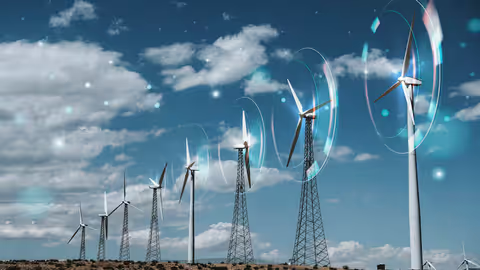
At its core, renewable power manufacturing converts raw materials into functional energy assets. Examples include photovoltaic modules that convert sunlight into electricity, wind turbine assemblies that capture kinetic energy, and battery systems that stabilize power supply. The sector bridges science, engineering, and industrial automation to ensure renewable technologies can be deployed at scale.
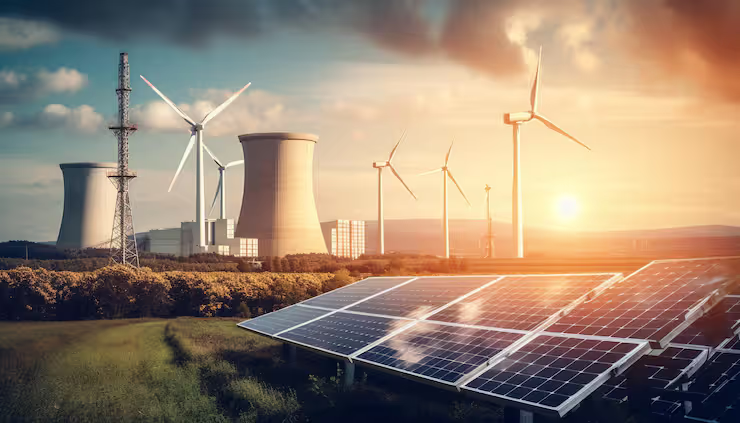
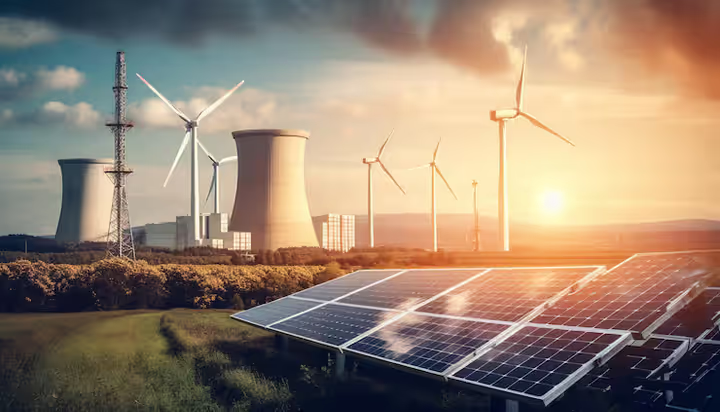
Key manufacturing segments commonly include:
-
Solar module and cell production
-
Wind turbine blades, towers, and nacelles
-
Battery and energy storage systems
-
Power electronics such as inverters and controllers
Together, these segments form the backbone of the clean energy supply chain.
Why Renewable Power Manufacturing Matters Today
Renewable power manufacturing plays a central role in modern energy systems. It directly affects energy security, economic development, and environmental outcomes. As more countries commit to net-zero targets, the demand for domestically manufactured renewable equipment continues to rise.
This topic matters because it influences:
-
Energy independence: Local manufacturing reduces reliance on imported fossil fuels and equipment.
-
Grid stability: Advanced manufacturing enables high-efficiency components that integrate better with smart grids.
-
Industrial growth: The sector stimulates upstream industries such as metals, electronics, and advanced materials.
Communities benefit through cleaner air and more resilient infrastructure, while utilities and planners gain access to standardized, high-performance renewable assets. Renewable power manufacturing also addresses supply-chain vulnerabilities that were exposed during global disruptions in recent years.
Manufacturing Processes and Production Workflows
Renewable power manufacturing involves specialized, multi-stage processes designed for precision, durability, and efficiency. Each technology has its own workflow, yet all emphasize quality control and scalability.
Solar Module Manufacturing Basics
Typical production stages include:
-
Silicon purification and wafer slicing
-
Solar cell fabrication with anti-reflective coatings
-
Module assembly with glass, encapsulants, and frames
-
Electrical testing and performance validation
Wind Turbine Manufacturing Basics
Wind manufacturing focuses on large-scale composite and mechanical engineering:
-
Blade molding using fiberglass or carbon composites
-
Tower fabrication from rolled steel sections
-
Nacelle assembly integrating gearboxes, generators, and control systems
Energy Storage and Battery Manufacturing
Battery production emphasizes chemical precision and safety:
-
Electrode material preparation
-
Cell assembly in controlled environments
-
Formation cycling and performance testing
Across all processes, automation, robotics, and digital quality inspection systems are increasingly common.
Recent Updates and Industry Trends (2024–2025)
Over the past year, renewable power manufacturing has seen notable shifts driven by policy alignment and technology innovation. Between late 2024 and 2025, manufacturers globally accelerated investments in high-efficiency production lines and localization strategies.
Key developments include:
-
Expansion of advanced solar cell technologies such as TOPCon and heterojunction designs
-
Increased adoption of modular wind turbine components to simplify transport and assembly
-
Rapid scale-up of lithium-ion and alternative battery chemistries for grid applications
Digital manufacturing tools, including artificial intelligence-based defect detection, became more prominent in 2025. Sustainability within manufacturing itself also gained focus, with reduced water use, recycling of production scrap, and lower-emission processes becoming standard benchmarks.
Laws, Policies, and Regulatory Framework in India
In India, renewable power manufacturing is shaped by a combination of national energy goals, industrial policy, and regulatory standards. Government programs aim to strengthen domestic manufacturing while supporting large-scale renewable deployment.
Important policy influences include:
-
National renewable energy targets aligned with long-term decarbonization goals
-
Production-linked incentive frameworks supporting local manufacturing capacity
-
Quality and performance standards for solar modules, wind components, and batteries
Environmental regulations also affect manufacturing operations by setting requirements for waste handling, emissions, and resource efficiency. Compliance with grid-integration standards ensures that manufactured equipment aligns with national transmission and distribution requirements.
These policies collectively encourage scale, standardization, and technological advancement within the renewable manufacturing ecosystem.
Tools and Resources for Renewable Power Manufacturing
A wide range of digital and analytical resources support planning, design, and optimization in renewable manufacturing.
Helpful tools and platforms include:
-
Energy yield modeling software for solar and wind performance estimation
-
Manufacturing execution systems (MES) for production monitoring and traceability
-
Lifecycle assessment calculators to evaluate environmental impact
-
Technical standards databases covering electrical, mechanical, and safety compliance
Reference websites and knowledge portals from industry bodies also provide specifications, benchmarking data, and technology roadmaps useful for manufacturers and analysts.
Data Snapshot: Renewable Manufacturing Segments
| Segment | Primary Output | Key Materials | Typical Use Case |
|---|---|---|---|
| Solar Manufacturing | PV modules | Silicon, glass, aluminum | Utility and rooftop power |
| Wind Manufacturing | Turbines | Steel, composites, copper | Onshore and offshore wind |
| Energy Storage | Battery systems | Lithium, nickel, graphite | Grid stability and backup |
Frequently Asked Questions on Renewable Power Manufacturing
What is renewable power manufacturing in simple terms?
It is the industrial production of equipment that generates or supports electricity from renewable sources such as solar, wind, and energy storage systems.
How does manufacturing quality affect renewable energy performance?
High manufacturing precision improves efficiency, durability, and safety, directly influencing power output and system lifespan.
Is renewable power manufacturing technology-intensive?
Yes. It relies on advanced materials science, automation, and digital quality control to meet performance standards.
Why is local manufacturing emphasized in policy discussions?
Local production strengthens energy security, reduces supply-chain risk, and aligns manufacturing with national standards.
Does renewable manufacturing impact the environment?
While manufacturing has environmental footprints, modern processes increasingly focus on efficiency, recycling, and emissions reduction.
Conclusion and Key Takeaways
Renewable power manufacturing is a foundational pillar of the global clean energy transition. By transforming raw materials into reliable, high-performance energy equipment, it enables scalable renewable deployment and long-term energy resilience. Ongoing technological innovation, supportive policy frameworks, and digital manufacturing tools continue to shape the sector’s evolution.
As renewable capacity expands, manufacturing excellence will remain essential for meeting energy demand, maintaining grid stability, and achieving sustainability objectives in India and beyond.