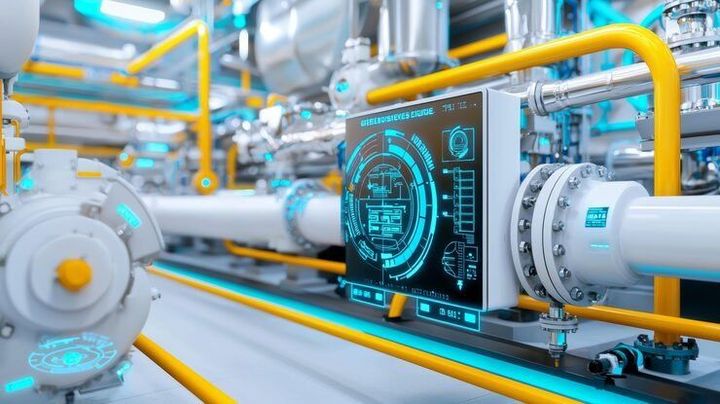
Industrial Fluid Control Guide: Technologies, Equipment, Flow Regulation and Operating Principles
An Industrial Fluid Control Guide explains the technologies, equipment, flow regulation methods, and operating principles used to manage liquids and gases in industrial systems. Fluid control is important in manufacturing plants, water treatment facilities, chemical processing units, power stations, food production, and many other industrial environments. These systems regulate how fluids move through pipes, tanks, machines, and processing equipment.
Context
An Industrial Fluid Control Guide explains the technologies, equipment, flow regulation methods, and operating principles used to manage liquids and gases in industrial systems. Fluid control is important in manufacturing plants, water treatment facilities, chemical processing units, power stations, food production, and many other industrial environments. These systems regulate how fluids move through pipes, tanks, machines, and processing equipment.
The development of industrial fluid control is closely connected to the growth of mechanical engineering, hydraulic machinery, steam-powered equipment, and modern process automation. Early systems relied heavily on manually operated valves and mechanical controls. Modern installations may combine valves, pumps, sensors, pressure regulators, flow meters, and electronic controllers to manage fluid movement according to defined operating requirements.
Understanding Industrial Fluid Control
Industrial fluid control involves adjusting or maintaining properties such as flow rate, pressure, temperature, and direction. The specific requirements depend on the fluid, the equipment being operated, and the purpose of the process.
For example, a water treatment plant may regulate water flow through filtration stages, while a manufacturing line may control hydraulic fluid pressure to operate a machine. Gas distribution systems also require suitable pressure regulation and protective equipment to maintain operating conditions.
The main objectives of fluid control include:
Maintaining a suitable flow rate for a process.
Regulating pressure within specified operating limits.
Directing liquids or gases through the correct pathways.
Preventing unwanted backflow and leakage.
Supporting automated process monitoring and equipment protection.
These functions may operate independently or as part of a larger control system. Proper equipment selection depends on fluid properties, operating pressure, temperature, required accuracy, and the surrounding industrial environment.
Main Types of Industrial Fluid Control Equipment
Different devices perform different roles within a fluid control system. A valve may start or stop flow, a pump may move liquid, and a sensor may measure conditions that influence automated adjustments.
Common equipment includes:
Control valves: Adjust fluid flow in response to a manual command or control signal.
Pressure regulators: Maintain downstream pressure within a defined range under suitable operating conditions.
Flow meters: Measure the volume or mass of fluid moving through a system.
Pumps: Move liquids through pipes and processing equipment.
Sensors and transmitters: Measure pressure, temperature, flow, or fluid level and communicate readings to monitoring systems.
Actuators: Operate valves or other mechanical components using electrical, pneumatic, or hydraulic power.
Check valves: Help prevent reverse flow in suitable piping arrangements.
Each component has operating limits and maintenance requirements. The devices must be compatible with the fluid and the conditions in which they are used.
Importance
Industrial fluid control matters because many production processes depend on predictable fluid movement. Incorrect flow or pressure can affect product consistency, equipment performance, energy use, and workplace safety. In water treatment, for instance, controlled flow helps maintain the intended movement of water through treatment stages, while industrial cooling systems depend on adequate circulation to remove heat.
Fluid control also affects workers, facility operators, equipment manufacturers, and communities that depend on industrial production. A leak in a water line may interrupt production, while a pressure failure involving a hazardous fluid can create a more serious safety concern. Monitoring and appropriate protective measures help reduce these risks.
Flow Regulation and Pressure Management
Flow regulation determines how much fluid passes through a system during a given period. It may be measured in litres per minute, cubic metres per hour, or other units suited to the application. Pressure describes the force exerted by a fluid over an area and is commonly measured in pascals, bar, or pounds per square inch.
These variables are related, but they are not interchangeable. A change in valve position may affect flow and pressure differently depending on pipe dimensions, pump performance, fluid viscosity, and downstream resistance.
Industrial systems may use manual valves for simple adjustments or automatic control valves for processes that require continuous regulation. Pressure transmitters and flow meters can provide measurements to a controller, which adjusts an actuator when readings move away from a defined target.
Factors Affecting Fluid Control Performance
Several factors influence system operation:
Fluid properties: Density, viscosity, temperature, and chemical compatibility affect movement and equipment selection.
Pipe design: Pipe diameter, length, bends, fittings, and surface characteristics influence pressure losses.
Operating conditions: Changes in demand, temperature, and supply pressure can alter system behavior.
Equipment sizing: Incorrectly sized valves, pumps, or meters can affect control accuracy and energy use.
Maintenance condition: Deposits, corrosion, worn seals, and blocked filters can restrict flow or cause leakage.
Understanding these factors helps explain why a control component cannot always be selected by its nominal pipe size alone. Engineers also consider flow requirements, pressure drop, materials, control range, and expected operating conditions.
Recent Updates
Industrial fluid control continues to develop alongside automation, digital monitoring, energy management, and industrial connectivity. Trends observed during 2024–2026 include broader use of connected sensors, digital condition monitoring, variable-speed drives, and data-based maintenance planning. Adoption differs between industries and depends on equipment age, process requirements, and investment priorities.
Smart Sensors and Automated Control
Modern control systems can collect measurements from flow meters, pressure transmitters, temperature sensors, and other instruments. A programmable logic controller or distributed control system can process these readings and adjust valves, pumps, or other equipment according to programmed logic.
Networked monitoring can also allow operators to review process conditions from a central control room. Alerts may identify unusual pressure changes, unexpected flow patterns, or equipment conditions that require inspection. These functions depend on suitable sensor calibration, reliable communications, and correctly configured control logic.
Energy Efficiency and Predictive Maintenance
Pumps often account for a significant portion of energy use in facilities that move large volumes of liquid. Variable-frequency drives can adjust motor speed to match changing demand, where the pump, motor, and process are compatible with this approach. The potential energy effect depends on the system design and operating profile.
Condition monitoring can use operating data to identify changes that may indicate wear, blockage, vibration, or leakage. However, sensor readings do not always identify the exact cause of a problem. Inspection, testing, and engineering assessment may still be required before maintenance decisions are made.
Digital Integration and Cybersecurity
Industrial control systems increasingly exchange data with supervisory systems, maintenance platforms, and production software. This integration can improve visibility across complex processes, but connected equipment also introduces cybersecurity considerations.
Industrial facilities may use network segmentation, access controls, secure configuration, software updates, and monitoring to reduce risks. Safety-critical control functions should be designed so that communication failures or unauthorized access do not create unacceptable operating hazards.
Laws or Policies
Industrial fluid control is influenced by workplace safety rules, environmental regulations, pressure equipment requirements, electrical standards, and industry-specific codes. Applicable requirements depend on the type of fluid, equipment design, operating pressure, industry, and location of the installation.
Industrial Regulations in India
In India, relevant requirements may include the Factories Act, 1948, and applicable state factory rules, subject to the current legal framework and any subsequent amendments or replacements. These provisions have addressed aspects of workplace health, safety, and welfare in covered industrial establishments.
Pressure vessels, boilers, piping, and other regulated equipment may be subject to additional technical requirements. The Indian Boilers Act, 1923, and applicable boiler regulations are relevant to covered boiler installations. The exact requirements depend on the equipment classification, use, and current regulations.
Industrial facilities may also need to comply with environmental requirements administered by the Ministry of Environment, Forest and Climate Change, the Central Pollution Control Board, and state pollution control boards. Applicable permissions and discharge requirements depend on the process and location.
Equipment Standards and Workplace Safety
Technical standards help define requirements for the design, testing, materials, and performance of industrial valves, pressure equipment, instruments, and piping systems. Relevant standards may be published by the Bureau of Indian Standards or international organizations such as the International Organization for Standardization.
Compliance depends on which standards and regulations apply to the installation. Facilities may need documented inspections, pressure testing, calibration records, maintenance procedures, and employee training. General guidance cannot replace an assessment of the specific equipment and legal obligations.
Tools and Resources
Industrial fluid control relies on measurement instruments, engineering calculations, technical documentation, and maintenance records. These resources help operators understand system performance and identify conditions that need further investigation.
Engineering Instruments and Calculators
Common instruments include pressure gauges, differential-pressure transmitters, flow meters, temperature sensors, and ultrasonic leak detectors. Each instrument measures a particular property and must be selected for the expected range, fluid compatibility, and operating environment.
Engineering calculations can help estimate flow rate, pipe pressure loss, pump requirements, and valve capacity. Results depend on input assumptions, fluid properties, and system geometry. Complex systems may require engineering software and verification against applicable design standards.
Digital Platforms and Technical Documentation
Several resources support industrial fluid control planning and learning:
Engineering calculation tools: Used to estimate flow, pressure drop, and piping requirements.
Manufacturer technical manuals: Provide equipment specifications, installation instructions, operating limits, and maintenance guidance.
Industrial automation platforms: Support controller configuration, process visualization, and equipment monitoring.
Maintenance management systems: Record inspections, calibration, repairs, and replacement schedules.
Standards catalogues: Help identify relevant technical requirements for equipment and installations.
For example, the Bureau of Indian Standards website provides information about Indian Standards, while the International Organization for Standardization publishes information about international standards. Manufacturer documentation remains important for understanding the specific equipment installed at a facility.
Comparing Common Fluid Control Technologies
| Technology | Primary function | Typical application |
|---|---|---|
| Manual valve | Starts, stops, or adjusts flow manually | Utility piping |
| Automatic control valve | Regulates flow using a control signal | Process plants |
| Pressure regulator | Controls downstream pressure | Gas and liquid supply systems |
| Flow meter | Measures fluid movement | Process monitoring |
| Variable-frequency drive | Adjusts compatible motor speed | Pumping systems |
| PLC or DCS | Executes control logic and monitors processes | Automated facilities |
The technologies can work together within one installation. Selection depends on required accuracy, response time, safety considerations, fluid characteristics, and the level of automation needed.
FAQs
What is industrial fluid control?
Industrial fluid control is the management of liquid and gas movement through equipment and piping. It includes regulating flow, pressure, direction, and other operating conditions using valves, pumps, sensors, and controllers.
Which equipment is used for industrial flow regulation?
Common equipment includes control valves, flow meters, pressure regulators, actuators, pumps, and electronic controllers. The exact combination depends on the process and the properties of the fluid.
How does an automatic fluid control system work?
Sensors measure operating conditions and send signals to a controller. The controller compares the readings with defined targets and may adjust a valve, pump, or other device to maintain the required process conditions.
What factors affect industrial fluid control performance?
Fluid viscosity, temperature, pressure, pipe dimensions, equipment sizing, and maintenance condition can influence performance. Changes in these factors may affect flow accuracy, energy use, and system reliability.
Which standards apply to industrial fluid control systems in India?
Applicable requirements may involve Indian Standards, pressure equipment regulations, workplace safety rules, and environmental requirements. The specific obligations depend on the equipment, fluid, industry, location, and current legal framework.
Conclusion
Industrial fluid control combines equipment, measurement technologies, and operating principles to regulate the movement of liquids and gases. Flow meters, valves, pumps, sensors, and controllers perform different functions within manual and automated systems. Current developments include connected monitoring, energy management, and data-based maintenance, alongside ongoing safety and cybersecurity considerations. Equipment selection and operation depend on the fluid, process requirements, applicable standards, and site-specific conditions.