Industrial Design Guide: Concepts, Design Methods, Prototyping, Manufacturing and Practical Considerations
An Industrial Design Guide explains how products are planned, shaped, tested, and prepared for manufacturing. Industrial design combines creativity, engineering knowledge, user research, material selection, and production requirements to develop physical products that are practical to use and suitable for their intended purpose. It applies to everyday objects such as furniture, household appliances, tools, electronic devices, medical equipment, and industrial machinery.
Context
An Industrial Design Guide explains how products are planned, shaped, tested, and prepared for manufacturing. Industrial design combines creativity, engineering knowledge, user research, material selection, and production requirements to develop physical products that are practical to use and suitable for their intended purpose. It applies to everyday objects such as furniture, household appliances, tools, electronic devices, medical equipment, and industrial machinery.
Industrial design developed alongside manufacturing, particularly during the Industrial Revolution, when mechanized production made it possible to manufacture large quantities of similar products. As factories expanded, designers and engineers began paying greater attention to product appearance, usability, durability, and manufacturing methods. Modern industrial design brings these considerations together early in product development.
Core Concepts of Industrial Design
Industrial design considers how a product looks, feels, functions, and can be manufactured. A successful design process balances several connected requirements rather than focusing on appearance alone.
Important concepts include:
Functionality: The product should perform its intended task under expected operating conditions.
Ergonomics: Shape, dimensions, controls, and handling should account for the people who use the product.
Aesthetics: Color, surface finish, proportions, and visual form influence how a product is perceived.
Material selection: Metals, plastics, wood, composites, and other materials have different strengths, weights, and environmental characteristics.
Manufacturability: The design should account for available equipment, production tolerances, assembly methods, and manufacturing limitations.
Durability and maintenance: Components should withstand expected use and allow appropriate inspection, cleaning, repair, or replacement.
These concepts often interact. For example, a lightweight machine enclosure may improve handling, but it must also provide sufficient structural strength, heat resistance, and protection for internal components.
The Industrial Design Development Process
Industrial design usually follows a series of stages, although teams may revisit earlier decisions when testing reveals a problem. The process begins with understanding the product requirement and continues through concept development, prototyping, testing, and production preparation.
Initial research identifies user needs, operating conditions, competing design approaches, and technical limitations. Designers then create sketches, digital models, and physical prototypes to examine possible solutions before finalizing the product design.
Importance
Industrial design matters because manufactured products must work reliably in real environments while remaining understandable and practical for their intended users. A poorly designed control panel, for example, may cause confusion, while an uncomfortable handle can make a tool difficult to operate for extended periods.
The design process also influences manufacturing efficiency, material use, product lifespan, and maintenance requirements. Manufacturers, engineers, product developers, businesses, and end users are all affected by decisions made during the design stage.
Solving Practical Product Challenges
Industrial design helps address problems that arise when a product's appearance, function, and production requirements do not align. Research and testing can identify these problems before large-scale manufacturing begins.
Common challenges include:
Usability: Controls, labels, handles, and interfaces may need adjustment to accommodate different users.
Material performance: A material must suit the expected loads, temperatures, moisture exposure, and chemical contact.
Assembly complexity: Excessive components or difficult connections can complicate production and maintenance.
Safety: Moving parts, sharp edges, electrical components, and hot surfaces may require protective design measures.
Resource efficiency: Product geometry and material selection can influence waste, energy consumption, and durability.
Repairability: Accessible components and replaceable parts may simplify maintenance and extend useful life.
Industrial design is particularly relevant when a product must be used repeatedly, manufactured in large quantities, or operated in demanding conditions. However, design alone does not establish that a product is safe or compliant; appropriate engineering analysis and testing are also necessary.
Comparing Design Methods
Different methods support different stages of industrial design. The appropriate method depends on product complexity, available resources, required precision, and the decisions that need to be evaluated.
| Design method | Main purpose | Typical output |
|---|---|---|
| User research | Understand needs and behavior | Research notes and requirements |
| Sketching | Explore initial concepts | Drawings and concept variations |
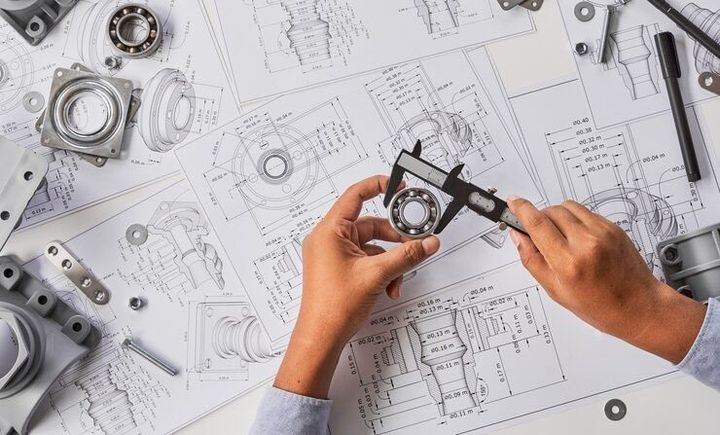
| CAD modeling | Define geometry and dimensions | Digital product models |
| Simulation | Examine predicted performance | Analytical results |
| Physical prototyping | Evaluate a tangible design | Testable physical model |
| Usability testing | Observe product interaction | Feedback and design changes |
| Design for manufacturing | Prepare designs for production | Manufacturing-ready specifications |
These methods can be combined. A digital model may help identify dimensional problems, while a physical prototype can reveal handling issues that are difficult to evaluate on a screen.
Recent Updates
Industrial design continues to change as digital manufacturing, artificial intelligence, advanced materials, and sustainability practices influence product development. During 2024–2026, common areas of development have included more connected design workflows, wider experimentation with generative design, improved digital simulation, and closer integration between design teams and manufacturing operations. Adoption varies by industry, company size, and product complexity.
Digital Design and Artificial Intelligence
Computer-aided design software allows designers to create accurate three-dimensional models, examine dimensions, and prepare files for engineering analysis or manufacturing. Some platforms now incorporate AI-assisted functions that help generate concept variations, automate selected modeling tasks, or summarize design information.
Generative design tools can explore possible geometries based on specified constraints such as weight, strength, available materials, and manufacturing methods. Their results still require human review because an automatically generated model may be difficult to manufacture, maintain, inspect, or use safely.
Digital twins and simulation tools can also help teams evaluate how products or components may behave under particular operating conditions. Their usefulness depends on the quality of the input data, the accuracy of the model, and whether predicted results are validated against physical testing.
Prototyping and Sustainable Design
Additive manufacturing, commonly called 3D printing, enables designers to create physical models directly from digital files. It can be useful for checking shape, fit, assembly, and selected functional characteristics before committing to other manufacturing processes. Printed prototypes do not necessarily reproduce the strength, surface finish, or performance of the final production material.
Sustainable industrial design increasingly considers a product's full lifecycle, including raw materials, manufacturing energy, transport, use, repair, and disposal. Designers may evaluate recycled materials, modular construction, reduced material use, and component replacement. Environmental performance depends on the specific product and its complete lifecycle rather than one design feature alone.
Laws or Policies
Industrial design is influenced by product safety requirements, intellectual property laws, environmental regulations, and industry-specific standards. The rules that apply depend on the product, its intended use, where it is manufactured, and the market in which it will be distributed.
Industrial Design Protection in India
In India, the Designs Act, 2000, provides a framework for protecting qualifying registered industrial designs. Protection generally concerns visual features such as a product's shape, configuration, pattern, ornament, or composition of lines or colors applied to an article, subject to statutory requirements.
Industrial design registration is different from a patent. Design protection focuses on qualifying visual features, whereas patents concern inventions that meet applicable legal requirements. Trademark protection may apply to identifying signs, names, or logos. The relevant form of intellectual property protection depends on the characteristics of the creation.
The Office of the Controller General of Patents, Designs and Trade Marks provides information about design registration procedures and related intellectual property matters. Applicants need to consider the applicable eligibility criteria, filing requirements, and examination process.
Product Safety and Manufacturing Compliance
Products manufactured or marketed in India may be subject to applicable standards and regulations depending on their category. The Bureau of Indian Standards develops and publishes standards and administers relevant conformity assessment and certification arrangements. Certain products may require compliance with specific standards or mandatory certification requirements.
Industrial equipment may also need to meet applicable electrical safety, machinery, workplace safety, environmental, or sector-specific requirements. Designers and manufacturers must identify the rules relevant to the product rather than assuming that one standard applies to every item.
Environmental requirements can influence material selection, emissions, waste handling, and the use of restricted substances. Compliance should be assessed using current official requirements and appropriate technical evaluation.
Tools and Resources
Industrial design tools help translate ideas into measurable specifications, testable prototypes, and manufacturing documentation. The selection depends on the design task, the required level of detail, and the team's technical capabilities.
Computer-Aided Design and Modeling
CAD platforms support the creation of two-dimensional drawings and three-dimensional product models. Examples include Autodesk Fusion, SolidWorks, and Onshape. Their functions vary, but they may support part modeling, assemblies, dimension control, and technical drawings.
Rendering tools can create realistic visual representations of materials, colors, lighting, and surface finishes. These images help communicate design concepts, although a rendering does not demonstrate that a product will perform as shown.
Prototyping and Testing Resources
Three-dimensional printers, laser cutters, machining equipment, and model-making tools can be used to produce prototypes from different materials. The appropriate process depends on dimensional accuracy, structural requirements, material properties, and the intended test.
Testing may include fit checks, load evaluation, thermal assessment, vibration testing, usability studies, and durability testing. Specialized products may require controlled laboratory conditions and validated test procedures.
Design Documentation and Planning
A product design brief records the intended users, primary functions, operating environment, constraints, and acceptance criteria. A requirements checklist or design review template helps teams track unresolved questions throughout development.
Useful documentation may include:
Product requirement specifications and concept sketches.
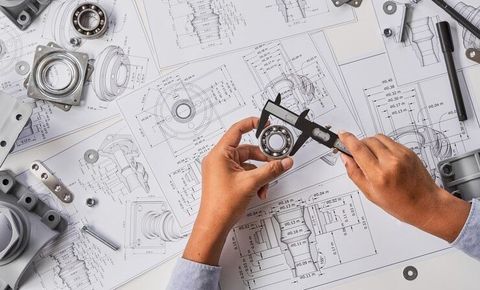
CAD files, technical drawings, and bills of materials.
Prototype test records and design revision histories.
Risk assessments and applicable compliance requirements.
Assembly instructions and maintenance documentation.
Organized documentation helps designers, engineers, suppliers, and production teams work from consistent information. Version control is particularly important when dimensions or materials change during development.
FAQs
What is industrial design and why is it important?
Industrial design is the process of developing physical products by considering their function, appearance, usability, materials, and manufacturing requirements. It helps address practical product needs while accounting for user experience and production limitations.
What are the main stages of industrial design?
The main stages commonly include research, defining requirements, concept development, CAD modeling, prototyping, testing, design refinement, and manufacturing preparation. Some stages may repeat when testing identifies problems.
Which software is used for industrial design?
Designers use CAD platforms such as Autodesk Fusion, SolidWorks, and Onshape for product modeling and technical documentation. Other tools support rendering, simulation, collaboration, and prototype preparation.
How does prototyping support industrial design?
Prototyping allows teams to evaluate shape, fit, handling, assembly, and selected performance characteristics before production. Physical testing can reveal issues that may not be apparent in drawings or digital models.
What regulations affect industrial design in India?
Applicable requirements may include design intellectual property laws, product safety standards, environmental regulations, and industry-specific rules. The exact obligations depend on the product and the market in which it is manufactured or used.
Conclusion
Industrial design combines user research, creative development, engineering considerations, and manufacturing preparation to shape physical products. Design methods such as CAD modeling, prototyping, and testing help teams evaluate product requirements before production. Digital technologies and sustainable design approaches continue to influence how products are developed and assessed. Applicable intellectual property laws, safety standards, and environmental regulations also form part of the broader industrial design process.

You May Also Like