Industrial Automation Technologies Guide: Control Systems, Robotics, Sensors, Uses and Benefits
Industrial automation technologies are systems that use control equipment, software, sensors, machines, and robotics to perform or manage industrial processes with limited manual intervention. They are used in manufacturing plants, warehouses, energy facilities, food processing, automotive production, packaging, and many other industrial environments.
Context
Industrial automation technologies are systems that use control equipment, software, sensors, machines, and robotics to perform or manage industrial processes with limited manual intervention. They are used in manufacturing plants, warehouses, energy facilities, food processing, automotive production, packaging, and many other industrial environments.
The development of industrial automation began with mechanical control methods and gradually expanded through electrical systems, programmable controllers, computers, industrial networks, and robotics. Today, industrial automation combines physical machines with digital technologies to monitor processes, collect information, and control equipment.
Main Components of Industrial Automation
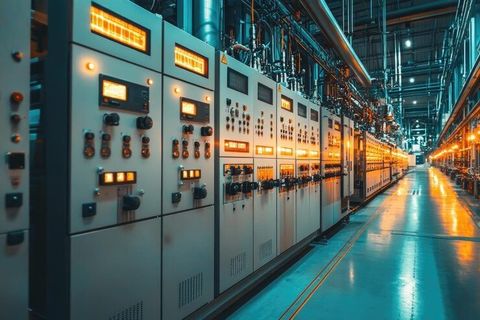
An automation system normally contains several connected elements. Sensors detect conditions such as temperature, pressure, position, speed, vibration, or material presence. Controllers process this information and determine how connected equipment should respond.
Common components include:
- Programmable logic controllers (PLCs)
- Industrial robots and robotic arms
- Sensors and measurement devices
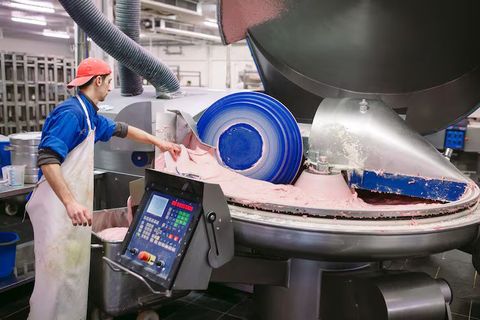
- Human-machine interfaces (HMIs)
- Supervisory control and data acquisition (SCADA) systems
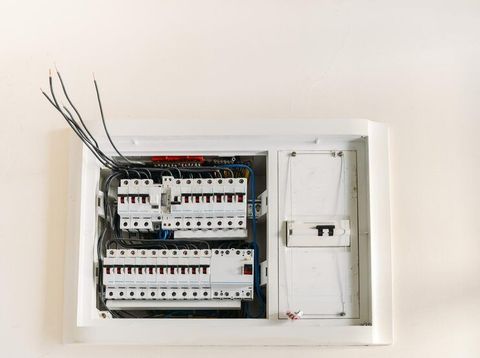
- Variable frequency drives and motor controllers
- Industrial communication networks
- Manufacturing execution and monitoring software
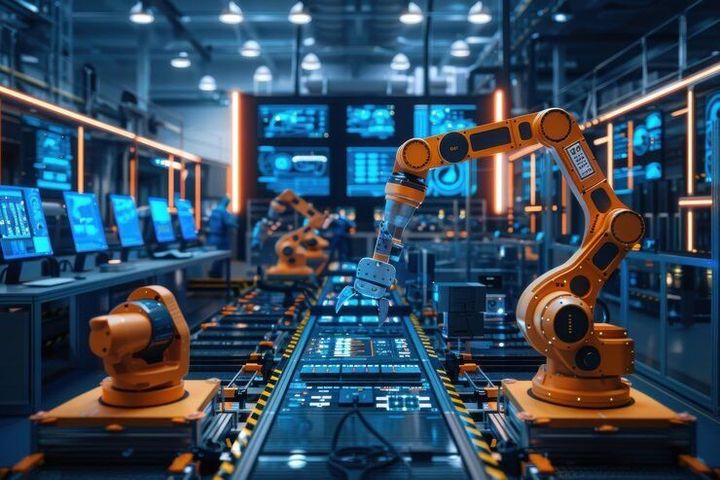
These components can work together as an integrated industrial automation system. For example, a sensor can detect an object on a production line, a PLC can process the signal, and a robotic arm can perform the next programmed movement.
Importance
Industrial automation matters because many industrial processes involve repetitive movements, continuous monitoring, precise measurements, or environments that can be difficult for people to access safely. Automation technologies can help organize these activities while allowing people to supervise, configure, maintain, and improve equipment.
Problems Addressed by Automation
Manufacturers and other industrial operators may use automation to manage several operational challenges. Repetitive production steps can be controlled through programmed sequences, while sensors can continuously monitor operating conditions.
Automation can also help with:
- Consistent movement and machine operation
- Continuous process monitoring
- Detection of abnormal operating conditions
- Material handling and packaging
- Equipment coordination
- Collection of production information
- Reduced exposure to certain industrial hazards
- More structured production workflows
The effect of automation differs according to the equipment, process, operating environment, and level of integration. Automation does not remove the need for human oversight because systems still require configuration, inspection, maintenance, and safety management.
How Control Systems Work
A control system generally follows a repeating sequence: sensing, processing, decision-making, and action. Sensors provide information about a machine or process, while a controller compares the information with programmed instructions.
For example, a temperature sensor may detect that a process has reached a specified level. The controller can then adjust a heater, cooling system, or another connected device according to its programmed logic.
| Automation Element | Main Function | Common Example |
|---|---|---|
| Sensor | Detects physical conditions | Temperature sensor |
| PLC | Processes control logic | Production-line controller |
| HMI | Displays information and controls | Operator touchscreen |
| Robot | Performs programmed movements | Robotic arm |
| SCADA | Supervises processes and data | Plant monitoring system |
| Drive | Controls motor operation | Variable frequency drive |
Recent Updates
Industrial automation has continued to develop from 2024 through 2026, with greater attention to connected equipment, robotics, industrial data, cybersecurity, artificial intelligence, and machine monitoring.
Connected and Data-Driven Automation
Modern automation systems increasingly connect machines, sensors, controllers, and software through industrial communication networks. This allows operating information to move between different parts of a production environment.
Data can be used to identify changes in machine conditions, monitor production processes, and support maintenance planning. Edge computing is also used in some environments to process information closer to machines rather than sending every piece of information to a remote system.
Robotics and Collaborative Systems
Robotics remains an important part of industrial automation. Industrial robots can perform programmed movements for handling, assembly, welding, inspection, packaging, and other applications.
Collaborative robot systems, commonly called cobots, are designed for applications where robots and people may work in closer proximity under appropriate safety controls. India's Bureau of Indian Standards has been updating its robotics safety framework, including work aligned with ISO 10218 requirements for industrial robots and robot applications.
Artificial Intelligence and Predictive Monitoring
Artificial intelligence is increasingly being explored alongside industrial automation. AI-based systems can analyze sensor information, images, and operational data to identify patterns or unusual conditions.
Predictive monitoring is another developing area. Instead of relying only on fixed maintenance intervals, organizations can analyze equipment information to identify indications of changing machine conditions. These technologies still depend on suitable data, system design, validation, and human oversight.
Cybersecurity and Digital Integration
As industrial equipment becomes more connected, cybersecurity has become an important part of automation planning. Controllers, industrial networks, remote monitoring systems, and connected sensors can create additional digital access points that need appropriate protection.
The integration of automation with enterprise software and cloud-based systems has also increased the importance of data management, access control, network segmentation, and secure system configuration.
Laws or Policies
In India, industrial automation is influenced by machinery safety requirements, electrical standards, workplace safety provisions, data protection rules, and standards published or administered through relevant authorities.
Machinery and Robotics Standards
The Bureau of Indian Standards (BIS) maintains standards covering industrial automation systems, robotics, machinery, electrical equipment, and related areas. Its industrial automation and robotics work includes areas such as process automation, programmable logic controllers, sensors, robotics, integration, and industrial data.
BIS also provides guidance for machinery safety and certification under applicable schemes. Certain categories of machinery and electrical equipment may be subject to mandatory requirements depending on applicable government notifications and standards.
Digital Data Protection
Connected industrial environments can sometimes process information that relates to identifiable individuals, particularly where employee, visitor, access-control, or monitoring systems are involved. India's Digital Personal Data Protection Rules, 2025 establish an implementation framework under the Digital Personal Data Protection Act, 2023. The rules include a phased implementation approach.
Organizations using connected automation should therefore consider applicable data protection requirements alongside machinery and workplace safety rules. Specific legal obligations depend on the type of data, organization, equipment, and activity involved.
Tools and Resources
Several resources can help readers understand industrial automation technologies and their applications.
Standards and Technical References
The BIS “Know Your Standard” portal allows users to search Indian Standards by standard number or keyword. It also provides information such as amendments, related documents, testing information, and committee details.
International standards from organizations such as ISO and IEC are also commonly referenced when designing industrial automation, robotics, machinery safety, control systems, and communication architectures.
Automation Software and Learning Tools
Common tools used in industrial automation include PLC programming environments, HMI configuration software, SCADA platforms, robot programming environments, industrial network diagnostic tools, and digital simulation software.
Simulation tools can help engineers examine control logic and machine behavior before physical implementation. Training platforms and technical documentation can also help learners understand PLC logic, sensor operation, robotics, industrial communication, and safety concepts.
FAQs
What are industrial automation technologies?
Industrial automation technologies are hardware and software systems used to monitor, control, and coordinate industrial processes. They include PLCs, sensors, robotics, HMIs, drives, industrial networks, and supervisory software.
How do control systems work in industrial automation?
Control systems collect information from sensors and use programmed logic to determine how connected equipment should respond. A PLC, for example, can receive a sensor signal and control a motor, valve, actuator, or other machine component.
What role do robotics and sensors play in industrial automation?
Sensors provide information about physical conditions such as position, temperature, pressure, and movement. Robotics can use this information together with programmed instructions to perform tasks such as material handling, assembly, welding, inspection, and packaging.
What are the benefits of industrial automation?
Industrial automation can support repeatable processes, continuous monitoring, equipment coordination, structured data collection, and reduced human exposure to certain hazardous activities. The actual results depend on system design and operating conditions.
Are industrial automation systems regulated in India?
Certain machinery, electrical equipment, and industrial activities are subject to applicable Indian laws, government requirements, and standards. BIS maintains standards related to industrial automation, robotics, and machinery safety, while data-related activities may also fall under India's digital data protection framework.
Conclusion
Industrial automation technologies combine control systems, sensors, robotics, software, and communication networks to manage industrial processes. Their applications range from production and material handling to monitoring, inspection, and equipment coordination. Recent developments have placed greater emphasis on connected systems, collaborative robotics, artificial intelligence, industrial data, and cybersecurity. In India, automation activities are also shaped by applicable machinery, electrical, safety, standards, and data protection requirements.