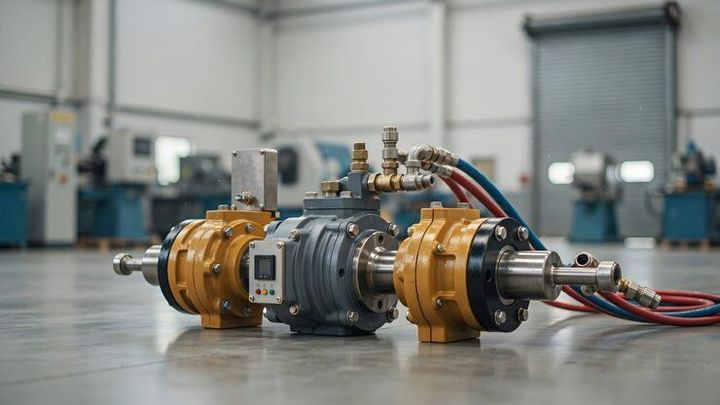
Hydraulic System Guide: Types, Pumps, Valves, Cylinders and Operating Methods
A hydraulic system uses pressurized liquid to transmit power and control movement. These systems are widely used in industrial machinery, construction equipment, agricultural machines, manufacturing facilities, vehicles, and material-handling equipment. By using liquid pressure to produce controlled force, hydraulic technology allows machines to lift heavy loads, move components, apply pressure, and perform repetitive operations.
Context
A hydraulic system uses pressurized liquid to transmit power and control movement. These systems are widely used in industrial machinery, construction equipment, agricultural machines, manufacturing facilities, vehicles, and material-handling equipment. By using liquid pressure to produce controlled force, hydraulic technology allows machines to lift heavy loads, move components, apply pressure, and perform repetitive operations.
The basic principle behind hydraulic systems is Pascal's law, which states that pressure applied to a confined fluid is transmitted throughout the fluid. This principle allows a relatively small input force to produce a larger output force when the system uses different-sized piston areas.
A typical hydraulic system includes a reservoir, hydraulic pump, valves, cylinders or hydraulic motors, connecting pipes, filters, and a suitable working fluid. Each component has a specific function, and all components must work together to maintain reliable operation.
Importance
Hydraulic systems are important because many industrial tasks require substantial force, controlled movement, and consistent operation. They are found in excavators, forklifts, hydraulic presses, lifting platforms, injection molding machines, agricultural tractors, and industrial production lines.
Compared with some mechanical arrangements, hydraulic systems can transmit high forces through compact components and flexible pipe connections. Operators can also control the direction, speed, and force of movement by adjusting valves and system settings.
Common applications
Hydraulic technology supports several types of work:
Construction equipment uses hydraulic cylinders to raise booms, operate buckets, and move heavy attachments.
Manufacturing machinery uses hydraulic pressure for pressing, clamping, forming, and material processing.
Agricultural equipment uses hydraulic circuits to raise implements and operate steering or lifting mechanisms.
Material-handling systems use hydraulic lifts and cylinders to position loads.
Industrial maintenance equipment uses hydraulic tools to apply controlled force during assembly and repair.
Hydraulic systems also have limitations. Fluid leaks, contamination, excessive heat, worn seals, and incorrect pressure settings can reduce performance or create safety risks. Regular inspection and proper operating procedures are therefore important.
How hydraulic power works
A hydraulic pump draws fluid from a reservoir and moves it through the circuit. The pump creates fluid flow, while resistance to that flow produces pressure. Valves direct the fluid, and an actuator converts hydraulic energy into mechanical movement.
A hydraulic cylinder produces linear movement, while a hydraulic motor produces rotational movement. Once the fluid completes its circuit, it returns to the reservoir or continues through the system, depending on the design.
Recent Updates
Hydraulic technology continues to develop alongside industrial automation, energy-efficiency initiatives, and digital monitoring. Modern equipment may combine hydraulic components with electronic sensors, programmable controllers, and automated control systems.
Electrohydraulic control
Electrohydraulic systems combine hydraulic power with electrical or electronic control. Sensors can monitor pressure, temperature, position, and other operating conditions, while electronic controllers adjust valves or pump output according to system requirements.
These arrangements are used in automated manufacturing equipment, mobile machinery, and industrial systems requiring precise movement. Their performance depends on suitable component selection, control programming, maintenance, and operating conditions.
Energy efficiency and monitoring
Variable-displacement pumps, load-sensing circuits, improved sealing materials, and optimized hydraulic layouts can help reduce unnecessary energy use in suitable applications. The actual results depend on machine design, operating cycles, and maintenance.
Condition-monitoring systems can also help identify changes in temperature, pressure, vibration, or fluid condition. These measurements may support maintenance planning, although they do not eliminate the need for physical inspections.
Another continuing development is the integration of hydraulic equipment with industrial Internet of Things platforms. Connected equipment can provide operating information for analysis, troubleshooting, and maintenance records.
Laws or Policies
In India, hydraulic systems are affected by workplace safety requirements, machinery-related rules, environmental requirements, and standards relevant to the equipment in which they are installed. The applicable requirements depend on the industry, machine type, workplace, and intended use.
The Factories Act, 1948, and applicable state factory rules have historically addressed workplace health and safety. India's Occupational Safety, Health and Working Conditions Code, 2020, is also relevant to the country's evolving occupational safety framework. The applicable commencement notifications and rules should be checked to establish which provisions govern a particular workplace.
Equipment manufacturers and operators may also refer to relevant Bureau of Indian Standards publications and applicable ISO standards for hydraulic systems, components, safety, and testing. Requirements vary by application, so not every standard applies to every machine.
Workplace safety practices
Common safety measures include:
Inspecting hoses, fittings, cylinders, and connections for damage or leakage.
Keeping hydraulic fluid within the specified operating limits.
Using pressure-rated components compatible with the system.
Following lockout and isolation procedures before maintenance.
Releasing stored hydraulic pressure before opening a circuit.
Supporting raised equipment mechanically before working beneath it.
Using appropriate protective equipment and trained personnel.
Hydraulic fluid can escape through tiny openings at high pressure and penetrate the skin. Suspected injection injuries require immediate emergency medical assessment, even if the visible wound appears small.
Tools and Resources
Several technical resources help users understand hydraulic system design, operation, maintenance, and troubleshooting.
Technical documentation
Equipment manuals, hydraulic circuit diagrams, component datasheets, and maintenance schedules explain the operating limits and configuration of a particular system. These documents help identify suitable fluids, pressure ranges, filter specifications, and replacement components.
Engineering calculation tools
Hydraulic calculators and engineering reference tools can assist with common calculations. Cylinder force can be estimated by multiplying pressure by the effective piston area. Flow rate and cylinder area can be used to estimate theoretical extension speed.
For example, the theoretical force relationship is:
Force = Pressure × Effective Area
Actual performance can differ because of friction, pressure losses, leakage, and mechanical loading. Calculations should therefore be checked against the manufacturer's specifications and the real operating conditions.
Learning and standards resources
The Bureau of Indian Standards provides information about Indian technical standards and standardization.
The International Organization for Standardization publishes standards covering hydraulic fluid power and related equipment.
Manufacturer training materials explain pump types, valve operation, cylinder maintenance, and circuit design.
Hydraulic schematic software can help learners interpret symbols and prepare circuit layouts.
Fluid-analysis tools can help identify contamination, moisture, wear particles, or changes in fluid condition.
These resources support technical understanding but do not replace equipment-specific instructions or qualified engineering assessment.
Types of Hydraulic Systems
Hydraulic systems can be classified by circuit arrangement, pressure requirements, and the way fluid returns to the reservoir.
Open-center and closed-center circuits
In an open-center circuit, fluid can circulate through a control valve when the actuator is not operating. In a closed-center circuit, the control valves generally block the main flow path when inactive, and the pump adjusts its output according to system demand or control design.
Open-center arrangements are common in some mobile machines, while closed-center arrangements are used in applications requiring different flow-control characteristics. Actual designs vary according to the equipment.
Fixed and variable-displacement systems
A fixed-displacement pump moves a consistent volume of fluid per revolution under comparable operating conditions. A variable-displacement pump can change the amount of fluid delivered, which may improve control and efficiency when correctly matched to the application.
Hydraulic Pumps, Valves and Cylinders
The three major component groups perform different functions within a hydraulic circuit.
Hydraulic pumps
Hydraulic pumps convert mechanical input power into hydraulic fluid flow. Common types include:
Gear pumps, which use meshing gears to move fluid.
Vane pumps, which use sliding vanes within a rotating assembly.
Piston pumps, which use reciprocating pistons and are available in fixed- and variable-displacement designs.
Pump selection depends on pressure, flow requirements, fluid compatibility, operating speed, noise, and maintenance needs.
Hydraulic valves
Valves regulate fluid direction, pressure, or flow rate. Directional control valves determine which actuator receives fluid. Pressure-relief valves help limit excessive system pressure, while flow-control valves regulate the rate of movement.
Some systems use proportional or servo valves for more precise control. These components require appropriate filtration, compatible fluid, and correct installation to operate reliably.
Hydraulic cylinders
Hydraulic cylinders convert fluid pressure into linear force. Common designs include single-acting cylinders, which are powered in one direction and return through gravity, a spring, or another external force, and double-acting cylinders, which use hydraulic pressure for movement in both directions.
Cylinder selection depends on required force, stroke length, mounting arrangement, operating speed, load direction, and available space. Seal condition and rod alignment also influence performance and service life.
Operating Methods and Maintenance
Hydraulic systems operate by controlling fluid flow and pressure through a connected circuit. The pump supplies flow, the valves direct or regulate it, and the actuator performs the intended movement.
Before operation, users should check fluid levels, inspect visible hoses and fittings, confirm that guards are in place, and review the manufacturer's startup procedure. During operation, unusual noise, overheating, unstable movement, or visible leakage may indicate a developing problem.
Routine maintenance commonly includes checking filters, monitoring fluid condition, inspecting seals and hoses, and following the recommended replacement intervals. Components should never be loosened while the circuit remains pressurized, and raised loads must not be supported by hydraulic pressure alone during maintenance.
FAQs
What is a hydraulic system used for?
A hydraulic system transmits power through pressurized liquid to operate machinery. Common applications include lifting, pressing, clamping, steering, and controlling industrial equipment.
What are the main types of hydraulic pumps?
Common types include gear pumps, vane pumps, and piston pumps. Their suitability depends on the required pressure, flow, operating conditions, and equipment design.
What is the function of a hydraulic valve?
A hydraulic valve controls fluid direction, pressure, or flow rate. Its function may include moving an actuator, limiting pressure, or adjusting operating speed.
What is the difference between single-acting and double-acting hydraulic cylinders?
A single-acting cylinder uses hydraulic pressure to move in one direction and relies on another force for its return. A double-acting cylinder uses hydraulic pressure to produce movement in both directions.
How is a hydraulic system maintained?
Maintenance includes checking fluid condition, inspecting hoses and seals, monitoring filters, and following manufacturer instructions. Pressure must be safely isolated before maintenance work begins.
Conclusion
Hydraulic systems use pressurized liquid to produce controlled force and movement across construction, manufacturing, agriculture, and other industrial applications. Pumps supply fluid flow, valves regulate its movement, and cylinders or motors convert hydraulic energy into mechanical action. Modern systems increasingly incorporate electronic controls, condition monitoring, and efficiency-focused designs. Proper component selection, routine inspection, and safe maintenance procedures are important for reliable operation.