High-Voltage Transformers Comparison Guide: Insights, Basics, Facts & Practical Knowledge
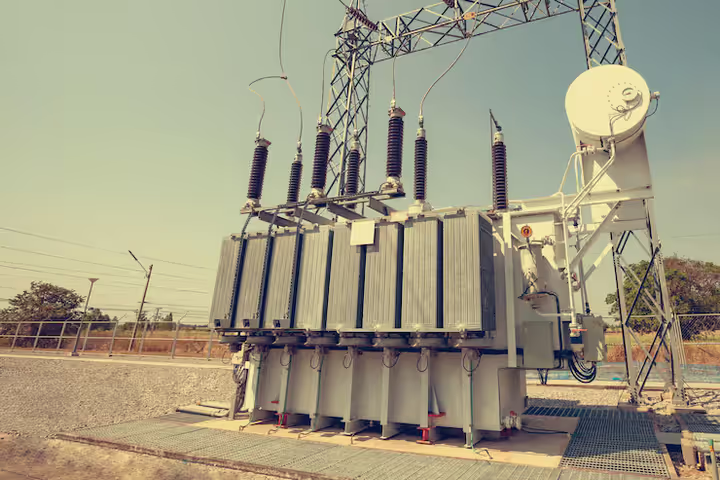
High-voltage transformers are critical components in modern electrical power systems, designed to step up or step down voltage levels for efficient electricity transmission and distribution. Typically operating above 35 kV, these transformers enable long-distance power transfer with minimal energy loss by increasing voltage at generation points and reducing it near consumption areas. They are widely used in power plants, substations, industrial facilities, and renewable energy systems.
In recent years, the comparison of high-voltage transformers has become increasingly relevant due to rapid global electrification, renewable energy integration, and smart grid development. Utilities and industries now evaluate transformers based on efficiency, insulation type, cooling systems, lifecycle cost, and environmental impact rather than just capacity. For example, the shift toward eco-friendly insulating fluids and digital monitoring systems reflects changing priorities in grid modernization.
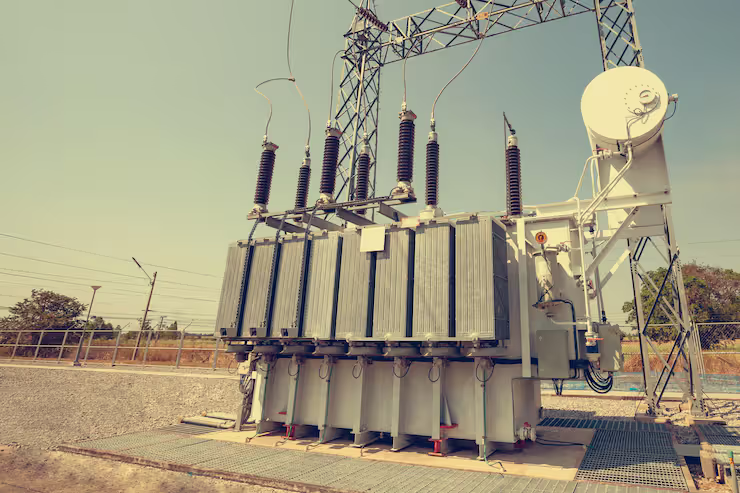
The growing demand for reliable power infrastructure, especially in developing regions, combined with stricter environmental regulations, has made transformer selection more data-driven. As energy consumption rises and grid complexity increases, understanding transformer types and their performance characteristics is essential for informed decision-making.
Who It Affects and What Problems It Solves
High-voltage transformers directly impact power utilities, industrial manufacturers, renewable energy developers, and infrastructure planners. For utilities, they are essential for maintaining grid stability and ensuring efficient transmission across vast distances. Industrial sectors rely on them to operate heavy machinery and maintain consistent power supply in energy-intensive processes such as steel production, chemical manufacturing, and data centers.
Renewable energy projects such as wind and solar farms also depend heavily on high-voltage transformers to integrate generated power into national grids. Without efficient voltage conversion, energy losses would increase significantly, making renewable systems less viable.
Problems It Solves
- Transmission Loss Reduction: By stepping up voltage, transformers reduce current and minimize energy loss over long distances.
- Grid Stability: They regulate voltage levels, preventing fluctuations and outages.
- Equipment Protection: Proper voltage levels protect electrical equipment from damage.
- Integration of Renewables: Enable smooth connection of variable energy sources to the grid.
- Scalability: Support expanding power demand in urban and industrial regions.
Recent Updates and Trends
The high-voltage transformer industry has seen several notable developments over the past year, driven by sustainability goals, digital transformation, and grid resilience needs:
- Eco-Friendly Insulation Fluids: Increased adoption of biodegradable ester-based oils instead of traditional mineral oil to reduce environmental risks.
- Digital Transformers: Integration of IoT sensors and predictive maintenance systems to monitor temperature, load, and insulation health in real time.
- Grid Modernization Projects: Governments worldwide are investing in smart grids, increasing demand for advanced transformers with automation capabilities.
- Higher Efficiency Standards: Regulatory bodies are enforcing stricter efficiency norms, pushing manufacturers to reduce no-load and load losses.
- Compact and Modular Designs: Urban substations now prefer compact transformers due to space constraints.
These trends reflect a shift toward sustainability, reliability, and data-driven asset management.
Comparison Table: Types of High-Voltage Transformers
| Parameter | Oil-Filled Transformer | Dry-Type Transformer | Gas-Insulated Transformer |
|---|---|---|---|
| Insulation Medium | Mineral/Ester Oil | Air or Resin | SF6 Gas |
| Cooling Method | Oil Natural/Air Forced | Air Natural/Forced | Gas Cooling |
| Efficiency | High | Moderate | Very High |
| Maintenance Requirement | Moderate (oil monitoring) | Low | Low but specialized |
| Fire Risk | Higher | Very Low | Low |
| Environmental Impact | Moderate | Low | Moderate (gas concerns) |
| Installation Location | Outdoor/Substations | Indoor/Urban Areas | Compact Urban Installations |
| Cost | Lower initial cost | Higher initial cost | Highest cost |
| Lifespan | 25–40 years | 20–30 years | 30–40 years |
| Best Use Case | Bulk power transmission | Commercial/industrial safety | High-density urban grids |
Laws and Policies Affecting High-Voltage Transformers
High-voltage transformers are subject to various national and international regulations to ensure safety, efficiency, and environmental compliance.
Key Regulatory Areas
- Energy Efficiency Standards: Governments enforce minimum efficiency levels to reduce energy losses. For example, many countries follow standards similar to IEC and DOE efficiency guidelines.
- Environmental Regulations: Restrictions on insulating oils and emissions encourage the use of biodegradable fluids and reduced greenhouse gases.
- Safety Standards: Installation and operation must comply with electrical safety codes to prevent hazards such as fires or explosions.
- Grid Codes: Utilities must follow grid stability and voltage regulation rules when deploying transformers.
Practical Guidance
- Urban Installations: Dry-type or gas-insulated transformers are preferred due to lower fire risk and compact size.
- Rural or High-Capacity Transmission: Oil-filled transformers remain the most cost-effective and efficient option.
- Environmentally Sensitive Areas: Ester-filled transformers are recommended to reduce ecological impact.
- Smart Grid Projects: Digital transformers with monitoring systems are increasingly required.
Tools and Resources
Several tools and platforms help engineers, planners, and researchers evaluate and manage high-voltage transformers effectively:
- Load Flow Analysis Software: Tools like ETAP or DIgSILENT PowerFactory for system simulation.
- Transformer Loss Calculators: Used to estimate efficiency and lifecycle cost.
- Condition Monitoring Systems: IoT-based platforms that track transformer health in real time.
- Standards Documentation: IEC, IEEE guidelines for design, testing, and maintenance.
- Maintenance Management Systems: Software for scheduling inspections and predictive maintenance.
- Thermal Modeling Tools: Help analyze heat dissipation and optimize cooling systems.
These resources enable better planning, reduced downtime, and improved operational efficiency.
Frequently Asked Questions (FAQ)
What is the main purpose of a high-voltage transformer?
It adjusts voltage levels for efficient power transmission and distribution, reducing energy losses over long distances.
Which type of high-voltage transformer is safest for indoor use?
Dry-type transformers are generally safest due to their low fire risk and absence of flammable oil.
How long do high-voltage transformers typically last?
Most transformers have a lifespan of 20 to 40 years, depending on maintenance and operating conditions.
Why are eco-friendly transformer oils gaining popularity?
They reduce environmental risks, are biodegradable, and comply with stricter environmental regulations.
What factors should be considered when selecting a transformer?
Key factors include efficiency, cost, installation environment, maintenance needs, and regulatory compliance.
Conclusion
High-voltage transformers play a foundational role in modern power systems, enabling efficient and reliable electricity transmission. The comparison between oil-filled, dry-type, and gas-insulated transformers shows that each type serves specific operational needs. Oil-filled transformers remain dominant for large-scale transmission due to their cost-effectiveness and efficiency, while dry-type transformers are increasingly preferred in urban and indoor environments for safety reasons. Gas-insulated transformers, although expensive, provide compact solutions for space-constrained applications.
Recent industry trends highlight a shift toward sustainability, digital monitoring, and higher efficiency standards. Data-driven decision-making is becoming essential as utilities balance performance, environmental impact, and long-term costs.
In practical terms, the best transformer choice depends on application context: large-scale grids benefit from traditional oil-filled systems, whereas urban and environmentally sensitive areas require safer and greener alternatives. Understanding these distinctions ensures optimized performance, regulatory compliance, and long-term reliability.