Battery Formation & Testing Explained: Processes, Equipment, Methods, Quality Checks and Key Considerations
Battery formation and testing are important stages in the production of rechargeable batteries. Formation is the controlled first charging and discharging process that helps establish the intended electrochemical behavior of a new cell. Testing then checks whether the cell or battery pack meets defined electrical, thermal, mechanical, and safety requirements.
The topic comes from the need to make rechargeable batteries behave consistently after assembly. A newly assembled cell does not immediately have its final operating characteristics. During formation, controlled electrical cycles help develop the internal interfaces that influence capacity, voltage behavior, resistance, and later cycling performance.
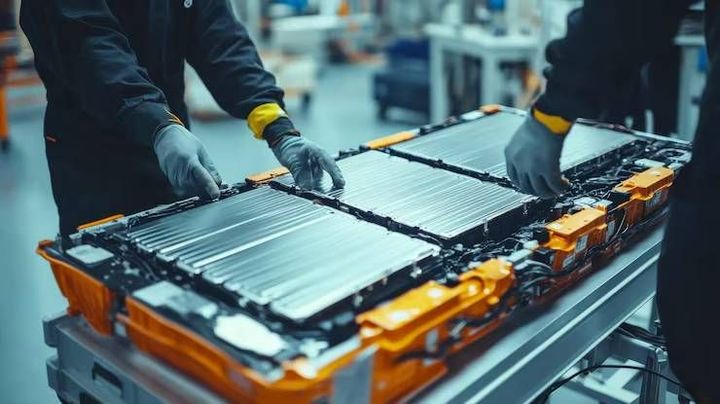
Battery formation equipment normally includes charge-discharge channels, power electronics, temperature sensors, monitoring software, and protective controls. Battery testing equipment can include precision voltage and current measurement systems, environmental chambers, insulation testers, impedance analyzers, and systems for controlled cycling. The exact setup depends on battery chemistry, cell format, capacity, and intended application.
From cell assembly to usable battery
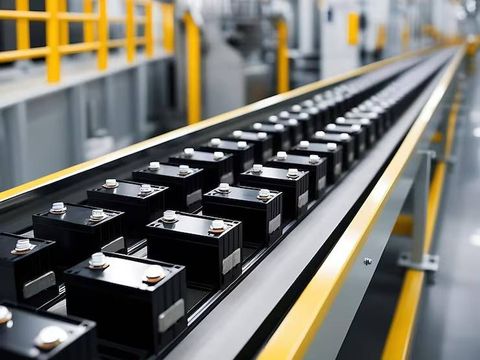
A simplified production sequence can be described as electrode preparation, cell assembly, electrolyte filling, sealing, initial formation, aging, grading, inspection, and final testing. Formation is therefore one part of a larger manufacturing process rather than a single test.
Importance
Battery formation and testing matter because batteries are used in phones, computers, energy storage systems, electric vehicles, industrial equipment, and many other applications. Consistent electrical behavior is important for equipment that depends on predictable voltage, capacity, temperature, and charging behavior.
Quality checks also help identify cells or packs that differ from the intended production range. Detecting abnormal voltage, resistance, temperature rise, leakage, or charging behavior before a battery reaches its application can reduce the chance that an unsuitable unit enters later production stages.
What formation helps establish
During formation, manufacturers control factors such as current, voltage limits, rest periods, temperature, and the number of charge-discharge cycles. The process can influence the development of the solid-electrolyte interphase in lithium-ion cells, a thin interface that forms mainly at the negative electrode during early cycling.
Why testing uses several methods
No single measurement describes battery condition completely. Capacity testing can show how much electrical charge a cell can deliver under specified conditions, while resistance or impedance measurements can reveal changes in electrical behavior. Thermal tests examine how the battery responds to temperature, and safety tests examine responses to conditions such as overcharge, short circuit, impact, or abnormal heating where applicable.
| Check | What it examines | Typical purpose |
|---|---|---|
| Capacity test | Charge delivered under defined conditions | Compare measured capacity with the specification |
| Voltage check | Electrical potential | Detect abnormal readings |
| Resistance or impedance | Internal electrical behavior | Identify variation or changes |
| Temperature monitoring | Heat during operation or cycling | Detect unusual thermal behavior |
| Cycle test | Behavior across repeated cycles | Study retention and durability |
| Insulation test | Electrical isolation | Check protection against unintended current paths |
| Visual inspection | Physical condition | Identify damage, deformation, or assembly issues |
Recent Updates
Battery manufacturing has expanded and diversified during 2024–2026. The International Energy Agency reported that global battery manufacturing capacity exceeded 4 TWh by the end of 2025, while battery deployment for electric vehicles also continued to grow. The same research describes continuing development of lithium-ion improvements, new cell formats, manufacturing processes, and artificial-intelligence-based image analysis for earlier defect detection.
Another development is the wider use of lithium iron phosphate chemistry in several markets. Battery manufacturers are also investigating sodium-ion and solid-state technologies, although these technologies have different production, testing, and operating requirements. Testing remains important because laboratory or prototype results do not automatically represent performance at large manufacturing scale.
Automation is also becoming more important in formation and testing. Modern systems can record voltage, current, temperature, time, and cycle information for many channels at once. Data analysis can then identify patterns across cells and production batches, helping manufacturers investigate process variation.
Laws or Policies
In India, battery production and end-of-life management are shaped by environmental rules and product standards. The Battery Waste Management Rules, 2022 apply to different categories of batteries, including electric vehicle, portable, automotive, and industrial batteries. The framework uses Extended Producer Responsibility, which places specified responsibilities on producers and other regulated entities for battery waste management.
The Ministry of Environment, Forest and Climate Change lists several amendments to the Battery Waste Management Rules during 2024 and another amendment in 2025. These updates show that the regulatory framework has continued to evolve as battery production, collection, recycling, and related activities expand.
For battery performance and safety, Indian Standards are also relevant depending on the application. BIS lists IS 17855:2022 for performance testing of lithium-ion traction battery packs and systems used in electrically propelled road vehicles. Other standards address lithium cells and batteries used in industrial or portable applications, while IS 16270:2023 covers secondary cells and batteries for solar photovoltaic applications.
For electric two- and three-wheelers, ARAI identifies battery testing under AIS-156, while the applicable requirements depend on vehicle category and the current version of the standard. An ARAI amendment also specifies requirements such as cell certification, controlled charge-discharge cycling, and maintenance of cycling records for certain traction battery applications.
These rules and standards do not mean that every battery must undergo exactly the same test sequence. Requirements depend on chemistry, application, battery configuration, product category, and the applicable regulatory framework.
Tools and Resources
Several resources can help readers understand battery formation and testing without working directly on a battery.
Standards and technical references
The Bureau of Indian Standards provides information about Indian Standards and its conformity assessment framework. Its guidance explains that manufacturers need appropriate process controls, quality control, and testing capabilities when a product is covered by a relevant Indian Standard.
The International Energy Agency publishes battery and electric-mobility research that explains global manufacturing, demand, chemistry trends, and technology development. Its Global EV Data Explorer and Global EV Policy Explorer can also be used to examine broader electric-mobility information.
Common measurement resources
For general learning, useful resources include battery capacity calculators, unit-conversion tools, charge-discharge data sheets, cycle-life spreadsheets, temperature logs, and laboratory test templates. A typical test record can contain cell identification, chemistry, nominal voltage, rated capacity, test current, temperature, charge limits, discharge limits, cycle number, measured capacity, resistance or impedance, and pass/fail status.
Battery testing laboratories and accredited facilities can also be used when formal measurements are required. The appropriate laboratory depends on the battery type and the standard being applied.
FAQs
What is battery formation and testing?
Battery formation is the controlled initial cycling of a newly assembled rechargeable cell. Battery testing measures characteristics such as capacity, voltage, resistance, temperature behavior, cycle performance, and safety under defined conditions.
What equipment is used for battery formation?
Battery formation equipment commonly includes programmable charge-discharge channels, measurement circuits, temperature sensors, protective controls, data logging, and software for managing charging and discharging profiles. Larger production systems can contain many independently monitored channels.
What battery testing methods are commonly used?
Common methods include capacity testing, voltage measurement, resistance or impedance measurement, cycle testing, thermal monitoring, insulation checks, and application-specific safety tests. The selected method depends on the battery chemistry, design, and intended use.
Why are battery quality checks important?
Quality checks help identify abnormal electrical, physical, or thermal behavior before a cell or pack proceeds to later production or application stages. They also create records that can be used for traceability and process analysis.
Which standards apply to lithium-ion battery testing in India?
The applicable standard depends on the battery and its use. Examples include IS 17855 for performance testing of lithium-ion traction battery packs and systems, IS 16805 and IS 16822 for certain industrial lithium battery applications, and IS 16270 for batteries used in solar photovoltaic applications. Vehicle traction batteries may also fall under applicable AIS requirements.
Conclusion
Battery formation and testing combine controlled electrical cycling with measurements that help establish and verify battery characteristics. Formation equipment manages charging, discharging, temperature, and data collection, while testing methods examine capacity, electrical behavior, thermal response, durability, and safety. From 2024–2026, battery manufacturing expanded, automation increased, and new chemistries and production methods continued to develop. In India, environmental rules and application-specific standards provide an important framework for battery production, testing, and end-of-life management.