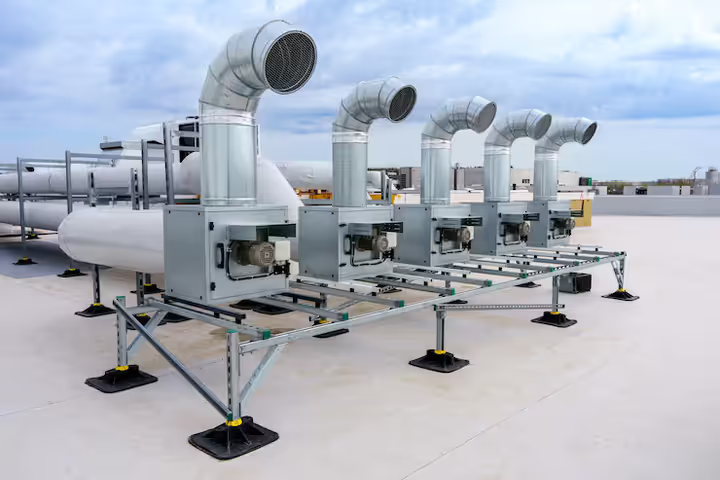
Air Pollution Control Systems: Guide, Insights, Overview, and Practical Knowledge
Air pollution control systems are engineered technologies designed to reduce or eliminate harmful pollutants from industrial emissions, transportation sources, and indoor environments. These systems play a critical role in maintaining air quality by capturing particulate matter (PM), gases, and volatile organic compounds (VOCs) before they enter the atmosphere. Common technologies include electrostatic precipitators, scrubbers, fabric filters, and catalytic converters.
In recent years, the comparison of different air pollution control systems has become increasingly important due to rising industrialization, urbanization, and stricter environmental regulations worldwide. Governments and organizations are prioritizing cleaner production methods and emission reductions to combat climate change and public health risks. According to global environmental assessments, air pollution remains one of the leading environmental risk factors contributing to respiratory and cardiovascular diseases.
Trends such as the adoption of smart monitoring systems, integration of AI-based emission tracking, and stricter emission standards are shaping the evolution of these technologies. Industries are now evaluating systems not only based on efficiency but also energy consumption, maintenance requirements, and regulatory compliance. Understanding these systems helps stakeholders make informed decisions while balancing environmental responsibility and operational efficiency.
Who It Affects and What Problems It Solves
Air pollution control systems affect a wide range of stakeholders, including industrial manufacturers, power plants, construction sectors, policymakers, and the general public. Industries such as cement, steel, oil and gas, and chemical manufacturing are among the largest contributors to air pollution and are therefore primary users of these systems. Urban populations, especially in densely populated cities, are directly impacted by air quality levels and benefit significantly from improved emission control measures.
From a public health perspective, poor air quality is linked to increased hospital admissions, reduced life expectancy, and chronic illnesses such as asthma and lung cancer. Environmental impacts include ecosystem damage, acid rain, and reduced agricultural productivity. Therefore, implementing effective pollution control systems is essential not only for regulatory compliance but also for societal well-being.
Problems It Solves
- Reduction of Particulate Matter (PM): Captures dust, smoke, and fine particles from industrial emissions.
- Control of Toxic Gases: Removes harmful gases like sulfur dioxide (SO₂), nitrogen oxides (NOx), and carbon monoxide (CO).
- Minimization of Health Risks: Lowers exposure to pollutants that cause respiratory and cardiovascular diseases.
- Regulatory Compliance: Helps industries meet emission standards set by environmental authorities.
- Environmental Protection: Reduces acid rain formation, smog, and climate-related impacts.
Recent Updates and Trends
Over the past year, several developments have influenced the air pollution control systems landscape:
- Stricter Emission Standards: Many countries have tightened industrial emission limits, especially for PM2.5 and NOx levels, pushing industries to upgrade their systems.
- Digital Monitoring Integration: Real-time emission monitoring systems (CEMS) are being integrated with pollution control technologies to provide continuous data tracking and compliance reporting.
- Shift Toward Energy Efficiency: New systems are designed to consume less energy while maintaining high filtration efficiency, addressing both environmental and operational concerns.
- Adoption of Hybrid Technologies: Combining multiple control methods (e.g., scrubbers with electrostatic precipitators) to improve overall efficiency.
- Focus on Carbon Reduction: While traditional systems focus on pollutants, newer technologies are also addressing greenhouse gas emissions.
These trends highlight a shift toward smarter, more sustainable, and data-driven air pollution control solutions.
Comparison of Common Air Pollution Control Systems
| System Type | Key Function | Efficiency Level | Suitable Industries | Advantages | Limitations |
|---|---|---|---|---|---|
| Electrostatic Precipitator | Removes fine particulate matter | High | Power plants, cement | High efficiency, low pressure drop | High initial cost |
| Fabric Filter (Baghouse) | Filters dust using fabric media | Very High | Manufacturing, mining | Excellent PM removal | Maintenance intensive |
| Scrubber System | Removes gases and particulates | Medium–High | Chemical, oil & gas | Effective for gas pollutants | Requires water and waste disposal |
| Cyclone Separator | Uses centrifugal force for particles | Medium | Woodworking, agriculture | Low cost, simple design | Less effective for fine particles |
| Catalytic Converter | Converts toxic gases to harmless ones | High | Automotive, refineries | Reduces NOx, CO, hydrocarbons | Requires catalyst replacement |
Laws and Policies Impacting Air Pollution Control Systems
Air pollution control systems are heavily influenced by environmental laws and government regulations. In India, for example, the Air (Prevention and Control of Pollution) Act, 1981 mandates industries to control emissions and obtain necessary permits. Regulatory bodies such as the Central Pollution Control Board (CPCB) and State Pollution Control Boards (SPCBs) enforce compliance.
Globally, emission standards such as the European Union’s Industrial Emissions Directive (IED) and the United States Clean Air Act set strict limits on pollutants. These regulations often require industries to adopt Best Available Techniques (BAT) for emission control.
Practical Guidance Based on Situations
- For Heavy Industries: Electrostatic precipitators or baghouse filters are preferred due to high efficiency in handling large volumes of particulate emissions.
- For Chemical Processing Units: Scrubber systems are more suitable as they effectively remove gaseous pollutants.
- For Small-Scale Operations: Cyclone separators provide a cost-effective solution for basic particulate removal.
- For Transportation Sector: Catalytic converters are essential to meet vehicle emission norms.
Compliance with these regulations not only avoids penalties but also enhances environmental credibility and operational sustainability.
Tools and Resources
Several tools and resources support the implementation and optimization of air pollution control systems:
- Emission Monitoring Software: Helps track pollutant levels in real time and generate compliance reports.
- Air Quality Index (AQI) Platforms: Provide insights into regional air quality trends.
- Simulation Tools: Used for designing and optimizing pollution control systems before deployment.
- Government Portals: Offer guidelines, compliance frameworks, and updates on environmental regulations.
- Technical Standards Documents: Provide detailed specifications for system design and performance benchmarks.
- Environmental Impact Assessment (EIA) Templates: Assist in evaluating the environmental implications of industrial projects.
These resources enable industries and policymakers to make data-driven decisions and improve system efficiency.
Frequently Asked Questions (FAQ)
What are air pollution control systems?
Air pollution control systems are technologies designed to remove harmful pollutants from air emissions before they are released into the environment.
Which system is most effective for particulate matter removal?
Fabric filters (baghouse systems) are considered highly effective for removing fine particulate matter due to their high filtration efficiency.
Why are air pollution control systems important today?
They are essential for reducing health risks, meeting regulatory standards, and addressing environmental challenges such as climate change and smog.
How do regulations influence system selection?
Regulations set emission limits that determine the type and efficiency of systems required for compliance, influencing technology adoption.
Are modern systems energy efficient?
Recent advancements focus on reducing energy consumption while maintaining high performance, making modern systems more efficient than older models.
Conclusion
Air pollution control systems are a critical component of modern industrial and environmental management strategies. With increasing regulatory pressure and growing awareness of environmental and health impacts, the adoption of efficient and advanced systems has become essential. Data from environmental agencies consistently shows that regions implementing robust emission control measures experience improved air quality and reduced health risks.
Different systems offer varying levels of efficiency, cost, and suitability depending on the application. For example, electrostatic precipitators and fabric filters excel in particulate removal, while scrubbers and catalytic converters are more effective for gaseous pollutants. The choice of system should be guided by emission type, regulatory requirements, and operational considerations.
Overall, the most effective approach often involves a combination of technologies supported by real-time monitoring and data analytics. As trends continue toward smarter and more sustainable solutions, industries that invest in advanced air pollution control systems are better positioned to meet future environmental challenges while maintaining operational efficiency.